
Update Search
Categories
Series
Date
Update Search
Categories
Series
Date
1 - 6 of 6 items
Sort By
Publisher : STAR SCHOLARS PRESS
Published : September 3, 2026
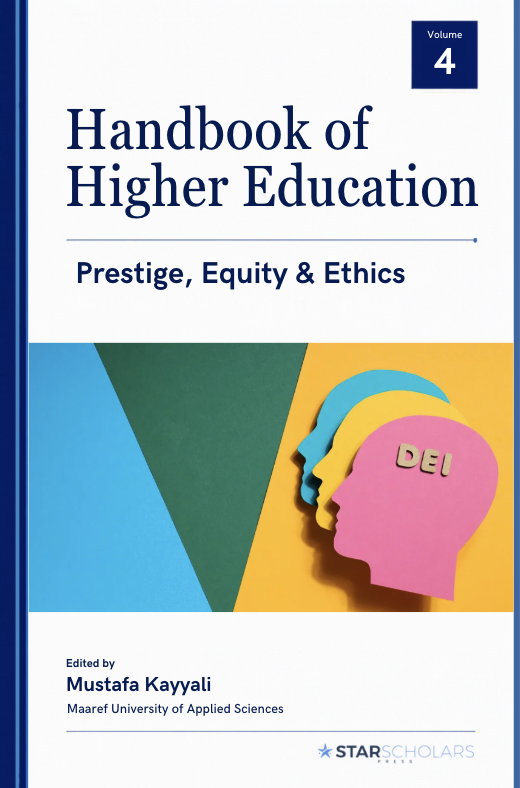
This volume analyzes digitalization, artificial intelligence, accreditation, rankings, and internationalization through the lens of future accountability in higher education. Ten chapters bring together Pacific, African, Asian, European, and broader Global South perspectives on prestige, inclusion, governance, and institutional transformation. The volume examines ethical foundations of academic reputation, inclusive quality assurance, accreditation as governance and political practice, ranking actors and algorithms, India’s National Education Policy 2020, borderless accreditation, Ubuntu-informed approaches to quality, flexible internationalization during systemic instability, and the movement from digitalization toward institutional smartness. Across these themes, the contributors challenge accountability models that privilege visibility, mobility, and standardized metrics over relationships, context, and public purpose. Intended for researchers, institutional leaders, accreditation and quality assurance professionals, policymakers, faculty, and graduate students, the volume argues that responsible transformation requires transparent data practices, context-sensitive standards, inclusive participation, and a critical understanding of how prestige systems distribute power and opportunity.
Publisher : STAR SCHOLARS PRESS
Published : June 30, 2026
Order Print Copies | Amazon | Hardcover | eBook | Google Books
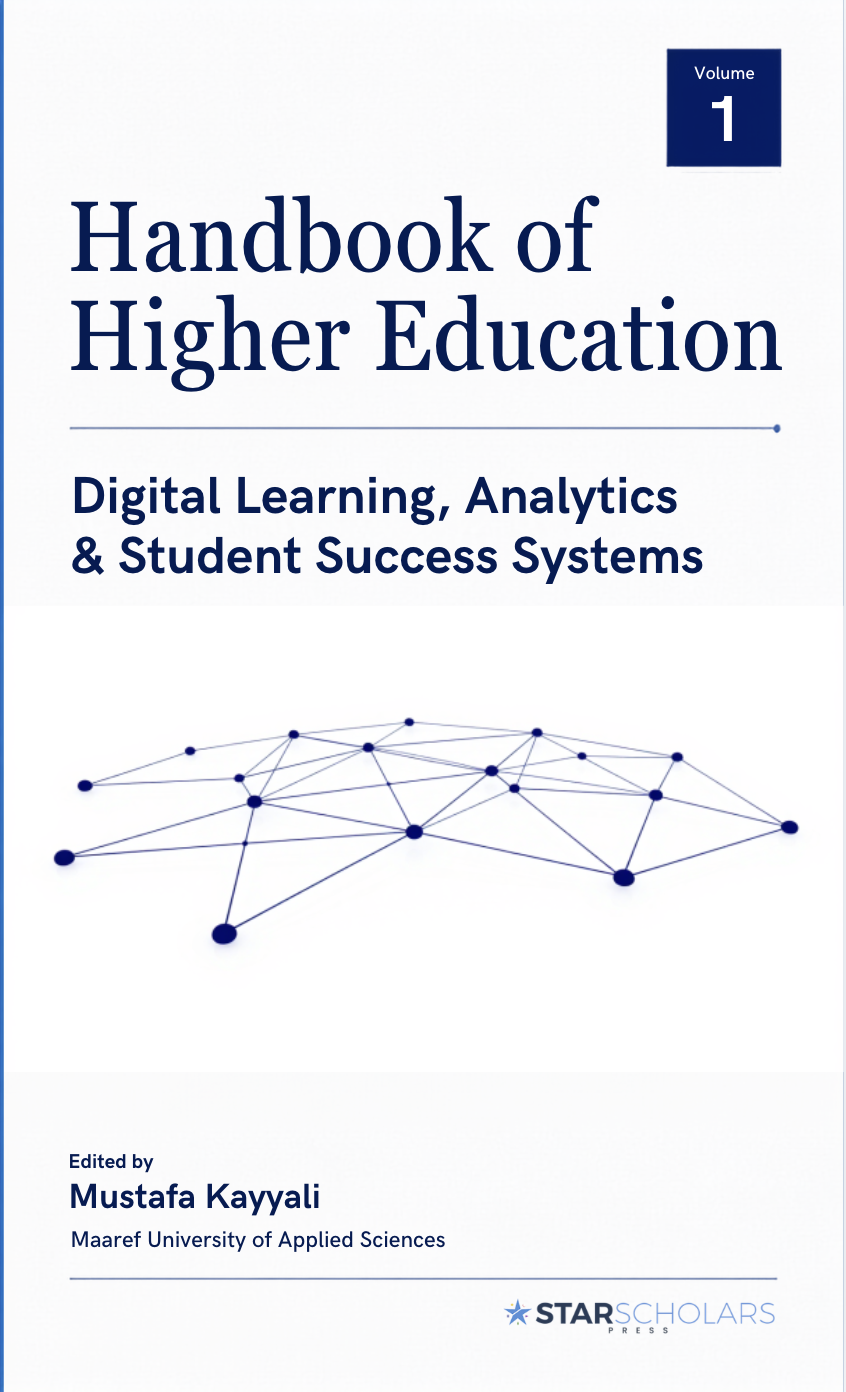
This volume examines the intersection of digital learning, learning analytics, and student success systems in contemporary higher education. Nine chapters written by scholars and practitioners from multiple geographic contexts analyze how artificial intelligence, institutional automation, faculty role transformation, and inclusive access technologies reshape higher education practice and outcomes. The volume combines theoretical frameworks with case evidence from national systems, disciplinary fields, and individual institutions. Core themes include the tension between digitalization and equity, the evolution of immersive and hybrid learning models, the role of data-informed decision-making in institutional performance, and the imperative to design digital transformations that serve all students, not only the advantaged. Intended for researchers, institutional leaders, faculty, graduate students, and policymakers, the volume argues that higher education can become simultaneously more efficient and more humane through thoughtful implementation and critical attention to context.
Publisher : STAR SCHOLARS PRESS
Published : June 30, 2023
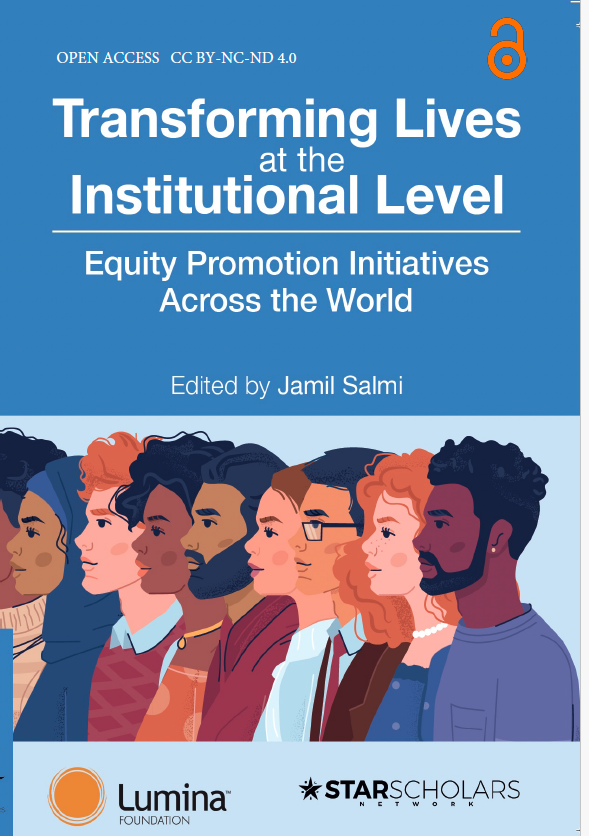
Transforming Lives at the Institutional Level explores innovative higher education initiatives from around the world aimed at enhancing access and success for underrepresented and marginalized groups. Through 31 case studies spanning seven global regions, this volume offers invaluable insights and lessons learned to inform equity promotion policies and practices.
OPEN ACCESS BOOK | CC BY-NC-ND Open access editions of this book can be accessed here . The open access edition of this book is freely available to readers worldwide and may be accessed, downloaded, and shared without charge through the publisher’s website and scholarly discovery platforms.
Praise for this book
Transforming Lives at the Institutional Level: Equity Promotion Initiatives Across the World, edited by Jamil Salmi is a timely and important resource providing insights into innovative policies and practices as well as barriers inhibiting access to and equity in higher education. Professor Ly Tran, Deakin University, Australia *** What a fantastic collection of case studies from around the world! The book is so timely, given the increased focus on the transformative role of higher education, in the light of current geo-political events and increasing precarity of higher education’s mission, influenced too narrowly by the economic benefit perspective. The book is a must read. Aneta Hayes, Keele University, UK **** At a time when too many countries are backsliding from the principles of democracy, including human rights protections for ordinary citizens–which at their very core demand access to educational opportunity–this book could not be more timely. But how do we correct course? This book provides some answers. Bernhard Streitwieser, George Washington University, USA
The event marked the official launch of Transforming Lives: Equity and Access for All Learners in Higher Education . Edited by Dr. Jamil Salmi, the book compiles proven approaches to reach underserved groups with case studies and practical solutions from over 20 countries.
“There is so much talent that goes to waste because millions of young people do not get the same opportunities to access and to be successful,” said editor Dr. Jamil Salmi, a Research Fellow at the Center for International Higher Education (CIHE) at Boston College.
From scholarship initiatives in Ethiopia to refugee support programs in Germany to curriculum decolonization efforts in Scotland and programs to support rural students in China and Australia the book highlights diverse solutions making a difference:
“I hope you’ll be able to glean at least one, if not many, more ideas so we can create a just and equitable post-secondary system,” said Dr. Courtney Brown, Vice President of Impact and Planning at the Lumina Foundation.
Key insights include combining financial and non-monetary policies, capturing intersectionalities, focusing on transitions beyond graduation, collecting better data, and aligning institutional and national approaches. Success factors across initiatives included dedicated leadership, pilot testing, and respecting diverse definitions of success.
“The equity interventions are sustainable when they are embedded in an institutional strategy and benefit from the support of all university stakeholders,” said Dr. Andrée Sursock, Senior Advisor to the European University Association.
“Leadership buy-in is a critical aspect that many people are facing,” added Dr. Renato Pedrosa, Institute of Advanced Studies, University of São Paulo.
Dr. Nidhi S. Sabharwal, Centre for Policy Research in Higher Education, share that “in India, specifically students from the socially disadvantaged groups are offered a relaxation of age and scores at admission…for increasing their access to higher education.”
Dr. Gerry Postiglione, The University of Hong Kong, observed that “the onset of massification in the emerging economies of Eastern Asia…has definitely improved opportunities from students, both men and women, from rural, minority, disabled groups, and particularly low income households.”
Participants included leaders from Australia, Canada, China, Colombia, Egypt, Ghana, India, Indonesia, Kenya, Malaysia, Nepal, Philippines, South Africa, Taiwan, Thailand, United Kingdom, United States.
Publisher : STAR SCHOLARS PRESS
Published : September 4, 2025
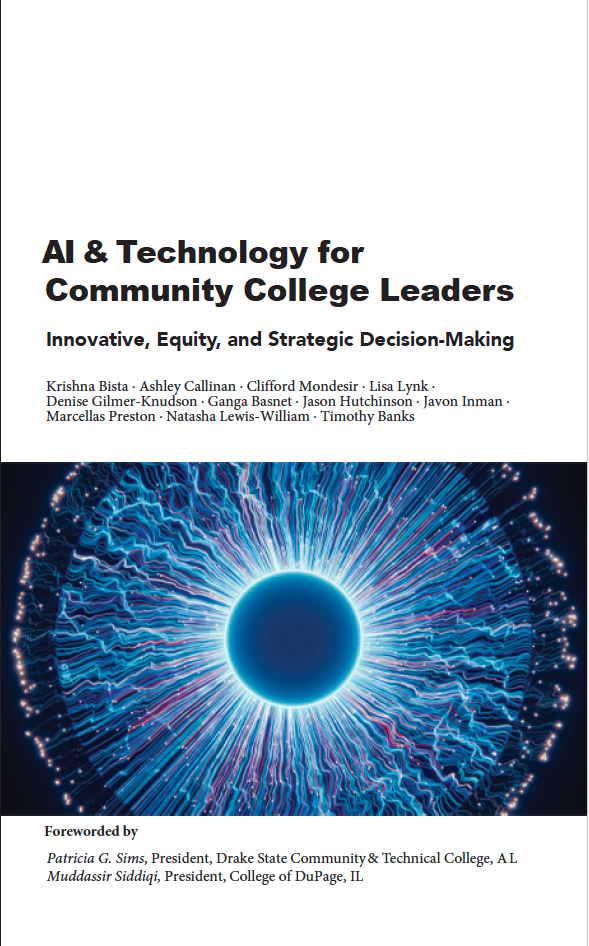
This book offers a practical and research-informed foundation for future community college leaders navigating the evolving digital landscape. Centered on the integration of educational technology into institutional planning, pedagogy, student success, and leadership, the book guides readers in critically evaluating digital tools, designing inclusive solutions, and anticipating emerging trends such as generative AI, cybersecurity, and equity-driven innovation. Blending theory, case studies, and reflective practice, this book equips doctoral students and practitioners with the skills needed to lead transformation in community colleges through ethical and strategic use of technology.
Order your hardcopies
"This book is a vital resource for community college leaders, offering practical strategies to navigate technological change while prioritizing equitable student success. Its concise, actionable insights make it essential for shaping inclusive and innovative educational environments."
— Lance D. Bowen, PhD, Dean, School of Science, Technology & Education, Anne Arundel Community College, Maryland
"A timely and transformative contribution, this book illuminates how community colleges can embrace digital innovation while staying true to their mission of access and equity. It is both practical and visionary, offering strategies that leaders, faculty, and staff can immediately apply to strengthen student success in a rapidly evolving landscape."
— Roshelle Lemon-Howard, EdD, MSN, RN, Assistant Professor & Coordinator, Practical Nursing Certificate Program, Baltimore City Community College
"This book provides an authentic look into the challenges and opportunities within community colleges. It highlights innovative practices that empower faculty and future educators, making it an invaluable guide for those committed to student success and educational equity."
— Melenese Sivells, EdD, Professor of Education, Northampton Community College
"This book powerfully demonstrates how community college leaders can harness AI to drive innovation while keeping equity at the center of decision-making. It is an essential guide for faculty and program directors preparing students—and institutions—for the future of higher education." — Huong Nguyen, EdD, Program Director, Montgomery College
“As a community college administrator, I found this book an invaluable guide that bridges innovation with access, showing how AI can be leveraged to enhance equity, efficiency, and student achievement.”
— Lesley Shotts, EdD, Dean of Institutional Effectiveness, Grants, and Research / Title III Administrator / Accreditation Liaison, Drake State Community & Technical College
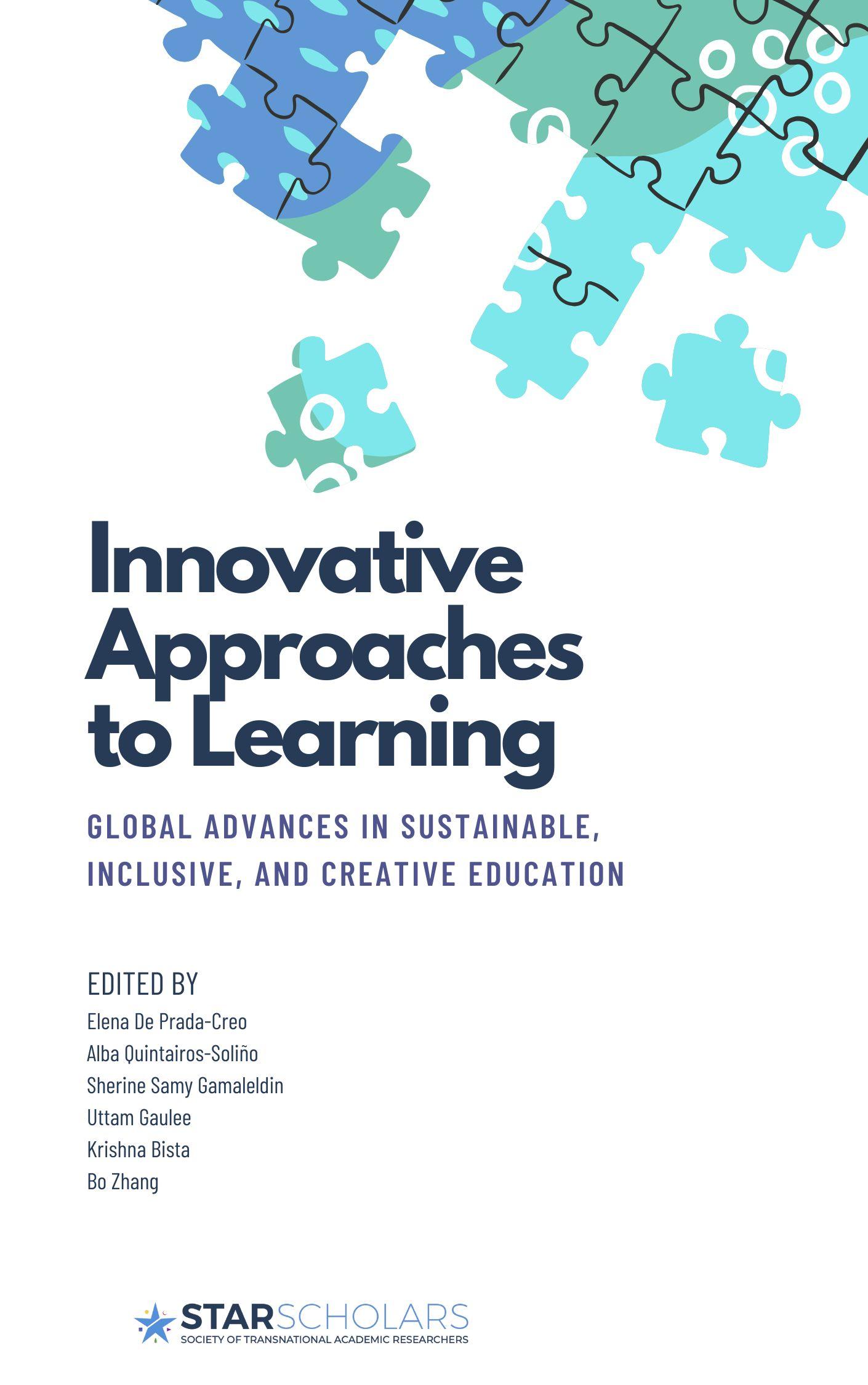
Innovative Approaches to Learning: Global Advances in Sustainable, Inclusive, and Creative Education
Publisher : STAR SCHOLARS PRESS
Published : July 7, 2024
This book explores diverse experiences and insights, revealing a tapestry of intercultural and inclusive learning, professional development, innovative educational strategies, and machine learning. From reflections on intercultural experiences and self-discovery through cinema research to analyzing gender differences among expatriate teachers in the Middle East, education takes many forms. Embedding Sustainable Development Goals into business education emphasizes sustainability in curricula, while multivariate analyses of university management practices highlight institutional responsibilities. Addressing hate speech in education and designing maternal health literacy programs for at-risk mothers demonstrate the impact of targeted educational interventions. It also looks into culturally responsive experiences in career counseling, internationalization of higher education systems, and innovative teaching methods, which offer fresh perspectives on global education. It examines the ethical dimensions of scientific progress, machine learning, creativity, and the influence of university architectural spaces on active learning. These diverse studies invite us to reimagine education as a dynamic, inclusive, and transformative force, fostering peaceful coexistence, entrepreneurial spirit, and a deeper understanding of our shared cultural heritage.
Download eBook Here
How to cite this book:
De Pradra-Creo, E., Quintairos-Solino, A., Gamaledin, S. S., Gaulee, U., Bista, K., & Zhang, B. (Eds) (2024). Innovative approaches to learning: Global advances in sustainable, inclusive, and creative education . Sta r Scholars Press.
Publisher : STAR SCHOLARS PRESS
Published : January 11, 2023
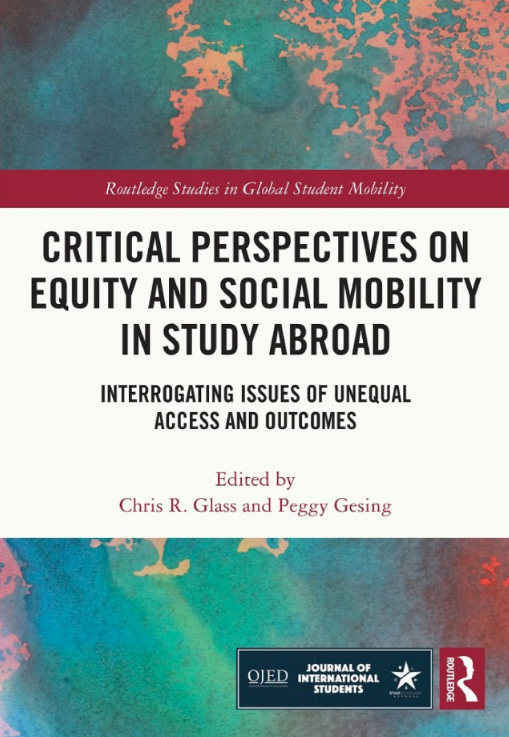
This edited volume brings together the perspectives of a diverse group of international scholars to explore the intersections of study abroad and social mobility. In doing so, it challenges universalist assumptions and power imbalances implicit in study abroad across the Global North and South, and explores the implications of COVID-19 for equity within study abroad programs, policy, and practice going forward.
Offering empirical, theoretical, and conceptual contributions, Critical Perspectives on Equity and Social Mobility in Study Abroad foregrounds critical reflection on the stratification of access to study abroad and examines the varied outcomes of international study in relation to graduates’ entry into domestic and international labor markets. Focusing on the experiences and outcomes of students from varied backgrounds, chapters identify a number of power imbalances relating to student race, ethnicity, religion, local and international policies and politics, and put forward valuable recommendations to ensure greater equity within the field.
Against the backdrop of growing criticism over the power imbalances in international exchange, this text will benefit researchers, academics, and educators with an interest in higher education, international and comparative education, and multicultural education. Those interested in educational policy and the sociology of education more broadly will also benefit from this book.
Paperback | Hardback | eBook
