
Update Search
Categories
Series
Date
Update Search
Categories
Series
Date
1 - 8 of 8 items
Sort By
Innovative Approaches to Learning: Global Advances in Sustainable, Inclusive, and Creative Education
Publisher : STAR SCHOLARS PRESS
Published : July 7, 2024
This book explores diverse experiences and insights, revealing a tapestry of intercultural and inclusive learning, professional development, innovative educational strategies, and machine learning. From reflections on intercultural experiences and self-discovery through cinema research to analyzing gender differences among expatriate teachers in the Middle East, education takes many forms. Embedding Sustainable Development Goals into business education emphasizes sustainability in curricula, while multivariate analyses of university management practices highlight institutional responsibilities. Addressing hate speech in education and designing maternal health literacy programs for at-risk mothers demonstrate the impact of targeted educational interventions. It also looks into culturally responsive experiences in career counseling, internationalization of higher education systems, and innovative teaching methods, which offer fresh perspectives on global education. It examines the ethical dimensions of scientific progress, machine learning, creativity, and the influence of university architectural spaces on active learning. These diverse studies invite us to reimagine education as a dynamic, inclusive, and transformative force, fostering peaceful coexistence, entrepreneurial spirit, and a deeper understanding of our shared cultural heritage.
Download eBook Here
How to cite this book:
De Pradra-Creo, E., Quintairos-Solino, A., Gamaledin, S. S., Gaulee, U., Bista, K., & Zhang, B. (Eds) (2024). Innovative approaches to learning: Global advances in sustainable, inclusive, and creative education . Sta r Scholars Press.
Publisher : STAR SCHOLARS PRESS
Published : May 20, 2024
Entry Points to US Education: Accessing the Next Wave of Growth focuses on the imperative need to modernize international education as a result of the changes in international student mobility. Centered around the ten entry points, the book looks into the distinct preferences and approaches of Generation Z (Gen Z) students, offering data-driven strategies to navigate the ten entry points to U.S. undergraduate degrees. This book also provides actionable strategies and model practices and encourages a national dialogue around student engagement to enhance (in the context of) global mobility.
Editors
Jing Luan is Provost Emeritus of San Mateo Colleges of Silicon Valley (San Mateo County Community College District) and former President of the Association of International Enrollment Management.
Leilt Habte is the Associate Director of the Transfer Center at the University of California Berkeley Center for Educational Partnership.
David L. Di Maria is a Senior International Officer and Associate Vice Provost for international education at the University of Maryland, Baltimore County.
Krishna Bista is a Professor of Higher Education in the Department of Advanced Studies, Leadership and Policy at Morgan State University, Baltimore, Maryland.
OPEN ACCESS BOOK | CC BY-NC-ND Open access editions of this book can be accessed here . The open access edition of this book is freely available to readers worldwide and may be accessed, downloaded, and shared without charge through the publisher’s website and scholarly discovery platforms.
Download Open Access Book (Free) or Order Paperback and Hardcover
Table of Contents
The Ten Entry Points to U.S. Education Jing Luan; Larry Lifson; Andrew H. Chen; George Kacenga
Diverse Entry Points to Degree Studies in the United States Mirka Martel; Julie Baer
Revolutionizing English Language Learning and Assessment Lindsay Mathers Addington; Anna Esaki-Smith
Secondary School Initiatives as Entry Points to Higher Education Enrollment for International Students in the U.S. Darla K. Deardorff; Maureen Manning
University Transfer Admission and Community College Ranking Jing Luan; Leilt Habte
Community Engagement and Branch Campus as an Entry Point to U.S. Higher Education Kelley E. Chung; Shannon N. Davis
Breaking Barriers Jing Luan
University Transfer Admission Success and Dispelling Myths Jing Luan
A True American Story Ralph Lemke
Alumni Management for International Student Recruiting Gretchen Dobson; Ben Waxman
A Copilot Model of University Transfer Admission Leilt Habte
Satisfying International Students' Palates Syed K. Jamal; Ling Zhang
Ethics in U.S. University International Admissions Francis Miller
The 6 Ps of Strategic International Enrollment Management Marty Bennett
Regional Reforms, Cultural Biases, and Acceptance of the Cultural Currency of Others David Di Maria
A Primer on Partnership Options for Institutions Seeking to Build and Nurture Marci Lynn Fradkin; Lisa A. Maroni
Impact of Tuition Fees on International Student Mobility in Sweden Per A. Nilsson; Lars Westin
Design Thinking to Support International Students’ Planning Christina (CJ) Davison; Karen Bauer
Strategic Digital Marketing for International Student Recruitment Ben Waxman; Tianyu Shen
Data Visualization for International Recruitment Pieter Vermeulen
National Conversation on Entry Points Jing Luan; Brian Whalen; Krishna Bista
"Entry Points to US Education highlights examining modern international education's complexities. Editors and authors offer a nuanced and thorough examination of the diverse pathways available to Generation Z students. This work is indispensable for those looking to elevate their strategic approach to international student engagement and education. All contributors expertly combine theoretical insights with practical examples, making this book an incredibly valuable resource for implementing effective recruitment and engagement strategies." Dr. Allan E. Goodman, Chief Executive Officer, Institute of International Education, New York, USA
***
"This is a compelling book for anyone seeking to add depth and detail to their understanding of the admissions systems into US higher education. Delivered in an accessible engaging format, this is an essential lens which all aspiring international recruiters and those working in enrollment management will be keen to look through. My congratulations to Dr. Jing Luan et al for demystifying and democratising this knowledge." Amy Baker, Chief Executive Officer, Professionals in International Education (PIE), London, UK
***
"A book truly for the ages! Both theory and science-based, this momentous volume will guide students to choose new and better ways for college." Lily Guo , CEO of Global Advanced Technical Education (GATE) China, and College University Partnership Board Member
***
"Luan, Habte, Di Maria, and Bista provide a crucial roadmap for navigating the complexities of international student recruitment in Entry Points to US Education: Accessing the Next Wave of Growth . Their comprehensive analysis and innovative strategies are indispensable for institutions aiming to enhance their global reach and effectively engage with Gen Z students." Dr. Ron K. Patterson , President, Chadron State College, Chadron, Nebraska, USA
***
“This work lays out a much-needed plan for facilitating increased international student study at the U.S. undergraduate level. Its consideration of the preferences of Gen Z and Millennial students as well as the larger global context and expertise of current practitioners results in content that is meaningful, authentic, and immediately applicable.” Dr. Sora H. Friedman , Professor of International & Global Education, SIT Graduate Institute, Vermont, USA
***
“Unlock the gateway to America's educational landscape with Entry Points to US Education . A strategic guide illuminating pathways for personal and national advancement.”
Dr. Naziema Jappie, Deputy Dean, Centre for Higher Education Development, University of Cape Town, South Africa
***
" Entry Points to U.S. Education clarifies the intricacies of international student mobility in the U.S., cementing its status as an invaluable reference for both new entrants and seasoned professionals alike in the field of international education.”
Dr. Emily Kirsch , Director of International Relations and Partnerships, University of California, Los Angeles (UCLA) Extension, USA
***
“As the global demand for US education continues to surge, Ten Entry Points to US Education: Accessing the Next Wave of Growth is a collective effort of authors who provide an illuminating roadmap for international students seeking to unlock the boundless opportunities within the United States educational landscape. Through meticulous research and insightful case-studies analysis, the authors provide a comprehensive approach on traditional educational frameworks and emerging technology enhanced learning methods. Each chapter of the book expertly navigates the complexities related to international student access, offering invaluable guidance on how to thrive in this dynamic environment. The book is a must read for students, educators, and policymakers alike.”
Dr. Jeet Joshee, Associate Vice President, International Education and Global Engagement, California State University Long Beach, Immediate Past President, AIEA
***
“This book by Jing Luan and his co-editors strikes at the central need for data-driven decision-making in International Education programming for Generation Z students and all future learners. It presents a cogent rationale for using data in strategic planning and resource allocation but also surfaces an urgent need for innovative and sustainable training for leaders serving international students. It should be on the reading list of international education planners, researchers, administrators, and academic and student services program leaders. The global diversity of our strength and pathway to survival lies in an international educated citizenry, and this book points to a continuing path to success and offers the needed tools and strategies to do so.”
Dr. Edward J. Valeau , Superintendent/ President Emeritus, Hartnell Community College, Salinas, California, USA
***
"Currently, some 1.1 million international students are studying at over 5,300 universities in the USA - creating an amazing "economic industry" for the USA, estimated at some $38.7 billion and employing in excess of 400,000. This has become the 6th largest services industry in the nation. To enable millions of students to access the U.S. experience and foster strong bonds, it is crucial to open up all available entry points. International student education is a major "international industry" that American higher education provides for the current and future generations of the world."
Dr. Patrick van Rooyen, CEO & Managing Partner, GoGlobal Education; Executive Director, World Education Group, USA ***
"Entry Points to US Education: Accessing the Next Wave of Growth provides an updated and dynamic cartography to facilitate international students' access to US universities, offering the different routes—the most direct and the less trodden ones—to reach their objective. Of utmost interest to students, academia, and institutions, this accurate and detailed chart provides clear and meaningful signposts and instructions for inclusive global navigation.
Dr. Elena de Prada Creo, Vice Dean for International Affairs, University of Vigo, Spain
***
"Just as American higher education leaders have examined and developed different entry points into colleges and universities for US-based students, a similar exploration is taking place for international students seeking to study in the US. This book offers much-needed practical strategies and evidence-based guidance for meeting the interests and needs of today’s international students pursuing undergraduate degrees at US institutions."
Dr. Dawn Michele Whitehead, Vice President, Office of Global Citizenship for Campus, Community, and Careers, American Association of Colleges and Universities, Washington, DC
***
" Entry Points to US Education: Accessing the Next Wave of Growth captures the essence of well-developed educational strategies in modern times. With its insightful analysis of cases and strategies, it serves as a source for educators, researchers, and policymakers aiming to navigate the complexities of a liberal yet meritorious educational ecosystem.”
Dr. Bal Chandra Luitel , Professor & Dean, Kathmandu University School of Education, Lalitpur, Nepal
***
"Bravo to the authors of this book. With the changing preferences and global mobility patterns of Generation Z students, there is an urgent need for colleges and universities to understand the multiple entry paths into U.S. undergraduate education. The delineation of opportunities and challenges with each of the 10 points of entry provides practitioners with insight into modernizing international education for their campuses. Case studies included in the book give depth into the successful strategies for implementing the different entry points. Data and research provide a foundation for case-making for reform. Tools are offered for strategic enrollment management and partnerships. This book causes you to think differently about the approach to international students entering into U S baccalaureate degree programs. A must-read for anyone interested in embracing the model and growing international enrollment." Dr. Martha Ellis, President of Mellis LLC and Professor in Residence University of Texas at Austin, USA
***
“Entry Points to U.S. Education is a timely review of how to optimize the enrollment of international students in U.S. higher education. As the leading destination for international students worldwide, with an increasingly competitive landscape amongst nations for these talented students, it is important for the United States, and its educators, to familiarize themselves with the variety of options they have for enrolling international students and, more importantly, why and how they should approach this task. Opportunity can only be had if it is first understood.”
Dr. Karen McBride, Executive Director, Community Colleges for International Development (CCID), Houston, USA
***
"An insightful comprehensive analysis of entry points to US higher education, bringing together research, policy, and practice within an ever-evolving complex international student mobility landscape. A timely and valuable addition to the current global discussion around equality, diversity, and inclusion."
Dr. Joanna Al-Youssef , Assistant Professor, University of Nottingham School of Education, UK
***
"This insightful book provides a vital, data-driven framework for modernizing international education to align with the evolving needs of today's globally mobile students. Centered around ten key entry points to U.S. undergraduate degrees, it offers actionable and innovative strategies to improve student engagement and expand access. This book is an invaluable resource for navigating the next wave of growth in U.S. higher education and makes an important contribution to the national dialogue on international student recruitment. I would recommend any higher education professional involved in attracting international students read this important book."
Charles Cormack, Chairman, Cormack Consultancy Group, UK
*** After many years of engagement with students, parents, institutional leaders, and governmental officials, with a direct focus on global student enrollment and retention, this book demonstrates to me the power of that engagement work. Furthermore, it outlines the future of global attractiveness for U.S. institutions of higher education in today's ever changing perceptual and pragmatic enrollment ecosystem. Understanding the attraction and retention process is clearly and powerfully detailed throughout this work.
Dr. James M. Smith , President, Eastern Michigan University, Ypsilanti, USA
***
"I am thrilled to have the opportunity to read this book before its publication and grateful to the authors for their generous sharing! A few authors of this book are good friends of mine, with years of rich experience and practical knowledge in education in the United States. The content of this book is a culmination of their years of practical experience, featuring both theory and hands-on advice. It truly guides readers on how to navigate higher education in the United States, especially for international students and those looking to transfer from community colleges. They provide highly effective and actionable methods and entry points, making it an essential textbook for parents, teachers, and education professionals!" Dr. Chunli Zhao, Professor, Stem Cell Biology, Stanford University, Palo Alto, USA
***
“This work is truly pioneering, as it clarifies all potential entry points to U.S. education, particularly emphasizing the significance for community colleges. As a community college trustee, I deeply resonate with the authors’ vision and strategic approach. I urge everyone to read the book, embrace its concepts, and advocate for these entry points.” Gilbert Wong , Foothill-De Anza Community College Trustee, Association of Community College Trustee At Large and ACCT Student Trustee Liaison, Former Mayor and Councilmember, City of Cupertino, California, USA
*** “This insightful publication by Jing Luan and colleagues is a game changer. The focus on actionable strategies and model practices provides a blueprint for enhancing student engagement and success in a globally mobile world.”
Dwiraj Sharma, CEO, Alfa Beta Group, Kathmandu, Nepal
*** “I highly recommend this book to those seeking to study in the U.S. and to those advising foreign students. Numerous students have triumphantly completed their undergraduate education through UTA (university transfer admission). With insights from this book, I am now even more confident in my efforts to steer students towards transfer programs at community colleges.”
Christine Ma, International Outreach Director, American Academy of English, San Francisco, USA
***
"This is a comprehensive and systematic introduction to the entry points for undergraduate studies in the U.S., offering incredible insights for education professionals, students, and parents worldwide. The compelling case studies make a persuasive and intuitive argument, steering us away from exclusively relying on applying for U.S. universities while in high school, which seems rather limited in light of the information from this illuminating compendium”.
Harry Gong, CEO, HYP Global Education, Singapore and Shanghai
***
"Studying in the U.S. is a dream of every child. Written with clarity and expertise, this book provides a roadmap to "Unlocking America" and demystifies the key requirements, procedures, and strategies for obtaining entry into the United States. A must-read for anyone seeking to understand the intricate pathways to the United States and embark on a journey leading to a brighter future in the land of endless opportunities." Dr. Pankaj Mittal, Secretary General of the Association of Indian Universities and Former Vice Chancellor of Bhagat Phool Singh Women's University, India
***
“An essential read for anyone invested in the future of international education in U.S. higher education institutions. As traditional models of access become overwhelmed, the authors highlight the importance of establishing alternative entry points, particularly through community colleges, for the next generation of international students. Valuable insights innovators at the forefront of the global student mobility conversation.”
Dr. Aaron McVean, Vice Chancellor of Educational Services and Planning, San Mateo County Community College District (SMCCCD), San Mateo Colleges of Silicon Valley (SMCSV), USA
***
"For students worldwide, studying in the US is both a dream and a path to future success. This book shows how that dream can be realized, and the many doors students can open to achieve their goals." Anna Esaki-Smith , author of Make College Your Superpower: It's Not Where You Go, It's What You Know, and Forbes contributor
*** This book emphasizes the importance of international student mobility and advocates for increased access to U.S. bachelor's programs through multiple entry points. The publication is committed to advancing ethical recruitment practices and promotes a more inclusive and interconnected approach to the mobility of international students. I find the book's recommendations to enhance diverse educational entry points and improve connectivity among them particularly compelling. These guidelines challenge the existing norms and offer a structured framework to capitalize on the unique strengths of U.S. higher education, including its breadth, access, quality, and flexibility. The proactive and intentional strategies discussed in this book will catalyze significant advancements in how institutions and communities across the U.S. approach international student enrollment. I recommend this book to all professionals and policymakers involved in higher education and international student recruitment. It is a vital resource that promises to transform perspectives and encourage significant strides toward a more inclusive and dynamic educational framework.
Dr. Jamillah Moore, Vice President for Student Services and Enrollment Management, San Francisco State University, USA
***
As a leader of one of largest professional associations for college admissions, I find this book invaluable for underscoring the critical work we do. It elucidates key entry points and data driven case studies, enabling us to enhance our engagement and strategic outreach efforts on an international scale. As a practitioner in college admissions at a community college, I particularly appreciate how the book highlights the essential role of two-year, vocational, and short-term programs in the global higher education landscape. It emphasizes the importance of including these options in discussions about helping students find the right higher education and post-secondary fit.” Kristoffer Toribio, President for International Association for College Admission Counseling and Manager, International Admissions and Recruitment for Orange Coast College, USA
***
First, the field needs these definitions of the entry points. The authors delivered them with clarity. The book is well balanced with a plan of action.It will greatly assist industry entities worldwide to grasp the nuances of the American Education System. Sushil Sukhwani, Founder, Edwise International, Nepal
Series : Volume 2
Publisher : STAR SCHOLARS PRESS
Published : December 15, 2025
First in the Family is a compelling anthology that amplifies the voices of first-generation college students and scholars from around the world. This volume captures deeply personal narratives shaped by resilience, identity, migration, and mentorship. Across diverse contexts—from remote villages to prestigious global universities—contributors share their experiences navigating systemic barriers and cultural expectations to achieve academic success. These transformative stories not only honor the legacy of first-generation learners but also serve as a powerful call for inclusive practices that empower future generations.
OPEN ACCESS BOOK | CC BY-NC-ND Open access editions of this book can be accessed here . The open access edition of this book is freely available to readers worldwide and may be accessed, downloaded, and shared without charge through the publisher’s website and scholarly discovery platforms.
Buy on Amazon | Print copies (other vendors) | Open Access Book (Free)
Editors
Krishna Bista is Professor of Higher Education at Morgan State University, Maryland. His scholarship focuses on global student mobility, international education policy, and equity in higher education. A prolific author and editor, Dr. Bista also serves as Senior Executive Vice President of the STAR Scholars Network. He earned his doctorate in Educational Leadership/Higher Education from Arkansas State University.
Courtney Brown is Vice President of Impact and Planning at Lumina Foundation, where she leads strategic planning, evaluation, and international engagement initiatives to expand access to learning beyond high school. With a background in education policy and performance measurement, she has published widely and is a frequent speaker on postsecondary success, data-driven strategies, and equity in higher education. Dr. Brown holds a Ph.D. from the University of Virginia.
Uttam Gaulee is Professor of Community College Leadership at Morgan State University, Maryland and President of the STAR Scholars Network. Dr. Gaulee's research explores community colleges, international higher education, and global development. He earned his Ph.D. in Higher Education Administration and Policy from the University of Florida. His research focuses on community colleges, international education, diaspora studies, and global development.
Project Editors
Professor Mirka Koro, Arizona State University Professor Meghan MacNamara, Morgan State University Professor Eugene Hammond, Stony Brook University Professor Stewart E. Sutin, University of Pittsburgh
Praise for this book This book reminds us that transformation in higher education often begins in places we least expect, and with people too often overlooked. George F. Kacenga, PhD, Vice President of Enrollment Management, William Paterson University of New Jersey, USA
As the first in my family to earn a Ph.D. through my own hard work and determination, I can attest that this volume serves as a compelling blueprint for institutions committed to empowering individuals who are not only the first in their families—but the first to lead with courage and conviction. Jing Luán, PhD, Governing Board Member, MISK Schools, Provost Emeritus An inspiring narrative emphasizing the need for democratizing access to higher education across cultures, while advocating for the need for more inclusive academic spaces. Pankaj Mittal, PhD, Secretary General of the Association of Indian Universities and Former Vice Chancellor of Bhagat Phool Singh Women's University, India
A priceless compass for educators, First in the Family charts the paths of their students' transformative journeys of discovery and perseverance, illuminating the way for them to overcome obstacles, transcend borders, and realize their dreams. Elena de Prada Creo, PhD, Vice Dean for International Affairs, Facultad de Relaciones Internacionales, Campus Universitario, Spain.
These powerful narratives beautifully capture how intercultural growth and academic resilience converge in the lives of first-generation learners, challenging racism, gender bias, and structural inequality. A moving testament to transformation, resistance, and intergenerational commitment. Sarah Carrica-Ochoa, Profesora Titular, Facultad de Educación y Psicología, Universidad de Naarra, Spain
A moving tribute to the grit and grace of first-generation scholars—this anthology is both an inspiration and a blueprint for a more inclusive academy. Pankhuri Aggarwal, PhD,Assistant Professor, Department of Psychology, University of Cincinnati, USA
A powerful collection of stories from diverse first-generation scholars, highlighting their struggles, resilience, and the vital role of support systems in achieving academic and personal success. Siu-Man "Raymond" Ting, PhD, Professor, Director of Graduate Programs, NC State University, USA As a rural education advocate, this book is a valuable resource for academic praxis and serves as a compass to guide young scholars in promoting social justice. Arlyne C Marasigan, PhD, Professor, College of Advanced Studies, Philippine Normal University, Manila, Philippines This volume situates the voices of first-generation university graduates in their own unique personal contexts and provides insight into the breadth of pathways that these graduates take to earn their degrees. As a first-gen graduate myself, the stories resonated, and will for others who are seeking guidance on how to be successful in this important life journey. Shannon N. Davis, PhD, Associate Dean for Faculty and Academic Affairs, George Mason University, Korea
Series : Volume 1
Publisher : STAR SCHOLARS PRESS
Published : August 29, 2025
First in the Family is a compelling anthology that amplifies the voices of first-generation college students and scholars from around the world. This volume captures deeply personal narratives shaped by resilience, identity, migration, and mentorship. Across diverse contexts—from remote villages to prestigious global universities—contributors share their experiences navigating systemic barriers and cultural expectations to achieve academic success. These transformative stories not only honor the legacy of first-generation learners but also serve as a powerful call for inclusive practices that empower future generations.
OPEN ACCESS BOOK | CC BY-NC-ND Open access editions of this book can be accessed here . The open access edition of this book is freely available to readers worldwide and may be accessed, downloaded, and shared without charge through the publisher’s website and scholarly discovery platforms.
Available as Paperback | Hardcover | Open-Access
Praise for this book This book reminds us that transformation in higher education often begins in places we least expect, and with people too often overlooked. George F. Kacenga, PhD, Vice President of Enrollment Management, William Paterson University of New Jersey, USA
As the first in my family to earn a Ph.D. through my own hard work and determination, I can attest that this volume serves as a compelling blueprint for institutions committed to empowering individuals who are not only the first in their families—but the first to lead with courage and conviction. Jing Luán, PhD, Governing Board Member, MISK Schools, Provost Emeritus An inspiring narrative emphasizing the need for democratizing access to higher education across cultures, while advocating for the need for more inclusive academic spaces. Pankaj Mittal, PhD, Secretary General of the Association of Indian Universities and Former Vice Chancellor of Bhagat Phool Singh Women's University, India
A priceless compass for educators, First in the Family charts the paths of their students' transformative journeys of discovery and perseverance, illuminating the way for them to overcome obstacles, transcend borders, and realize their dreams. Elena de Prada Creo, PhD, Vice Dean for International Affairs, Facultad de Relaciones Internacionales, Campus Universitario, Spain.
These powerful narratives beautifully capture how intercultural growth and academic resilience converge in the lives of first-generation learners, challenging racism, gender bias, and structural inequality. A moving testament to transformation, resistance, and intergenerational commitment. Sarah Carrica-Ochoa, Profesora Titular, Facultad de Educación y Psicología, Universidad de Naarra, Spain
A moving tribute to the grit and grace of first-generation scholars—this anthology is both an inspiration and a blueprint for a more inclusive academy. Pankhuri Aggarwal, PhD,Assistant Professor, Department of Psychology, University of Cincinnati, USA
A powerful collection of stories from diverse first-generation scholars, highlighting their struggles, resilience, and the vital role of support systems in achieving academic and personal success. Siu-Man "Raymond" Ting, PhD, Professor, Director of Graduate Programs, NC State University, USA As a rural education advocate, this book is a valuable resource for academic praxis and serves as a compass to guide young scholars in promoting social justice. Arlyne C Marasigan, PhD, Professor, College of Advanced Studies, Philippine Normal University, Manila, Philippines This volume situates the voices of first-generation university graduates in their own unique personal contexts and provides insight into the breadth of pathways that these graduates take to earn their degrees. As a first-gen graduate myself, the stories resonated, and will for others who are seeking guidance on how to be successful in this important life journey. Shannon N. Davis, PhD, Associate Dean for Faculty and Academic Affairs, George Mason University, Korea
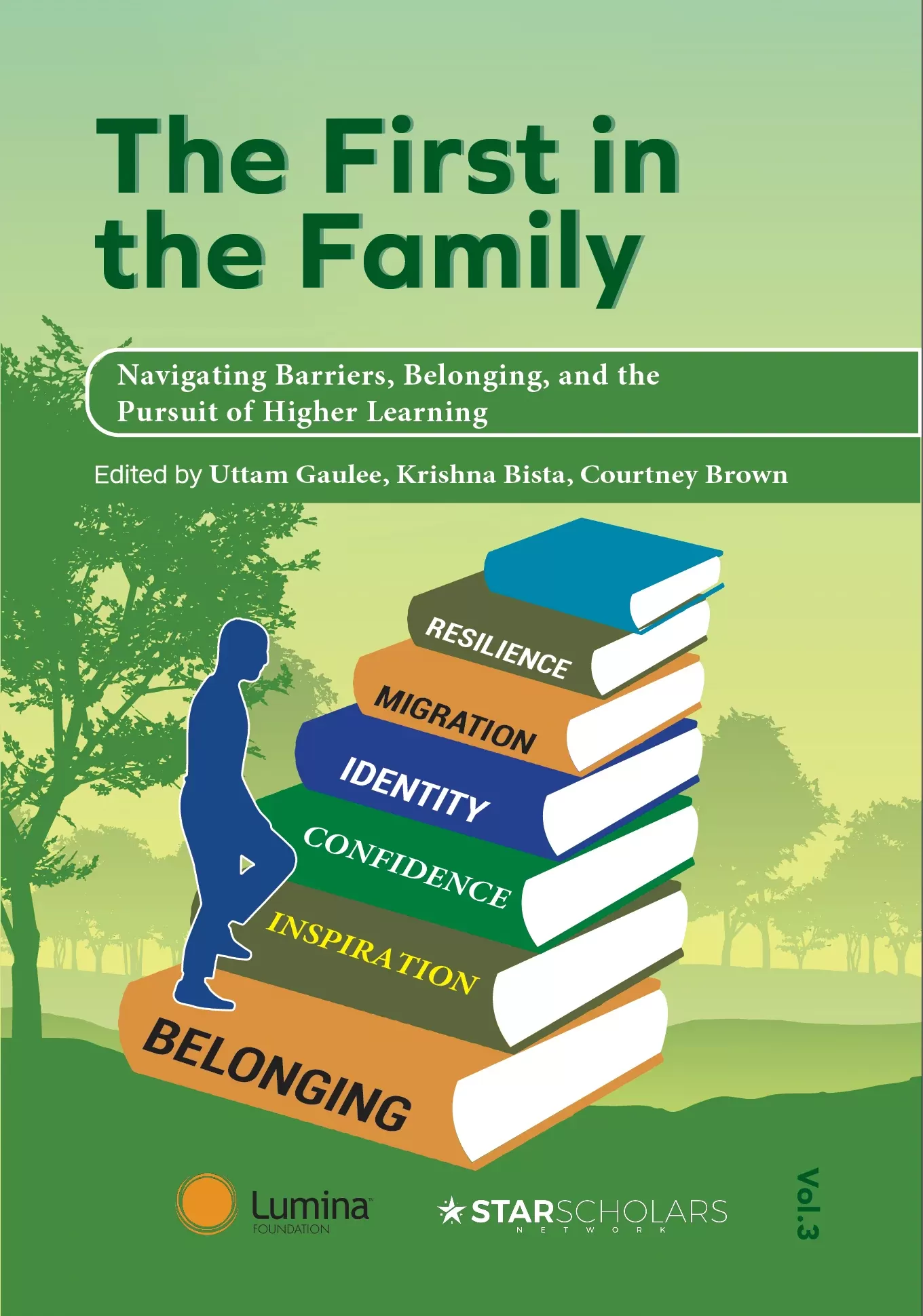
Series : Volume 3
Publisher : STAR SCHOLARS PRESS
Published : January 2, 2026
First in the Famil y brings together powerful narratives of first-generation students who have crossed borders—geographical, cultural, and social—to pursue higher education. Spanning continents and diverse experiences, the chapters explore themes of identity, gender, resilience, and belonging. From navigating privilege and overcoming shame to embracing agency and transforming lives through education, these stories reveal both the struggles and triumphs of being “first.” Each chapter offers a testament to courage, perseverance, and the transformative power of learning to uplift families and communities. Inspiring and deeply human, this volume serves as a vital resource for students, educators, and policymakers committed to expanding access and equity in education worldwide.
Editors
Uttam Gaulee is Professor of Community College Leadership at Morgan State University, Maryland and President of the STAR Scholars Network. Dr. Gaulee's research explores community colleges, international higher education, and global development. He earned his Ph.D. in Higher Education Administration and Policy from the University of Florida. His research focuses on community colleges, international education, diaspora studies, and global development.
Krishna Bista is Professor of Higher Education at Morgan State University, Maryland. His scholarship focuses on global student mobility, international education policy, and equity in higher education. A prolific author and editor, Dr. Bista also serves as Senior Executive Vice President of the STAR Scholars Network. He earned his doctorate in Educational Leadership/Higher Education from Arkansas State University.
Courtney Brown is Vice President of Impact and Planning at Lumina Foundation, where she leads strategic planning, evaluation, and international engagement initiatives to expand access to learning beyond high school. With a background in education policy and performance measurement, she has published widely and is a frequent speaker on postsecondary success, data-driven strategies, and equity in higher education. Dr. Brown holds a Ph.D. from the University of Virginia.
Project Editors
Professor Mirka Koro, Arizona State University Professor Meghan MacNamara, Morgan State University Professor Eugene Hammond, Stony Brook University Professor Stewart E. Sutin, University of Pittsburgh
Praise for this book This book reminds us that transformation in higher education often begins in places we least expect, and with people too often overlooked. George F. Kacenga, PhD, Vice President of Enrollment Management, William Paterson University of New Jersey, USA
As the first in my family to earn a Ph.D. through my own hard work and determination, I can attest that this volume serves as a compelling blueprint for institutions committed to empowering individuals who are not only the first in their families—but the first to lead with courage and conviction. Jing Luán, PhD, Governing Board Member, MISK Schools, Provost Emeritus An inspiring narrative emphasizing the need for democratizing access to higher education across cultures, while advocating for the need for more inclusive academic spaces. Pankaj Mittal, PhD, Secretary General of the Association of Indian Universities and Former Vice Chancellor of Bhagat Phool Singh Women's University, India
A priceless compass for educators, First in the Family charts the paths of their students' transformative journeys of discovery and perseverance, illuminating the way for them to overcome obstacles, transcend borders, and realize their dreams. Elena de Prada Creo, PhD, Vice Dean for International Affairs, Facultad de Relaciones Internacionales, Campus Universitario, Spain.
These powerful narratives beautifully capture how intercultural growth and academic resilience converge in the lives of first-generation learners, challenging racism, gender bias, and structural inequality. A moving testament to transformation, resistance, and intergenerational commitment. Sarah Carrica-Ochoa, Profesora Titular, Facultad de Educación y Psicología, Universidad de Naarra, Spain
A moving tribute to the grit and grace of first-generation scholars—this anthology is both an inspiration and a blueprint for a more inclusive academy. Pankhuri Aggarwal, PhD,Assistant Professor, Department of Psychology, University of Cincinnati, USA
A powerful collection of stories from diverse first-generation scholars, highlighting their struggles, resilience, and the vital role of support systems in achieving academic and personal success. Siu-Man "Raymond" Ting, PhD, Professor, Director of Graduate Programs, NC State University, USA As a rural education advocate, this book is a valuable resource for academic praxis and serves as a compass to guide young scholars in promoting social justice. Arlyne C Marasigan, PhD, Professor, College of Advanced Studies, Philippine Normal University, Manila, Philippines This volume situates the voices of first-generation university graduates in their own unique personal contexts and provides insight into the breadth of pathways that these graduates take to earn their degrees. As a first-gen graduate myself, the stories resonated, and will for others who are seeking guidance on how to be successful in this important life journey. Shannon N. Davis, PhD, Associate Dean for Faculty and Academic Affairs, George Mason University, Korea

Publisher : STAR SCHOLARS PRESS
Published : September 1, 2021
Global Higher Education During COVID-19: Policy, Society, and Technology explores the impacts of the novel coronavirus (COVID-19) for global mobility in the field of international higher education. Specifically, this book responds to the growing need for new insights and perspectives to improve higher education policy and practice in the era of COVID-19. The sub-theme that runs through this book concerns the changing roles and responsibilities of international education leaders and the demand to rethink comprehensive internationalization post-2020. Topics in this book include international students' experience, study abroad, branch campus, mental health, enrollment, and graduate education.
Editors: Joshua S. McKeown, Krishna Bista, and Roy Y. Chan
Order your copy: Paperback | eBook
Reviews
Dr. KS Adeyemo, Senior Lecturer, University of Pretoria, South Africa
Global Higher Education During COVID-19: Policy, Society, and Technology is a highly recommended resource for higher education institution policymakers and educators around the globe. Not only does this book provide invaluable insights from higher education institution policymakers, educators, and students during the COVID-19 pandemic, but it also offers useful suggestions on dealing with possible challenges and seeking opportunities in future higher education .
Dr. Misty So-Sum Wai-Cook, Centre for English Language Studies, National University of Singapore
It’s a timely book reporting the most recent responses of international higher education across the world during the Covid-19 pandemic. Besides providing the theoretical contributions, the book also offers practical implications for stakeholders, including policymakers, education managers and practitioners, international students, and parents.
Dr. Hiep Pham, Director, Center for Research and Practice on Education, Phu Xuan University, Vietnam
Global Higher Education During COVID-19: Policy, Society, and Technology is timely and relevant providing a critically engaged reflective account of geographically diverse higher education institutions’ response and practice during the COVID-19 pandemic. This book illuminates some of the current impediments to higher education internationalization within the context of COVID-19 and provides insights into shared learning experiences that address new challenges to internationalization imposed by the pandemic. A must-read for international higher education specialists, practitioners, scholars, and researchers.
Dr. Tasmeera Singh, Advisor, International Office, University of KwaZulu-Natal, South Africa
A worldwide phenomenon: Strategies and inspiration to address the challenges and opportunities for the new normal in the field of global higher education. I cannot recommend it highly enough.
Dr. Daisy Kee Mui Hung, Associate Professor, Universiti Sains Malaysia, Malaysia
The movement of people across borders furthered the spread of Covid-19. This inevitably impacted international higher education, which although not reducible to student mobility is its primary form. Global Higher Education during COVID-19: Policy, Society, and Technology is, therefore, a timely edited collection that begins to unpack the multifaceted impact the pandemic has had on higher education worldwide. It adds to the growing conversation on reimagining higher education. The collection will be valuable to current and future scholars of higher education, offering an important snapshot of policy and practice during the pandemic.
Dr. Will Brehm, Lecturer of Education and International Development, UCL Institute of Education, UK
With the COVID-19 crisis having upended higher education around the world, this timely book provides a deep and much-needed analysis of the roles and responsibilities of universities going forward. It sheds light not only on the shared challenges countries have faced, but also reveals how the impact of the pandemic has varied in important ways across countries.
Dr. Rajika Bhandari, Author/Advisor, STAR Scholar Network, USA
This book presents a comprehensive and rigorous worldwide account of Covid-19 impact, challenges and new opportunities. It stands out as a ground-breaking valuable companion for all those involved in the future of internationalization in higher education.
Dr. Elena de Prada Creo, Vice Dean for International Affairs, Facultad de CC. Empresariales y Turismo, Spain
Hard copies are available able on Amazon.com
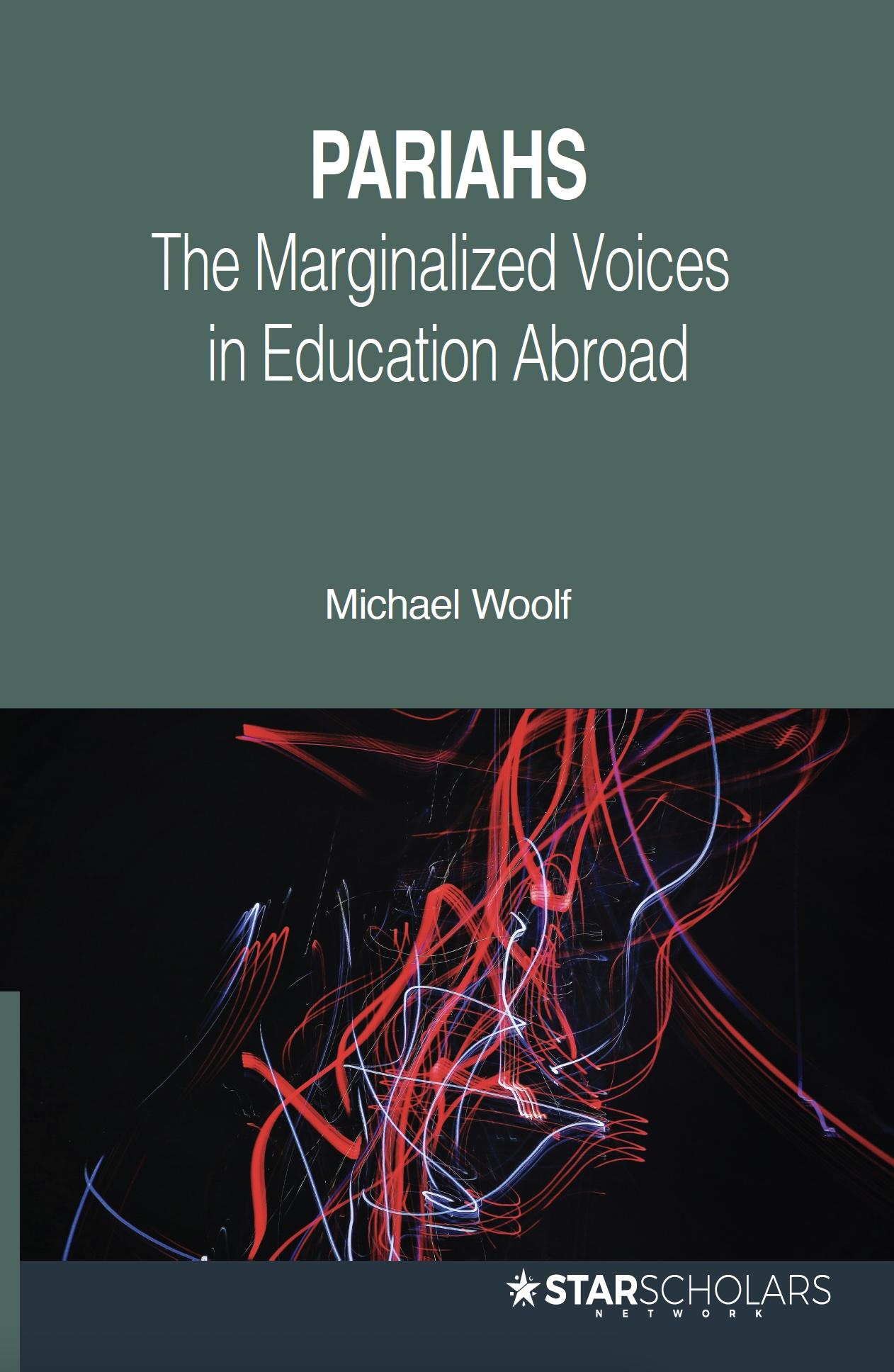
Publisher : STAR SCHOLARS PRESS
Published : November 21, 2024
Few enjoy the privilege of creating their own identities. Jews, Blacks, Roma, Hillbillies, Witches, and a myriad of others, demonized, erased or eradicated, demonstrate that identities are not necessarily a matter of individual choice. These ostensibly diverse figures do not control their own narratives and are subject to various forms of dehumanization and marginalization. They are defined by stereotypes that generate hate, fear, ridicule or romantic mythologies, sometimes, paradoxically, simultaneously. The author’s research integrates perspectives drawn from myth, literature, religious belief, histories, political ideologies, popular culture, and other sources, from the distant past to the disturbing present, to reveal the pervasive power of bigotry.
This book exposes those dynamics that have created a spectrum of hate from prejudice, through discrimination, towards persecution, exclusion and, in its darkest manifestations, ethnic cleansing, erasure, genocide. These figures, and the spaces they inhabit, are profoundly connected. Their identities are formed by the interaction, or collision, between who they believe they are and how they are imagined to be through the hostility of others. They are invented as pariahs, outsiders who threaten or subvert the imagined cohesion of dominant communities. New imperatives emerge for international higher education. Conventional, simplistic concepts of identity or “culture” distort the unfamiliar environments students will encounter throughout their lives. The insights offered here indicate that a key task is to help students unlearn assumptions, to discard the baggage with which they travel across borders, real and metaphorical. The author deconstructs orthodoxies and demands that attention be paid to those silenced, ignored, dehumanized, victims of cruel myopia and immoral deafness.
Author:
Michael Woolf’s career has been spent substantially in international contexts. Prior to working in education abroad, he completed a PhD in American Studies, taught literature at universities in the UK and Italy, and worked for BBC radio. He has held leadership roles in international education for many years and has published and edited extensively. He received the Peter A. Wollitzer Award (2020) from the Forum on Education Abroad. Pariahs draws directly upon his identity as a Jew born in London in 1947. The Holocaust was rarely discussed but fear of the hostility of others was palpable in landscapes of anxiety.
How to cite this book:
Woolf, M. (2024). PARIAHS: Marginalized voices in education abroad . STAR SCHOLARS PRESS.
______________________________________
PRAISE for this book
"In this time of extraordinary ethnic and racial hatred across the globe, PARIAHS: Marginalized Voices in Education Abroad provides readers with a truly global context for recognizing the potential and the power of intercultural understanding, respect, and compassion. In this increasingly globalizing century, one must first recognize and then overcome the biases that are as second-nature to us as the air we breathe. PARIAHS helps us take this first step; the next step is up to the reader." — Benjamin Rifkin, Provost and Senior Vice President for Academic Affairs, Fairleigh Dickinson University, USA
" In PARIAHS , Woolf presents a profound study of identity and cultural exchange that resonates with challenges we see in Nepal’s evolving international education. His insights on marginalized communities speak to the global need for equity, offering valuable perspectives that can inspire Nepalese educators and policymakers to foster greater inclusivity and empathy in both local and international educational contexts." — Tirth Raj Khaniya, Professor and Former Vice-Chancellor, Tribhuvan University, Nepal
"PARIAHS: Marginalized Voices in Education Abroad is a transformative exploration of the layered experiences of marginalized identities within global education. Woolf’s insightful analysis challenges educators to foster empathy and inclusivity, making this essential reading for those committed to a more equitable landscape in international education." — Meghna Mehndroo, Principal, University Institute of Teachers Training and Research, Chandigarh University, India
"PARIAHS is a must-read that illuminates the lived experiences of marginalized communities in international education, urging readers to challenge and expand their understanding of identity and cultural exchange. Woolf’s work is both timely and transformative, offering a critical lens that encourages educators and students alike to engage with the complexities of diversity in global learning environments." — Dr. ‘Dimeji R. Togunde, Vice Provost for Global Education & Professor of International Studies, Spelman College, USA
“ PARIAHS is first and foremost a book about identities and how these are constructed. It focuses on those identities that are imposed on a group of individuals and lead to their marginalization. It is a wonderful book which reminds us of the complexity of the world and warns all of us working in international education to avoid falling into the trap of oversimplification and generalization about the concepts of culture and intercultural learning in study abroad” — Giorgio Marinoni, Manager, HE and Internationalization, International Association of Universities, France
"Michael Woolf in Pariahs challenges us to question the conventional notions of identity and culture in international higher education which are often simplistic and fail to reflect the diverse and complex realities that students encounter. The book aims to deconstruct these orthodoxies, encouraging readers to unlearn assumptions and challenge stereotypes." — Amany Saleh, Ph. D., Professor of Curriculum and Instruction, Arkansas State University, USA
"Woolf's PARIAHS is a thought-provoking exploration of marginalized voices in international education. By examining complex identities and the impact of cultural exchange, the book challenges us to reimagine the role of education in fostering empathy and inclusivity. Through insightful analysis and compelling case studies, Woolf sheds light on the often-overlooked experiences of those who navigate the intersections of race, ethnicity, and class in global learning environments." — Marina Falasca, Professor, I.E.S. en Lenguas Vivas "Juan Ramón Fernández", Buenos Aires, Argentina
"PARIAHS: Marginalized Voices in Education Abroad is a compelling exploration of identity, marginalization, and cultural awareness. It examines the harmful impact of stereotypes while challenging readers to question and unlearn deeply ingrained biases." — Andrea Lee, Ed.D., Assistant Professor, Austin Peay State University, USA
"A wonderful book about identity from one of the most important voices in education abroad. Compassionate, wise, insightful and a must-read." — Michael Punter, Global Director of Theatre Education, CEA CAPA London, UK
In Pariahs, Michael Woolf offers a wide-ranging, nuanced, and timely discussion of how stereotypes have been created and used, historically as well as recently, to represent various marginalized groups globally. — Ted Olson, Professor, Department of Appalachian Studies, East Tennessee State University, USA
"Pariahs" is a much-needed multidimensional road map showing scholars and students a new path towards self-discovery and identity, one that requires leaving our luggage behind and exploring the roads with an empathic and inclusive mindset." — Elena de Prada Creo, Vice Dean for International Affairs, University of Vigo, Spain
"A rich, in-depth review of many key cultural stereotypes we hold that often prevent us from truly listening and learning while on study-abroad programs." — Gene Hammond, Professor Emeritus of Rhetoric, Stony Brook University, USA
This book profusely and insightfully interrogates the assumptions we hold about others and the ones they hold about us, especially when viewed from the reality of education abroad and international education and cultural exchange. Written in fine flowing prose, well-researched, and garnished with rich knowledge of history, politics, race, Christian mythologies, and critical events that shaped the interactions between “The West and the Rest of Us,” Michael Woolf paints a portrait of what it means to live in a divided world as the “other,” existing at the mercy of the mainstream, and its deeper implications to study abroad and cultural exchanges. — Emmanuel E. Akanwa, Frederick Douglass High School, Upper Marlboro, Maryland, USA
"PARIAHS is an essential contribution to international education, providing readers with a nuanced understanding of the societal forces that shape marginalized voices. His work is both enlightening and necessary for anyone committed to diversity in global academia." — Uttam Gaulee, President, STAR Scholars Network, USA
"As an international graduate student, I resonate with the insights and stories thoughtfully told by Michael Woolf. PARIAHS provides readers with diverse viewpoints on the transformational experience of being in a foreign land." — John Jefferson Besa, MD, Harvard University, USA
_________________________________________
Hardcopies and ebooks are available in the following countries through Amazon, Barnes & Noble , and other vendors.
US | UK | DE | FR | ES | IT | NL | PL | SE | JP | CA | AU

Publisher : STAR SCHOLARS PRESS
Published : March 22, 2024
This book of abstracts based on the 2023 STAR Global Conference on the theme of "Transformative Education for an Interconnected and Equitable World" is a seminal volume featuring an array of scholarly presentations that dissect the evolving landscape of global education. The collection traverses a multitude of perspectives, from the intricacies of fostering digital competencies and tackling the ethics of scientific research to implementing internationalization with a spirit of reciprocity and cultivating transformational creativity in educational practices. It spotlights technological advancements through systematic reviews of gamified learning, virtual intercultural dialogues, and the arts' role in nurturing critical citizenship. It also offers a forward-looking approach to online learning and linguistically-driven AI innovations in India.
