
Update Search
Categories
Series
Date
Update Search
Categories
Series
Date
1 - 5 of 5 items
Sort By
Publisher : STAR SCHOLARS PRESS
Published : January 30, 2026
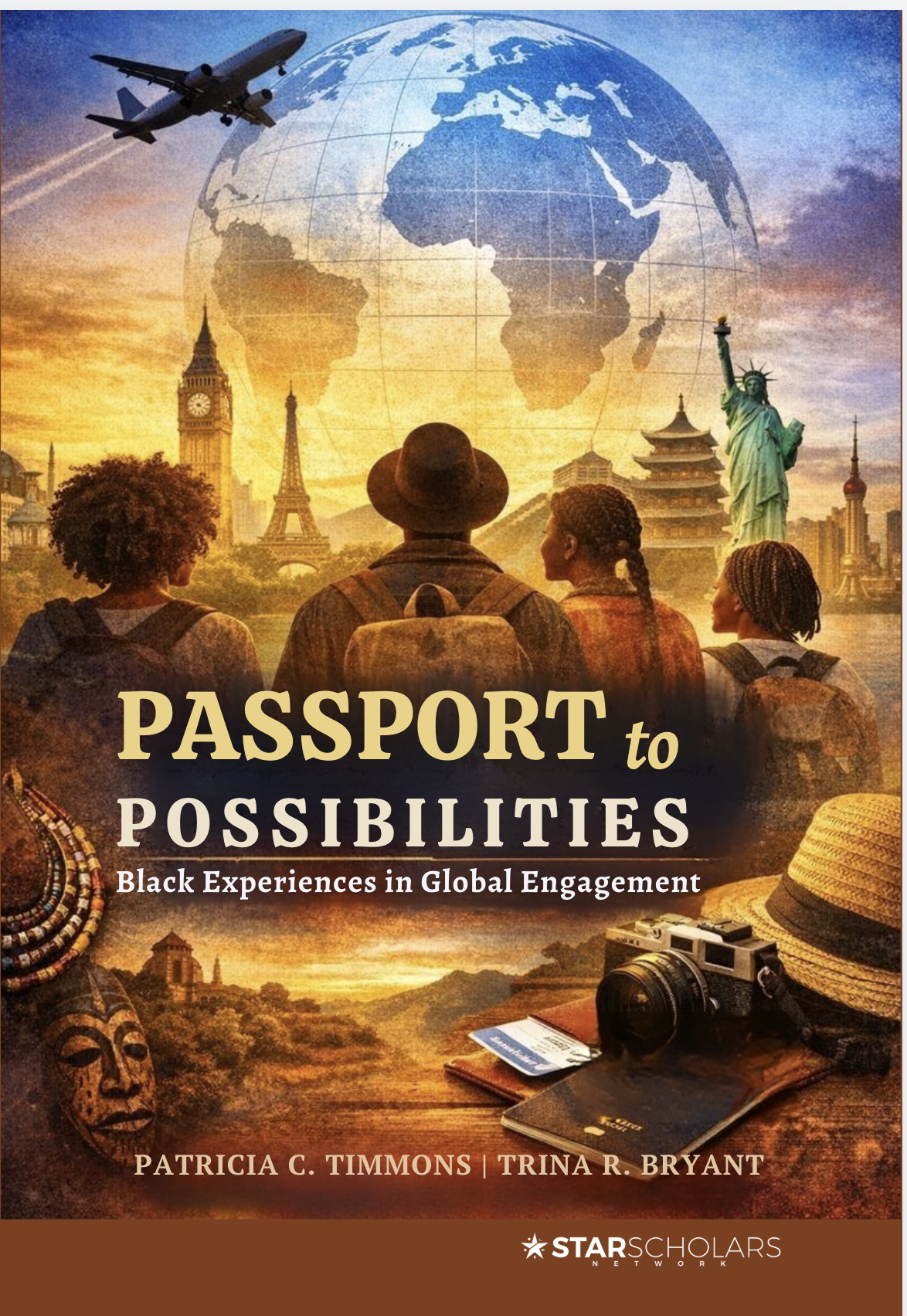
Passport to Possibilities: Black Experiences in Global Engagement brings together reflections from thirteen Black contributors across the globe, including Black students, faculty, staff, educators, and professionals based in the United States, Canada, Germany, and South Africa, offering powerful insights into what it means to be Black and abroad. Through research, storytelling, and critical reflection, the book centers Black experiences in global education, challenging long-standing assumptions about who participates in international learning and why it matters. Each chapter presents a deeply personal narrative that explores the intersections of race, identity, belonging, access, and mobility within global contexts. The contributors reveal both the challenges and transformative potential of international engagement, framing global learning as a pathway to personal empowerment and social justice. The book calls for a reimagined global education field—one where Black voices, leadership, and lived experiences are essential to creating more inclusive, equitable, and transformative forms of global mobility.
Editors Patricia C. Timmons, Harvard Kennedy School Trina R. Bryant, Suffolk University
Table of Contents
1. Bridging the Gap: Black Students’ Experiences in Global Mobility Programs at U.S. Community Colleges
2. Improving Access & Engagement: Black Lives in Global Spaces
3. Neurodivergence and Study Abroad: Strategies to Create Inclusive Opportunities for Neurodivergent Students
4. Reshaping Identity and Finding Belonging in the Global Community
5. Teaching With the Ancestors’ Compass: An Endarkened Journey Through Global Classrooms
6. Navigating the Grey Area of Studying Abroad While Black
7. Becoming A Scholar: Resilience, Community, and the Journey to Study Abroad
8. Voices From the South: Reflections from Black, Southern Female Scholars Breaking Myths and Charting New Territory Abroad
9. A Tale of Two Cities: Hospitality and Discovery
10. Likkle But Tallawah: A Black Jamaican Woman's Journey Through Student Affairs in the Us and the Middle East
11. Traveling While Black: Reimagining Mobility and Self-Image
12. Becoming American in Japan: A Black Woman’s Reflection On Identity and Belonging in Japan
13. Leaping the Boundaries of Access: A Reflexive Account of Black Caribbean Mobility Through Japan’s Jet Program
14. The Proof and the Promise: Reclaiming History, Belonging, and Joy
Publisher : STAR SCHOLARS PRESS
Published : October 11, 2023
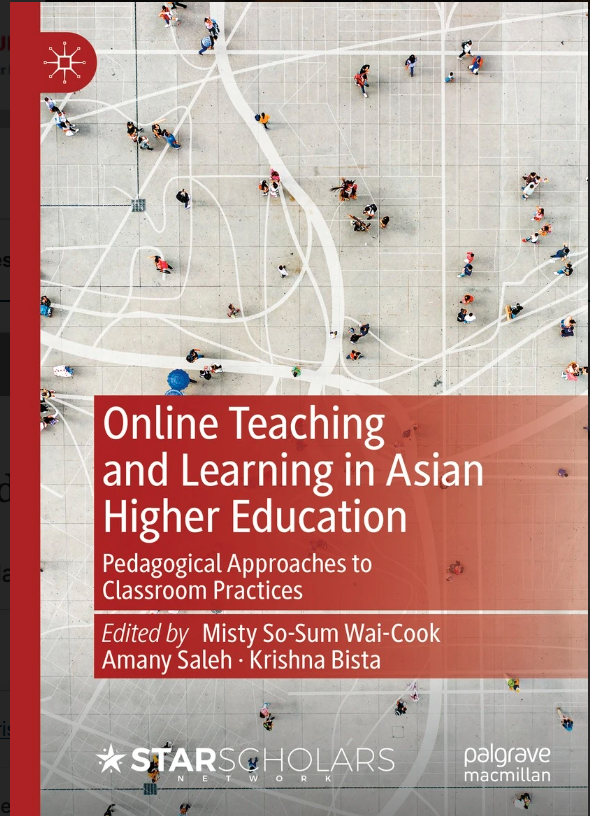
In a world where online education has become paramount, this book is a comprehensive guide to navigating the challenges and innovations encountered in Asian higher education during the COVID-19 pandemic. It delves into various aspects of online teaching and learning, including curriculum design, student engagement, assessment strategies, and the use of technology in the classroom.
Editors: Misty So-Sum Wai-Cook, Amany Saleh, Krishna Bista
Table of contents
About this book
Keywords
Reviews
Editors and Affiliations
About the editors
Publisher : STAR SCHOLARS PRESS
Published : February 23, 2023
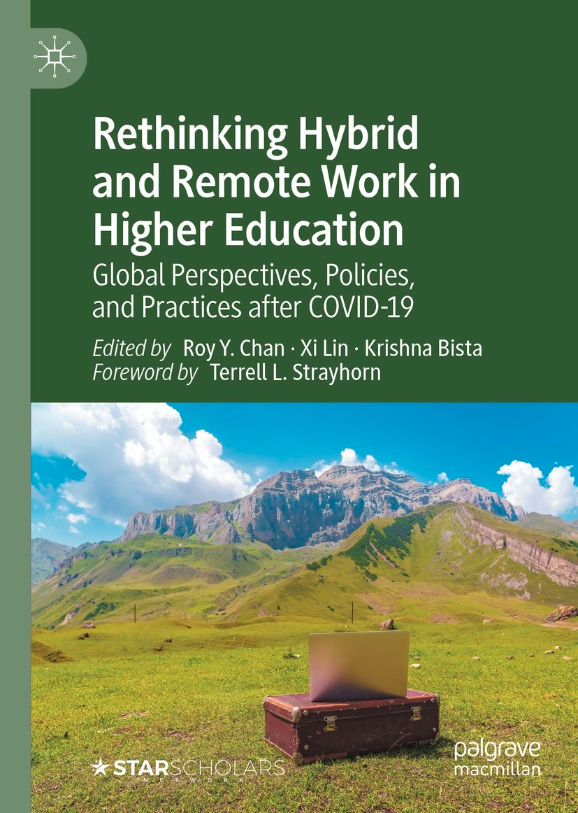
This timely volume explores the current and future state of hybrid and remote work in higher education from national, regional, and global perspectives. Today, colleges and universities worldwide must ensure that they have adequate information and communications technology (ICT) infrastructure, equipment, and systems to adapt to the “new normal” post-COVID-19. Hybrid and remote work can be a source of boosting productivity and advancing institutional change in higher education. Common within the management and leadership literature, hybrid and remote work is an understudied phenomenon in higher education administration. This book investigates the rapid rise of remote and hybrid work during and after the global pandemic and what it means for the future of higher education in the United States and abroad. By developing a comprehensive, research-based knowledge and framework this book seeks to equip and empower teacher-scholars and practitioners to operate safely, securely, and efficiently in a remote or hybrid environment.
Editors: Roy Y. Chan , Xi Lin , Krishna Bista
Rethinking Hybrid and Remote Work in Higher Education
Is Hybrid and Remote Work Here to Stay? Opportunities and Challenges in the United States and Abroad
Essential Hybrid and Remote Workers in Higher Education: Challenges and Resiliency of Student Affairs Practitioners
Sense of Place and Belonging: The Role of Service-Learning and Faculty Development Centers in Promoting Community Among Hybrid and Remote Faculty Members
An Exploratory Examination of Online Learning During and After the Pandemic: Learning Goal Congruence in Lecturing and Research Activities
Reinventing Remote Work and Online Learning at Colleges and Universities Worldwide
Exploring Faculty Members’ Perceptions of Hybrid Teaching in Indonesian Higher Education: Using Transitivity Analysis
Building, Bonding, and Growing During the COVID-19 Pandemic: A Case Study of Indiana University’s Chinese Flagship Program
The Importance of Including Students’ Perspectives in Research to Further Understand New Learning Environments
Post-COVID, Learning Redefined: Self-Directed Learning in Higher Education
Research Discourses on Women Academics During the COVID-19 Pandemic: Has a Bad Situation Turned Worse?
Lessons Learned from Hybrid and Remote Work: Comparative Case Studies
Changes to Hybrid Higher Education Induced by the COVID-19 Pandemic: A South African Case Study
Lessons from Virtual Exchange Programs and Hybrid Study Abroad Programs Before and During the COVID-19 Pandemic
Digital Readiness and Preparation in a University Setting: An Examination of Faculty, Staff and Students’ Practices of Online Education in Nepal
Using Dell Hymes’ SPEAKING MODEL as a Tool to Teach Intercultural Competence and Communication: Cultural Identity in Alexandria, Egypt
Attitude and Motivation of Gamified Mathematics Virtual Remedial Students: Case Study of a Business School in Lima, Peru
Millennial Teachers’ Perspectives on the Graduate Transition to Work in Vietnamese Higher Education
Publisher : STAR SCHOLARS PRESS
Published : May 13, 2024
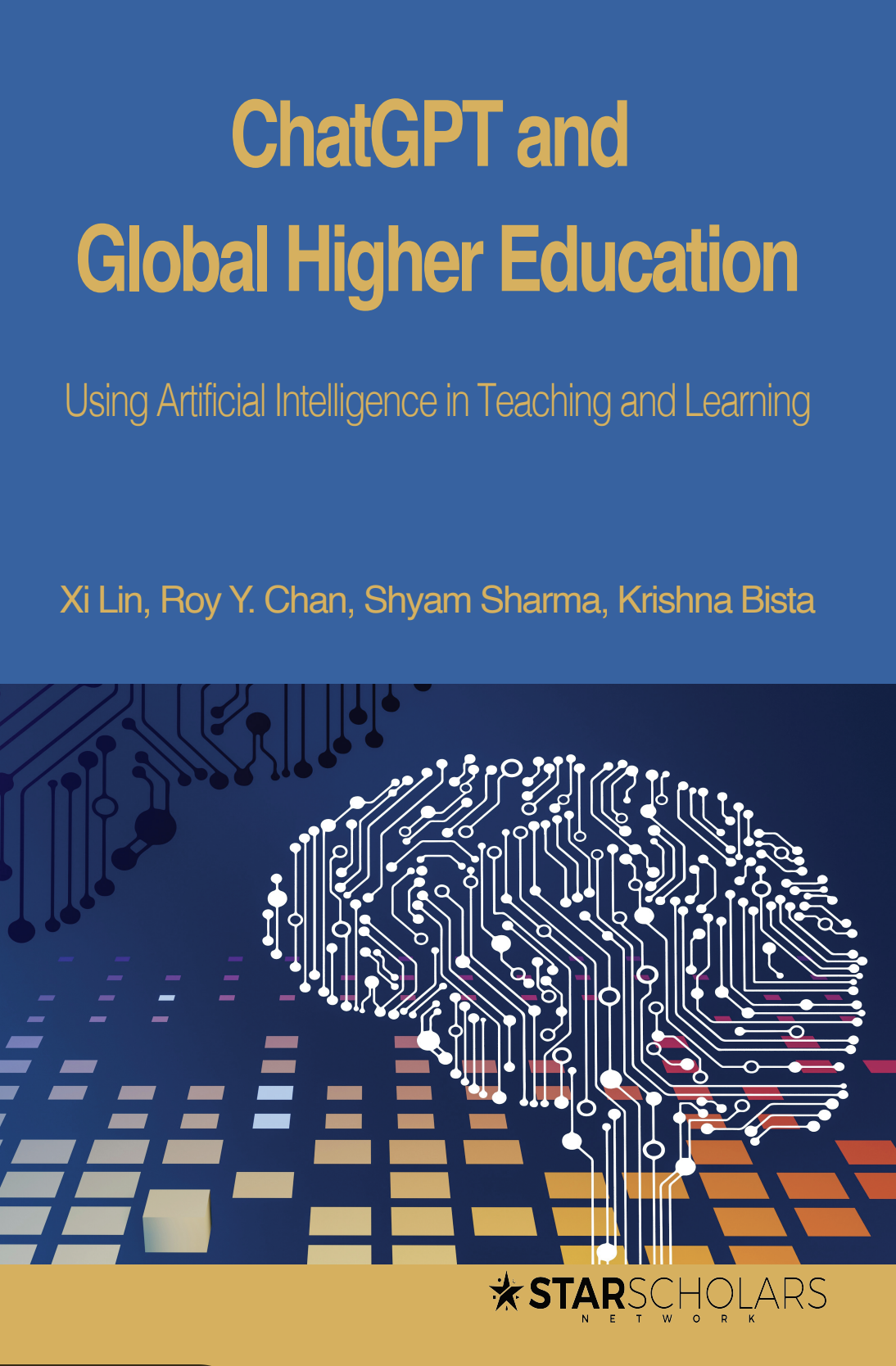
The rise of artificial intelligence (AI) tools based on advanced language models, such as ChatGPT and Bard, is transforming industries and professions worldwide, and higher education is no exception. ChatGPT, an AI-powered chatbot developed by OpenAI, has created a substantial amount of conversation and controversy across academia regarding what generative AI means for teaching and learning in the classroom. There is plenty of speculation not only about how those innovations will affect the academic profession but also what unique opportunities and challenges they present to global higher education. In this book, authors delve into the impact of AI and ChatGPT on higher education leadership and management, examining potential opportunities and challenges that this innovative technology presents to teaching, research, program, and policy.
The primary purpose of this volume is to provide a comprehensive, research-driven analysis of AI chatbots’ roles in shaping institutions of higher education around the world. By exploring the transformative potential of ChatGPT in academic settings, this timely book aims to bridge the gap between technological innovation and its practical applications. In the long run, we anticipate that this volume will provide valuable insights and guidance for teacher-scholars, university administrators, and policymakers on leveraging this cutting-edge technology effectively and responsibly.
Edited By Xi Lin, Roy. Y Chan, Shyam Sharma, Krishna Bista
OPEN ACCESS BOOK Creative Commons License | CC BY-NC-ND Open access editions of this book can be accessed here This book is published as an open-access publication by STAR Scholars Press. The digital edition of this book is freely available to readers worldwide and may be accessed, downloaded, and shared without charge through the publisher’s website and scholarly discovery platforms.
Order hard copies | Open Access Book (free)
Table of Contents
Prologue Keeping the Human (Educator) in the Loop Matthew Salzano
Chapter 1
The Impact of Artificial Intelligence (AI) on Global Higher Education: Opportunities and Challenges of Using ChatGPT and Generative AI Xi Lin, Roy Y. Chan, and Shyam Sharma
UNIT 1
The Use of ChatGPT and AI in Global Higher Education: A Historical View of Current Innovations
Chapter 2 Considering the History of Technologies in Education, the Distinctiveness of AI Apps, and the Future of Educational Systems Kenneth J. Luterbach
Chapter 3 The Influence of ChatGPT on Student Learning Outcomes in Higher Education: A Meta-Analysis of the Initial Empirical Literature Yankun He and Leslie Cordie
Chapter 4 The Evolution of Technology in Education and the Emerging Role of Generative AI Abdulrahman Alsharif
Chapter 5 ChatGPT as a Pedagogical Tool for Decolonizing Curriculum Bhavika Sicka
UNIT 2
Effective Practices and Standards of ChatGPT Use: Lessons Learned and Recommendations for Colleges and Universities
Chapter 6 Transforming STEM Education: Leveraging ChatGPT for Enhanced Learning in Psychology and Neuroscience Lingfei Luan, Xi Lin, Yan Dai, Laura Allen, and Shanhua Hu
Chapter 7 Hearing Students’ Voices: Access, Use Patterns, and Attitudes toward Generative AI Technologies among Chinese Students Ling Angela Xia, Olivia Yiqun Sun, and Charlie Reis
Chapter 8 Using ChatGPT to Improve Access, Inclusion, and Equity in and Through English-Medium Instruction in Higher Education Thatcher A. Spero
Chapter 9 A Comparative Study of ChatGPT and Seq2Seq Chatbot for Effective Student Advising Suha Khalil Assayed, Manar Alkhatib, and Khaled Shaalan
UNIT 3
Policy Implications and Ethical Considerations: Assessment and Accountability in Higher Education
Chapter 10 Generative Creations, Code, and Data: How Intellectual Property Rights over Ownership, Use, and Image Apply to Higher Education Jeffrey C. Sun
Chapter 11 ChatGPT and Research Ethics Lisa M. Rubin
Chapter 12 ChatGPT on Student Learning Outcomes in Higher Education: A Meta-Analysis of Early Studies Bo Zhang
Chapter 13 Rethinking Assessment and Feedback: Adapting Evaluation Methods for the Age of Artificial Intelligence Allen Farina
Chapter 14 Artificial Intelligence in Undergraduate Assignments: An Exploration of the Effectiveness and Ethics of ChatGPT in Academic Work Luke Parker, Christopher W. Carter, Alice Karakas, A. Jane Loper, and Ahmad Sokkar
UNIT 4
Current Issues and Future Concerns about Teaching and Learning
Chapter 15 Communities of Practice and Preservice Teachers in the Rise of the Artificial Intelligence Era: ChatGPT as a Method of Inquiry and Reflection Gabriela Mocanu
Chapter 16 Unlocking the Promise of AI: Exploring the Crucial Role of Faculty Members’ Growth Mindset, Self-Efficacy, and University AI Policies: A Study at Vietnam National University, Hanoi Kim Manh Tuan, Pham Van Thuan, Duong Thi Hoang Yen, and Nguyen Phuong Huyen
Chapter 17 Creating Context-Specific Critical Incidents with ChatGPT for Effective Soft Skill Training Stephan Ruppert
Chapter 18 Applications of ChatGPT in Work-Based Learning Programs: Opportunities, Challenges, and Ethical Considerations Hon Jie Teo
Publisher : STAR SCHOLARS PRESS
Published : June 6, 2026
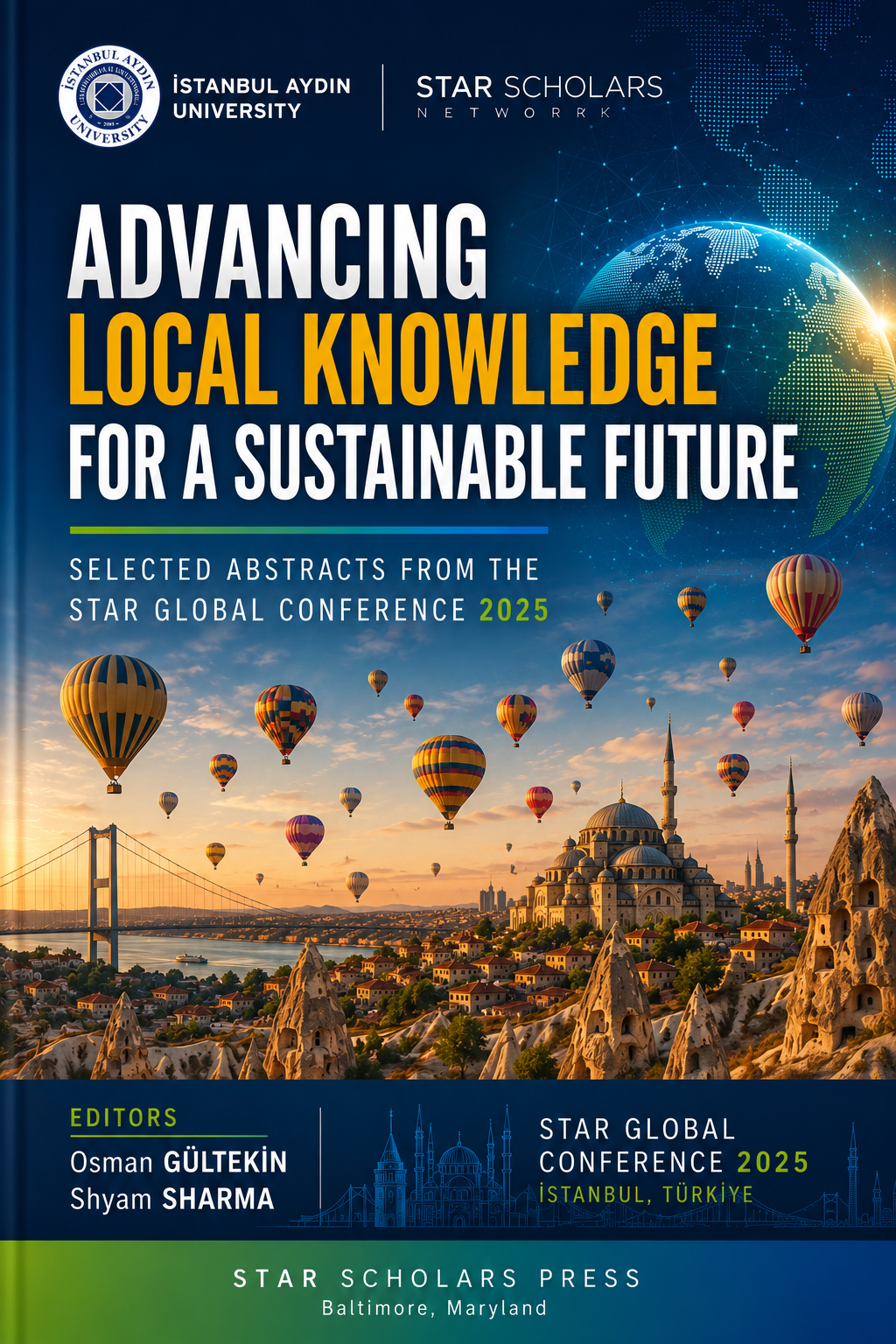
Advancing Local Knowledge for a Sustainable Future: Selected Abstracts from the STAR Global Conference 2025 brings together scholarly abstracts presented at the conference in İstanbul, Türkiye. Reflecting the conference theme, this digital volume highlights diverse perspectives on the role of local knowledge in addressing contemporary global challenges and advancing sustainable development. The collection features contributions from researchers, educators, practitioners, policymakers, and graduate students representing institutions across multiple countries and disciplines. Topics include higher education, artificial intelligence, educational innovation, sustainability, indigenous knowledge systems, community development, cultural heritage, language learning, leadership, social justice, health, architecture, and international collaboration.
Highlights
Global Perspectives: Research and insights from scholars, educators, and practitioners representing diverse countries and disciplines.
Local Knowledge for Sustainable Futures: Innovative approaches that connect indigenous, community-based, and local knowledge with global challenges.
Emerging Trends and Innovation: Contributions exploring artificial intelligence, educational transformation, sustainability, and social development.
Interdisciplinary Scholarship: A rich collection of abstracts spanning education, technology, culture, leadership, health, architecture, and community engagement.
How to cite: Gültekin, O., & Sharma, S. (Eds.). (2026). Advancing local knowledge for a sustainable future . STAR Scholars Press. https://doi.org/10.32674/a2ecr316
