
Update Search
Categories
Series
Date
Update Search
Categories
Series
Date
1 - 3 of 3 items
Sort By
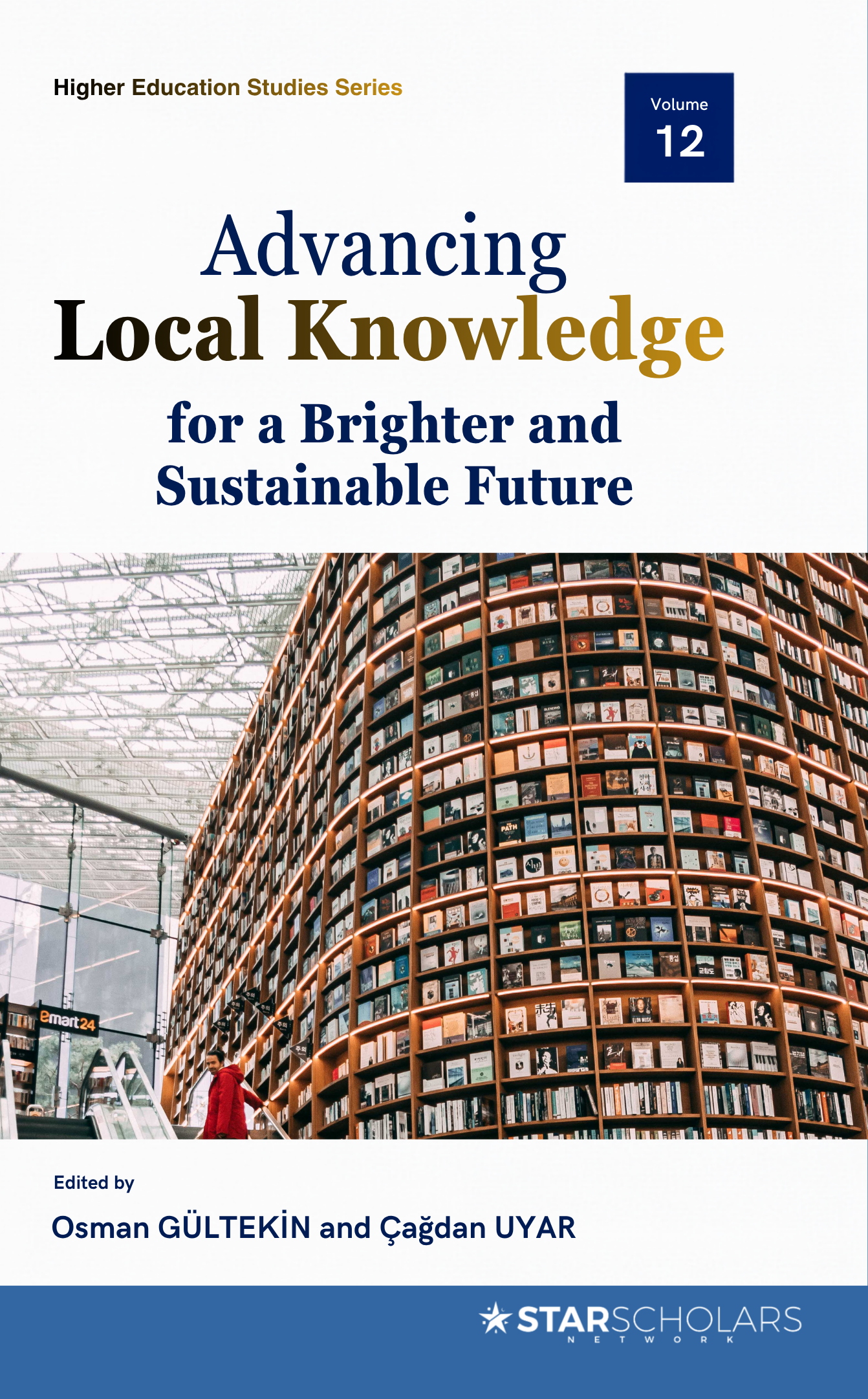
Series : 12
Publisher : STAR SCHOLARS PRESS
Published : August 28, 2026
Download eBook | Order Print Copies | Other Distributors
This edited volume, Advancing Local Knowledge for a Brighter and Sustainable Future, foregrounds the importance of local knowledge as a vital source of insight for addressing global educational, cultural, technological, social, and sustainability challenges. While locally grounded knowledge is often rich in context and practical relevance, its broader impact depends on its visibility within international scholarly conversations. This volume responds to that need by providing a multilingual, interdisciplinary, and globally engaged platform for knowledge exchange. Contributions explore themes related to education, intercultural communication, cultural diplomacy, governance, sustainability, language, technology, and leadership. Together, the chapters demonstrate how locally produced scholarship can inform global understanding, strengthen academic collaboration, and support a more inclusive and sustainable future. The volume is intended for scholars, educators, institutional leaders, policymakers, and practitioners interested in advancing equitable knowledge production and global academic engagement.
DOI: https://doi.org/10.32674/dsza7f33
ISBN (Hardcover): 979-8-89524-093-9 ISBN (eBook): 979-8-89524-094-6
Recommended citation (APA 7th edition) Gültekin, O., & Uyar, Ç. (Eds.). (2026). Advancing local knowledge for a brighter and sustainable future . STAR Scholars Press. https://doi.org/10.32674/dsza7f33
CONTENTS
Front Matter
Title Page and Editorial Team — i Conference Leadership and Committees — ii Preface and Acknowledgements — iv Legal Disclaimer and Statement of Responsibility — vi
CHAPTERS
01. English as Foreign Language Instructors’ Perceptions of and Attitudes Towards Teaching World Englishes and Cultures in Higher Education in Türkiye Seda Bozkır Elmalı; Saeed Mehrpour Pages 1–20
02. Exploring Chatbots, Adaptive Systems, and Beyond: AI in Foreign Language Teaching Eyyüp Yaşar Kürüm Pages 21–26
03. The Role of Adopting Artificial Intelligence into Architectural Design in Promoting Urban Sustainable Development Safa A. Alhusban; Ahmad A. Alhusban; Mohammad A. Alhusban Pages 27–34
04. Transforming Higher Education in Ibero-America: Empowering Global Change Agents Through COIL and the SDGs Marina Falasca Pages 35–42
05. Learning by Doing: Using Role-Play Simulations to Enhance Project Management Education Thomas Neubauer; Andrea Schlacher; Anja Pfleger-Landthaler; Birgit Phillips Pages 43–52
06. Role of AI and Metaverse in Revolutionizing Health Care and Medical Training Abdallah Dwikat; Zafer Aslan; Dilara Arslan; Rafet Akdeniz Pages 53–68
07. Integrating Wildlife into Forest Europe Process: A Critical Gap in Framework Çağdan Uyar Pages 69–86
08. Legal Regulation of Water Use: Lithuanian Experience Dalia Perkumienė Pages 87–96
09. Assessing Period Poverty and Menstrual Issues: A Descriptive Analysis from an Online Survey of College Students Joyvina Evans Pages 97–100
10. Navigating Inclusive Excellence: Centering International Student Voices for a More Equitable Campus Marcia Sun Pages 101–104
11. Student Engagement with AI Writing Tools: Benefits, Challenges, and Ethical Considerations in the Rural Development Program of Tribhuvan University, Nepal Tirtha Raj Timsina; Nirajan Rijal Pages 105–118
12. Exploring Nepalese Teachers’ Perceptions towards the Effectiveness of the PTE Test in Improving English Language Skills Hiranya Lal Lamsal Pages 119–132
13. Impact of Integrating Local Knowledge Systems (LKS) into the Basic Education Curriculum as a Strategy for Decolonizing Education and Enhancing Students’ Engagement and Cultural Identity in Public Secondary Schools in Anambra State, Nigeria Njideka Gloria Ikegbusi Pages 133–150
14. Women’s Political Participation through the Lens of Feminist Theory: The Case of Türkiye after 1934 and Comparisons with Afghanistan and Denmark Serra Uslu Pages 151–160
15. Sustainable University Campus Design: Case of Istanbul Aydin University Gökçen Firdevs Yücel Caymaz; Yaman Aniss Pages 161–178
16. Evaluation for Children Hospital Environmental Design Criteria Gökçen Firdevs Yücel Caymaz; Mahammad Mammadov Pages 179–194
17. The Effects of the New Metropolitan Law No. 6360 on Forest Villages and Villagers: The Example of Aydin Province in Türkiye Ahmet Tolunay; Seda Dilek; Ayhan Akyol Pages 195–200
18. Environmental Sustainability in the Sports Industry: Negative Impacts and the Importance of Green Environmental Policies Ahmet Atalay Pages 201–212
19. Tarihi, Kültürel ve Siyasi Bağlamda Sözsüz Türk Dünyası Devlet Sembollerinin Söylem Çözümlemesi: SSCB Dönemi Türk Cumhuriyetleri Örneği, Yılmaz Büyükkutlu 213- 251
Print copies are available in the following countries and through multiple vendors: US , UK , DE , FR , ES , IT , NL , PL , SE , BE , IE ,
Publisher : STAR SCHOLARS PRESS
Published : March 17, 2024
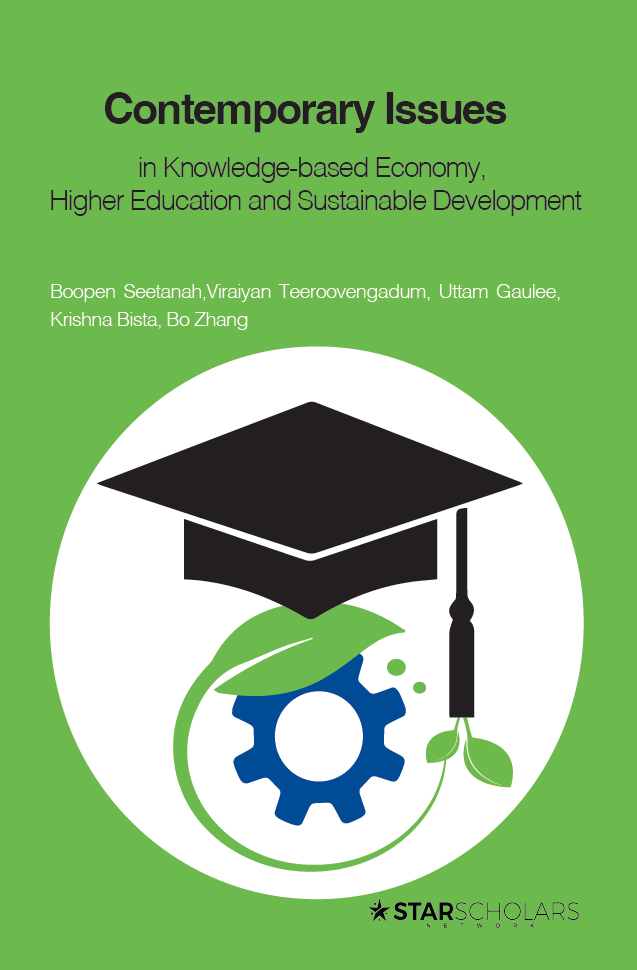
This book strives to unravel the intricacies of contemporary challenges in the knowledge-based economy, higher education, and sustainable development. It navigates through diverse perspectives, from prioritizing mental health among university students in India to exploring the impact of green intellectual capital in Mauritius. The collection delves into social entrepreneurship, digitalized teaching, and resilient student activism during the COVID-19 pandemic. Each chapter underscores the pivotal role of higher education in shaping sustainable socio-economic development, providing invaluable insights into a rapidly evolving global landscape.
Download ebook
Order print copies
Publisher : STAR SCHOLARS PRESS (March 15, 2024)
Language : English
Paperback : 273 pages
ISBN-10 : 1957480319
ISBN-13 : 978-1957480312
Item Weight : 1.05 pounds
Dimensions : 6 x 9 inches

Publisher : STAR SCHOLARS PRESS
Published : January 30, 2024
Shifting Paradigms in Higher Education: Balancing Humanism, Scientism, and Academic Capitalism offers a profound exploration of the evolving landscape of higher education. Drawing from a wealth of experience, including leadership roles at Tribhuvan University and involvement with the National Planning Commission in Nepal, the author delves into critical issues facing higher education institutions. This book confronts the pressing need for policy reforms, restructuring universities, and adapting to changing global trends in higher education. It highlights the detrimental effects of politicization in academia and the urgency of establishing a think tank for informed decision-making. At its core, this book emphasizes the importance of preparing future leaders in higher education with a comprehensive understanding of its philosophy, history, and contemporary dynamics. It argues for the integration of science and humanities to humanize higher education and maintain ethical societies. For anyone involved in higher education, from policymakers to aspiring academic leaders, this book serves as an essential guide for understanding the transformative forces shaping higher education globally. It illuminates the path toward sustainable development and human welfare, making it a valuable resource for all stakeholders in the field.
Author
Professor Tirth Raj Khaniya is an eminent figure in the field of education and higher learning. As Vice Chancellor of Tribhuvan University, he implemented significant reforms, including internationalization efforts that earned the university a world ranking. Dr. Khaniya's relentless commitment to accessible and quality education has been recognized with prestigious awards, including the Sukritimaya Rastradip (Meritorious Act Light of Nepal) award from the President of Nepal in 2017. His contributions have left a lasting impact on Nepal's educational landscape.
Publisher : STAR SCHOLARS PRESS (January 21, 2024)
Language : English
Paperback : 259 pages
ISBN-10 : 1957480335
ISBN-13 : 978-1957480336
Item Weight : 12.5 ounces
Dimensions : 6 x 0.59 x 9 inches
Print editions: Order online
For bulk orders, please send your request to contact@starscholars.org
Special thanks to NIST Foundation, Nepal
