
Update Search
Categories
Series
Date
Update Search
Categories
Series
Date
26 - 50 of 73 items
Sort By

Publisher : STAR SCHOLARS PRESS
Published : September 26, 2021
COVID-19 and Higher Education in the Global Context: Exploring Contemporary Issues and Challenges addresses the lasting impact of the novel coronavirus (COVID-19) in the higher education sector and offers insights that inform policy and practice. Framed in a global context, this timely book captures a wide variety of topics, including student mobility, global partnerships and collaboration, student health and wellbeing, enrollment management, employability, and graduate education. It is designed to serve as a resource for scholar-practitioners, policymakers, and university administrators as they reimagine their work of comparative and international higher education in times of crisis. The collection of chapters assembled in this volume calls for a critical reflection on the opportunities and challenges that have emerged as a result of the global pandemic, and provides as a basis for how tertiary education systems around the world can learn from past experiences and shared viewpoints as institutions recalibrate operations, innovate programs, and manage change on their respective campuses.
OPEN ACCESS BOOK | CC BY-NC-ND Open access editions of this book can be accessed here . The open access edition of this book is freely available to readers worldwide and may be accessed, downloaded, and shared without charge through the publisher’s website and scholarly discovery platforms.
Order your copy: Paperback | Open Access (Free)
Table of Contents List of Editors Foreword Darla K. Deardorff
1. The Impact of COVID-19 on Higher Education: Challenges and Issues Ravichandran Ammigan; Roy Y. Chan; Krishna Bista
Part I. COVID-19 and Global Issues in Higher Education
2. The Evolution Revolution: The Application of a Leadership Adaptation Continuum to the Future of Global Higher Education Post COVID-19 Allison Silveus; Leslie Ekpe
3. Rethinking the Social Responsibilities of Universities in the Light of COVID-19 Pandemic Hằng Trần Thị; Quy Dinh Le Nguyen; Luc-Diep Tra
4. “Internationalization at Home” in the United States: Enhancing Admissions and Enrollment Practices for Marginalized Students During and After the COVID-19 Pandemic Raquel Muñiz; Natalie Borg
5. Financial Ramifications of Coronavirus on Division I Athletic Departments Molly Harry
Part II. COVID-19 and Academic Issues in Higher Education: Special Topics and Themes
6. Traditional Exams, 21st Century Employability Skills and COVID-19: Disruptive Opportunities for Rethinking Assessment Design in Higher Education Andrew Kelly; Catherine Moore; Emma Lyons
7. From Hardships to Possibilities: Dissertation Writing during the COVID-19 Pandemic Juan Manuel Niño; Onésimo M. Martínez
8. Disrupting Accommodations through Universal Design for Learning in Higher Education Carly D. Armour
9. Reshaping the Landscape: Considering COVID-19’s Uncertain Impacts on Canadian and U.S. International Higher Education Michael O’Shea; You Zhang; Leping Mou
10. The Vulnerability and Opportunity of Privatization in Higher Education during a Pandemic Ziyan Bai
Part III. COVID-19, Wellbeing and Humanity in Higher Education: International Perspectives and Experiences
11. COVID-19 and Health Disparities: Opportunities for Public Health Curriculum Enhancement Anuli N. Joku
12. Internationalizing Trauma-Informed Perspectives to Address Student Trauma in Post-Pandemic Higher Education Joshua M. Anzaldúa
13. Global Collaboration for Global Solution in Academia: Opportunities and Challenges Ekaterina Minaeva; Giorgio Marinoni
14. Humanizing the Academic Advising Experience with Technology: An Integrative Review Charles L. Liu; Ravichandran Ammigan
Index

Publisher : STAR SCHOLARS PRESS
Published : January 30, 2024
Shifting Paradigms in Higher Education: Balancing Humanism, Scientism, and Academic Capitalism offers a profound exploration of the evolving landscape of higher education. Drawing from a wealth of experience, including leadership roles at Tribhuvan University and involvement with the National Planning Commission in Nepal, the author delves into critical issues facing higher education institutions. This book confronts the pressing need for policy reforms, restructuring universities, and adapting to changing global trends in higher education. It highlights the detrimental effects of politicization in academia and the urgency of establishing a think tank for informed decision-making. At its core, this book emphasizes the importance of preparing future leaders in higher education with a comprehensive understanding of its philosophy, history, and contemporary dynamics. It argues for the integration of science and humanities to humanize higher education and maintain ethical societies. For anyone involved in higher education, from policymakers to aspiring academic leaders, this book serves as an essential guide for understanding the transformative forces shaping higher education globally. It illuminates the path toward sustainable development and human welfare, making it a valuable resource for all stakeholders in the field.
Author
Professor Tirth Raj Khaniya is an eminent figure in the field of education and higher learning. As Vice Chancellor of Tribhuvan University, he implemented significant reforms, including internationalization efforts that earned the university a world ranking. Dr. Khaniya's relentless commitment to accessible and quality education has been recognized with prestigious awards, including the Sukritimaya Rastradip (Meritorious Act Light of Nepal) award from the President of Nepal in 2017. His contributions have left a lasting impact on Nepal's educational landscape.
Publisher : STAR SCHOLARS PRESS (January 21, 2024)
Language : English
Paperback : 259 pages
ISBN-10 : 1957480335
ISBN-13 : 978-1957480336
Item Weight : 12.5 ounces
Dimensions : 6 x 0.59 x 9 inches
Print editions: Order online
For bulk orders, please send your request to contact@starscholars.org
Special thanks to NIST Foundation, Nepal
Publisher : STAR SCHOLARS PRESS
Published : January 10, 2026
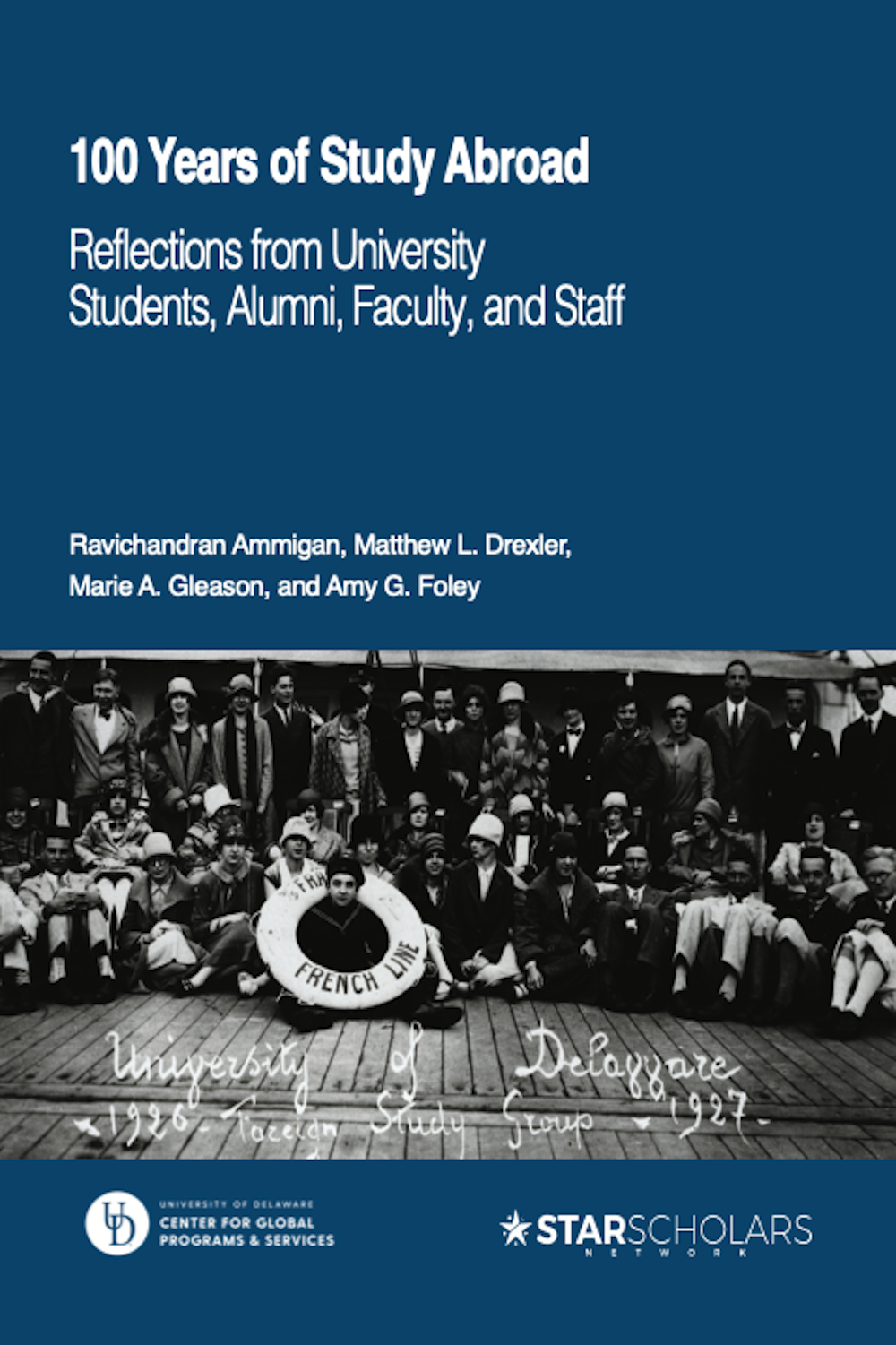
This volume presents a diverse collection of short personal essays that illuminate the experiences of study abroad students, alumni, faculty, and staff as they reflect on the lasting impact of their intercultural encounters and interactions in new environments and communities around the world. The stories explore themes ranging from culture shock and adaptation to resilience and personal growth, revealing how individuals gain new perspectives and develop deeper self-awareness by stepping outside their comfort zones. The authors share moments of perseverance and discovery, the challenges of building connections across cultures, and the rewards of learning and living in unfamiliar settings. Current and former students, in particular, describe their journeys of personal and academic growth through immersive coursework, internships, and community engagement, despite the initial hurdles of adjusting to new norms and expectations. This collection of reflective essays takes readers on a journey alongside those who have lived the study abroad experience while also offering insights from international educators and university administrators who design, direct, and support these programs at the University of Delaware—home to the nation’s first study abroad program for over a century.
OPEN ACCESS BOOK Creative Commons License | CC BY-NC-ND Open access editions of this book can be accessed here This book is published as an open-access publication by STAR Scholars Press . The digital edition of this book is freely available to readers worldwide and may be accessed, downloaded, and shared without charge through the publisher’s website and scholarly discovery platforms. Download Open Access Book (Free) | Hardcover (Print)
About the Editors
Ravichandran Ammigan, Ph.D. , serves as Vice Provost for Global Engagement and Senior International Officer at the University of Delaware. With 25 years of experience in the field of international higher education, he is responsible for leading the institution’s internationalization strategy and global engagement portfolio. He holds a secondary faculty appointment as Associate Professor in the School of Education, where his main research focuses on the academic, social, and cultural experiences of students in higher education worldwide. Dr. Ammigan has published numerous research articles, co-edited several books, and is a regular speaker at conferences internationally.
Matthew L. Drexler, M.A., serves as Director of Study Abroad at the University of Delaware, an operation that supports more than 125 faculty-led and semester education abroad programs each year. Matt has more than 17 years of experience facilitating international exchange and collaboration, and currently oversees collaborative efforts to internationalize UD’s campus through international mobility and internationalization at home programs. He also manages the evaluation and assessment of the study abroad student experience at UD and leverages that data to drive strategic efforts to expand and improve global programming at the university.
Marie A. Gleason, M.A., is a Senior Study Abroad Program Coordinator in the Center for Global Programs and Services at the University of Delaware. During her 24-year career in international education at the University, she has coordinated over 150 study abroad programs, supporting students and faculty in developing transformative global experiences. She also administers the Study Abroad Office’s need-based scholarship program and collaborates with academic departments to design and implement sustainable education abroad initiatives, including faculty-led and semester programs.
Amy G. Foley, Ed.D., serves as Director for Global Outreach and Partnerships at the University of Delaware. She is the founding director of the UD World Scholars Program and oversees the strategic coordination of international partnerships and agreements at the Center for Global Programs and Services. Dr. Foley brings over 35 years of knowledge as a higher education professional. She earned a B.A. in Communications from the University of Miami, a certificate in Museum Studies from the International University of Art in Florence, Italy, an M.A.T. in Museum Education from The George Washington University, and an Ed.D. in Educational Leadership from the University of Delaware.
Publisher : STAR SCHOLARS PRESS
Published : March 15, 2022
This book provides narrative cross-cultural stories written by undergraduate students, graduate students, staff, and faculty. They cover a variety of experiential learning—from formal program awards to informal encounters, to travel to attend conferences, to volunteerism. Cross-cultural experiences are recognized as engines leading to global awareness. When students venture outside of their routines, their worlds become larger. This then leads to greater tolerance, more awareness, or even more possibilities in life. Hard copies are available on Amazon.com
Editors Krishna Bista, EdD , is Professor of Higher Education in the Department of Advanced Studies, Leadership and Policy at Morgan State University, USA. Adele Newson-Horst, PhD, is Professor of English in the Department of English and Language Arts at

Publisher : STAR SCHOLARS PRESS
Published : April 1, 2024
This book presents a wide range of themes of perseverance, cultural exploration, transformative journeys, and reflections on life’s lessons. Each chapter offers unique perspectives on overcoming challenges, embracing cultural diversity, and finding profound meaning in life’s experiences. From tales of enduring determination to reflections on identity and global citizenship, the book invites readers to explore the complexities of the human spirit and find inspiration in the shared stories of resilience and growth.
Editors
Krishna Bista is a Professor of Higher Education in the Department of Advanced Studies, Leadership and Policy at Morgan State University (USA). Uttam Gaulee is a Professor of Higher Education in the Advanced Studies, Leadership, and Policy Department at Morgan State University (USA). Dawn Michele Whitehead is Vice President of the Office of Global Citizenship for Campus, Community, and Careers at the Association of American Colleges and Universities (USA). Bo Zhang is a TESOL Instructor and District Administrator at Providence Public Schools in Rhode Island (USA).
Order your copies: eBook | Paperback

Publisher : STAR SCHOLARS PRESS
Published : June 2, 2022
In this book, we explore the socio-political environment that impacts international students’ employability and discuss student experiences of employability development during and after their studies. The book also aims to provide a holistic understanding of international student employability on a global scale, incorporating various higher education contexts, including the US, UK, Netherlands, Vietnam, and Japan.
Publisher : STAR Scholars, Baltimore, Maryland (US) | Published Date: July 2022
Order print copies ($19.99)| download e-book (free) | cite chapters |
Publisher : STAR SCHOLARS PRESS
Published : March 1, 2023
Crossing Borders, Bridging Cultures: The Narratives of Global Scholars is a compelling and insightful collection of personal accounts from scholars worldwide. Through their experiences, the book provides a unique perspective on the challenges and triumphs of academic life in different cultures, highlighting the diversity and richness of the global academic community. From navigating language barriers and adapting to new environments to confronting cultural differences and promoting cross-cultural understanding, these stories are powerful messages of unity and cooperation in the face of adversity.
You can order digital copies and hardcopies here
Publisher : STAR Scholars (March 1, 2023)
Editors : Uttam Gaulee, Krishna Bista, Bo Zhang, Birgit Schreiber

Publisher : STAR SCHOLARS PRESS
Published : March 11, 2021
This book provides readers with a unique opportunity to walk a mile in the shoes of an international student. It also highlights the importance of a strong support system for students in both the curricular and co-curricular settings and offers insights to international educators and university administrators into creating a welcoming environment that fosters international understanding and cross-cultural awareness on campus.
Edited by Ravichandran Ammigan Published : March 2021, STAR Scholars
Digital copies | Print copies available

Publisher : STAR SCHOLARS PRESS
Published : October 11, 2022
International Student Support and Engagement in Higher Education examines innovative practices in campus, academic, and professional support services which serve the various and unique needs of international students seeking undergraduate and graduate degrees.
Divided into three sections pertaining to campus, academic, and professional support services, the authors present case studies and original research that examine strategies for how institutions of higher education can operate to promote international student success beyond the classroom. The international range of contributors showcase research from across Canada, China, Indonesia, Malaysia, Russia, Senegal, Thailand, and the United States. Foregrounding support services with innovative and successful methods for collaborating with one another, the book crucially addresses how the myriad support services available on campuses can work together to support international students and foster a sense of belonging and connection, rather than maintaining a focus on acculturation. It examines the origins of these partnerships, asking whether the services are designed to support the international student community specifically, or to serve the student population more generally.
Identifying new emerging trends and with a view to establishing a broad and global context for best practices in international student support, this book will appeal to faculty, researchers, scholars, and scholar-practitioners with interests in higher education, student support services, and international and comparative education.
Paperback | Hardback | eBook
Publisher : STAR SCHOLARS PRESS
Published : January 22, 2023
This volume uses case studies and students' lived experiences to document the impacts of coronavirus (COVID-19) on international students and explore future challenges and opportunities for student mobility within higher education.
Responding to the growing need for new insights and perspectives to improve higher education policy and practice in the era of COVID-19, this text analyses the changing roles and responsibilities of institutions and international education leaders post-2020. Initial chapters highlight key issues for students that have arisen as a result of the global health crisis such as learning, well-being, and the changed emotional, legal, and financial implications of study abroad. Subsequent chapters confront potential longer-term implications of students' experiences during COVID-19, and provide critical reflection on internationalization and the opportunities that COVID-19 has presented for tertiary education systems around the world to learn from one another.
This timely volume will benefit researchers, academics, and educators with an interest in online teaching and e-learning, curriculum design, and more specifically those involved with international and comparative education. Those involved with educational policy and practice, specifically related to pandemic education, will also benefit from this volume.
Hardcover | Paperback | eBook
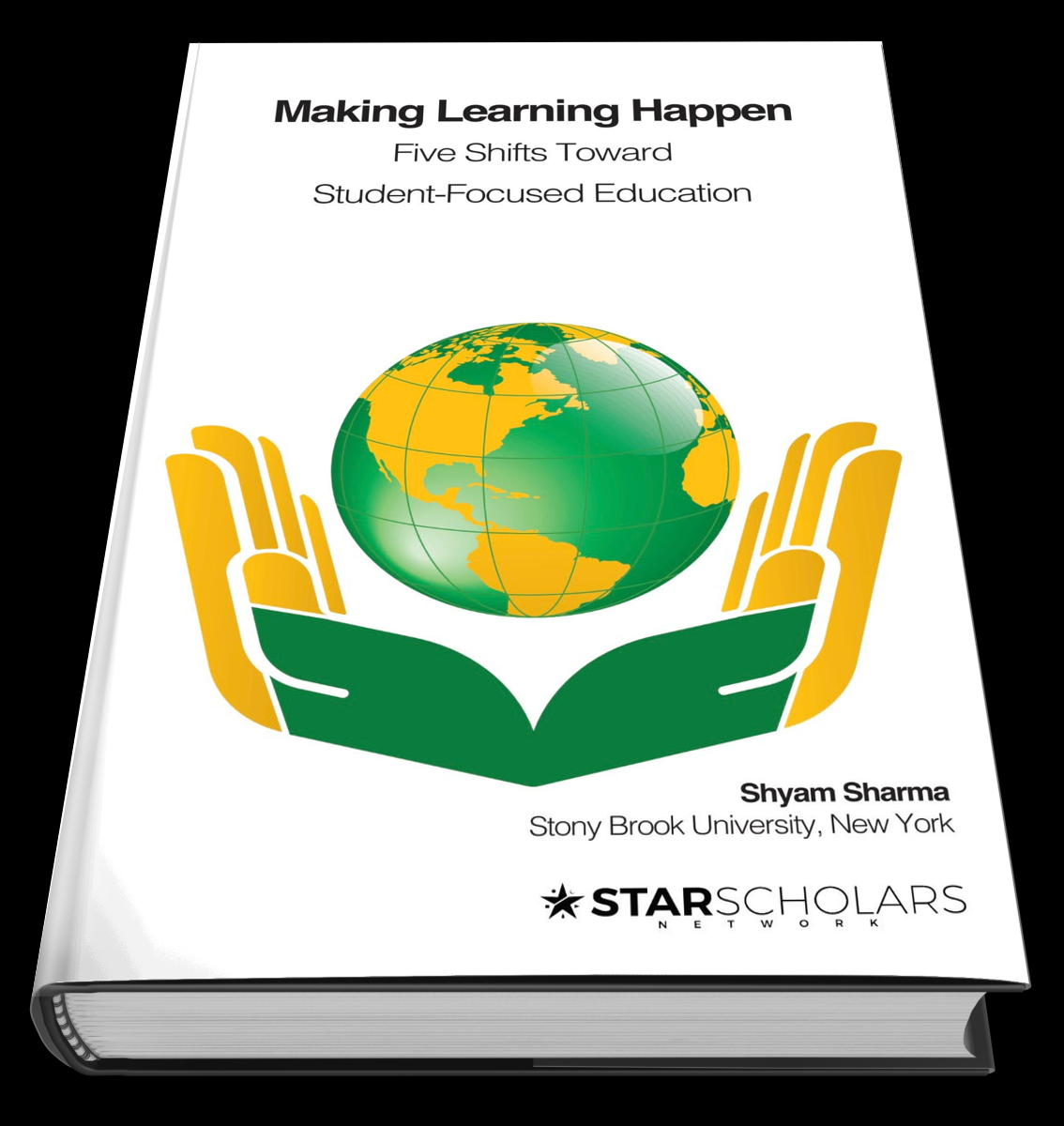
Publisher : STAR SCHOLARS PRESS
Published : December 14, 2023
This book is a valuable resource for educators seeking to shift toward a more student-centered, student-engaged education. Drawing on the author's own experiences and research, the book provides practical strategies ranging from making class meetings more student-focused to engaging diverse stakeholders. The book translates teaching methods and strategies into concrete, actionable forms that are also meant to help students not only succeed but also prepare for successful careers. While recognizing the challenges faced in different educational contexts, the handbook encourages teachers to start small and help to shift their educational institutions and culture. With its practical approach and adaptable strategies, this is a must-use book for educators worldwide.
Shyam Sharma is Associate Professor and Graduate Program Director in the Program in Writing and Rhetoric at Stony Brook University, State University of New York.
Order Hardcopies || Download E-books |

Publisher : STAR SCHOLARS PRESS
Published : December 11, 2023
This book takes a critical and historical perspective in parsing the current state of play for refugee and immigrant students in Germany, addressing federal, state, and institutional innovations as well as gaps in service.
Drawing from de/post/anticolonial theory, it considers the levels of support for diverse groups including migrants, refugees, and racialized Germans, investigating why a comparatively well-resourced higher education system has, to date, selectively invested in the support of some marginalized groups. It calls for the reconsideration of policy and programmatic support, drawing from emerging best practice across states and HEIs. Using historical analysis, federal and state level policy documents, institutional equal opportunity plans and student-facing websites, reporting, and first-person-accounts of marginalized students both prospective and enrolled, this critically-oriented work interrogates how and why the world’s fourth largest economy – and its primarily public higher education system – have failed to engage systemic change with an eye towards addressing mechanisms of exclusion including racialization and xenophobia. It concludes with a consideration of possible policy interventions supporting these minoritized student groups who are essential not only to German learning and economy, but also to the rebuilding of conflict states.
This volume will appeal to researchers, scholars and practitioners working across comparative and international higher education, crisis education, and education in emergencies, as well as diversity specialists.
Order your copy:
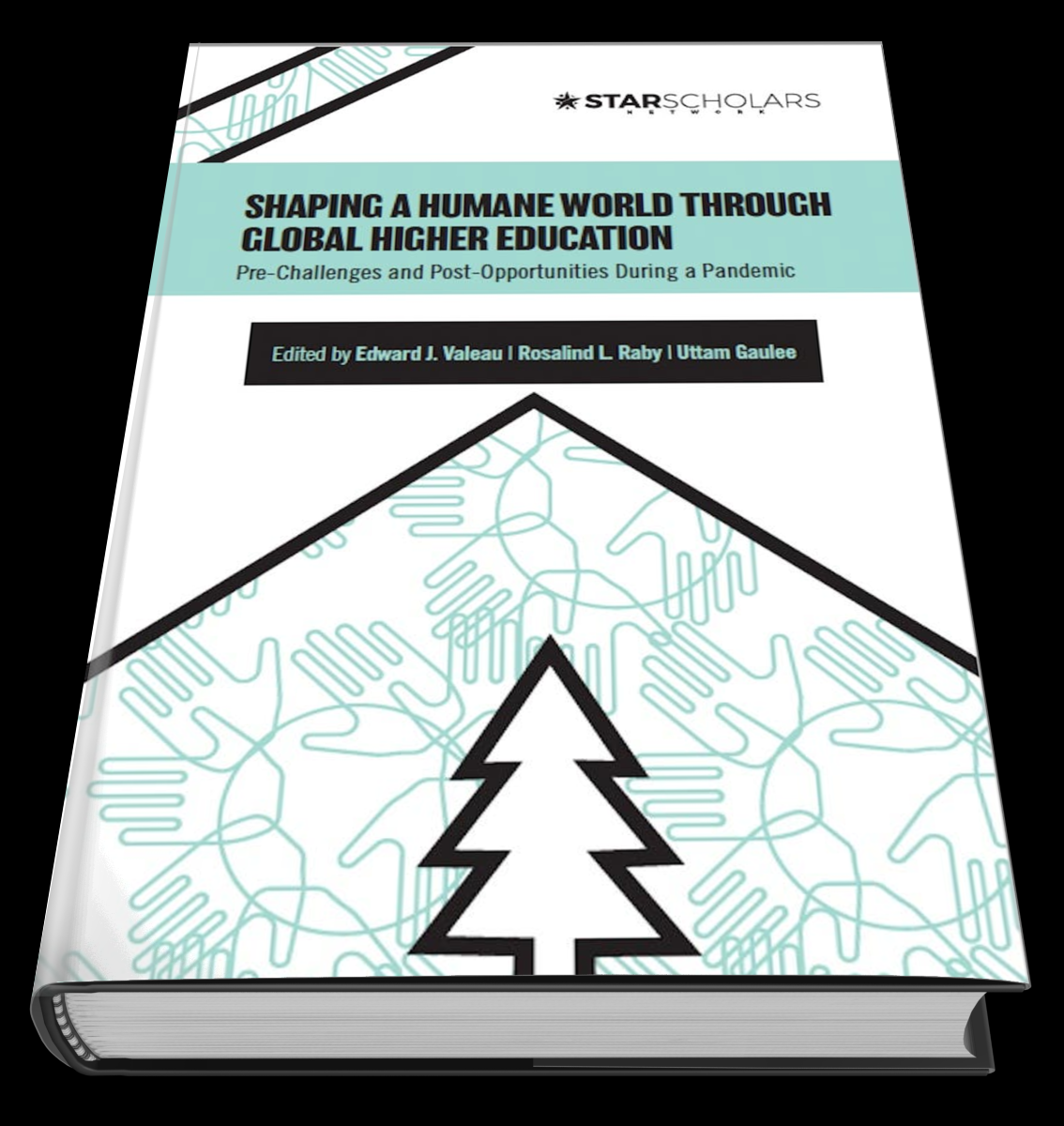
Publisher : STAR SCHOLARS PRESS
Published : June 24, 2022
In this book, each author reflects on events since the conference that occurred during the writing of this book and shares their vision of what still needs to be addressed to advance issues of higher education leadership, training, student development, disability education, and relevant programming in countries around the world. Within these discussions are targeted discussions on how to address some of the critical issues of our time, including a focus on access, diversity, and inclusion as elements intended to frame a just and fair Humane World. The authors represent five countries: Australia, Kenya, Malaysia, Nepal, and the United States. Their voices represent issues important in both the Global North and the Global South and what in particular is needed to design essential policies and training required to achieve success.
Order digital/print copies here.
by Edward J. Valeau (Editor), Rosalind L. Raby (Editor), Uttam Gaulee (Editor), Stewart Sutin (Preface)

Publisher : STAR SCHOLARS PRESS
Published : September 1, 2021
Global Higher Education During COVID-19: Policy, Society, and Technology explores the impacts of the novel coronavirus (COVID-19) for global mobility in the field of international higher education. Specifically, this book responds to the growing need for new insights and perspectives to improve higher education policy and practice in the era of COVID-19. The sub-theme that runs through this book concerns the changing roles and responsibilities of international education leaders and the demand to rethink comprehensive internationalization post-2020. Topics in this book include international students' experience, study abroad, branch campus, mental health, enrollment, and graduate education.
Editors: Joshua S. McKeown, Krishna Bista, and Roy Y. Chan
Order your copy: Paperback | eBook
Reviews
Dr. KS Adeyemo, Senior Lecturer, University of Pretoria, South Africa
Global Higher Education During COVID-19: Policy, Society, and Technology is a highly recommended resource for higher education institution policymakers and educators around the globe. Not only does this book provide invaluable insights from higher education institution policymakers, educators, and students during the COVID-19 pandemic, but it also offers useful suggestions on dealing with possible challenges and seeking opportunities in future higher education .
Dr. Misty So-Sum Wai-Cook, Centre for English Language Studies, National University of Singapore
It’s a timely book reporting the most recent responses of international higher education across the world during the Covid-19 pandemic. Besides providing the theoretical contributions, the book also offers practical implications for stakeholders, including policymakers, education managers and practitioners, international students, and parents.
Dr. Hiep Pham, Director, Center for Research and Practice on Education, Phu Xuan University, Vietnam
Global Higher Education During COVID-19: Policy, Society, and Technology is timely and relevant providing a critically engaged reflective account of geographically diverse higher education institutions’ response and practice during the COVID-19 pandemic. This book illuminates some of the current impediments to higher education internationalization within the context of COVID-19 and provides insights into shared learning experiences that address new challenges to internationalization imposed by the pandemic. A must-read for international higher education specialists, practitioners, scholars, and researchers.
Dr. Tasmeera Singh, Advisor, International Office, University of KwaZulu-Natal, South Africa
A worldwide phenomenon: Strategies and inspiration to address the challenges and opportunities for the new normal in the field of global higher education. I cannot recommend it highly enough.
Dr. Daisy Kee Mui Hung, Associate Professor, Universiti Sains Malaysia, Malaysia
The movement of people across borders furthered the spread of Covid-19. This inevitably impacted international higher education, which although not reducible to student mobility is its primary form. Global Higher Education during COVID-19: Policy, Society, and Technology is, therefore, a timely edited collection that begins to unpack the multifaceted impact the pandemic has had on higher education worldwide. It adds to the growing conversation on reimagining higher education. The collection will be valuable to current and future scholars of higher education, offering an important snapshot of policy and practice during the pandemic.
Dr. Will Brehm, Lecturer of Education and International Development, UCL Institute of Education, UK
With the COVID-19 crisis having upended higher education around the world, this timely book provides a deep and much-needed analysis of the roles and responsibilities of universities going forward. It sheds light not only on the shared challenges countries have faced, but also reveals how the impact of the pandemic has varied in important ways across countries.
Dr. Rajika Bhandari, Author/Advisor, STAR Scholar Network, USA
This book presents a comprehensive and rigorous worldwide account of Covid-19 impact, challenges and new opportunities. It stands out as a ground-breaking valuable companion for all those involved in the future of internationalization in higher education.
Dr. Elena de Prada Creo, Vice Dean for International Affairs, Facultad de CC. Empresariales y Turismo, Spain
Hard copies are available able on Amazon.com

Publisher : STAR SCHOLARS PRESS
Published : May 20, 2023
Curriculum Theory and Pedagogy for Student Mobility – an edited collection of international research – seeks to examine how curriculum theory within different social, political, and cultural contexts can be actuated to advance equity and diversity, plus supportive and inclusive outcomes in international student education. A comprehensive volume, it contours a holistic interdisciplinary landscape of the field. The book draws upon both a broad range of curriculum-related theoretical frameworks and multiple perspectives to offer a diverse spectrum of examples about the many challenges and complexities involved in not only theorizing about, but doing the work of, educating international students in institutions of higher education. Additionally, the book provides a strong pedagogical framework for enhanced teaching practices, as well as new avenues for research in international student education. Drawing upon the expertise of contributors from varied backgrounds, identities, fields, and positionalities, the assembled chapters elucidate contemporary curriculum theory and its foundations and uses and analyzes its potential in international education. Equally, theoreticians and practitioners, both, offer valuable insights into conceptualizing, strategizing, and applying curriculum theory-driven research and proven practices for the advancement of the field of international student education.
Order Hardcopies || Download E-books
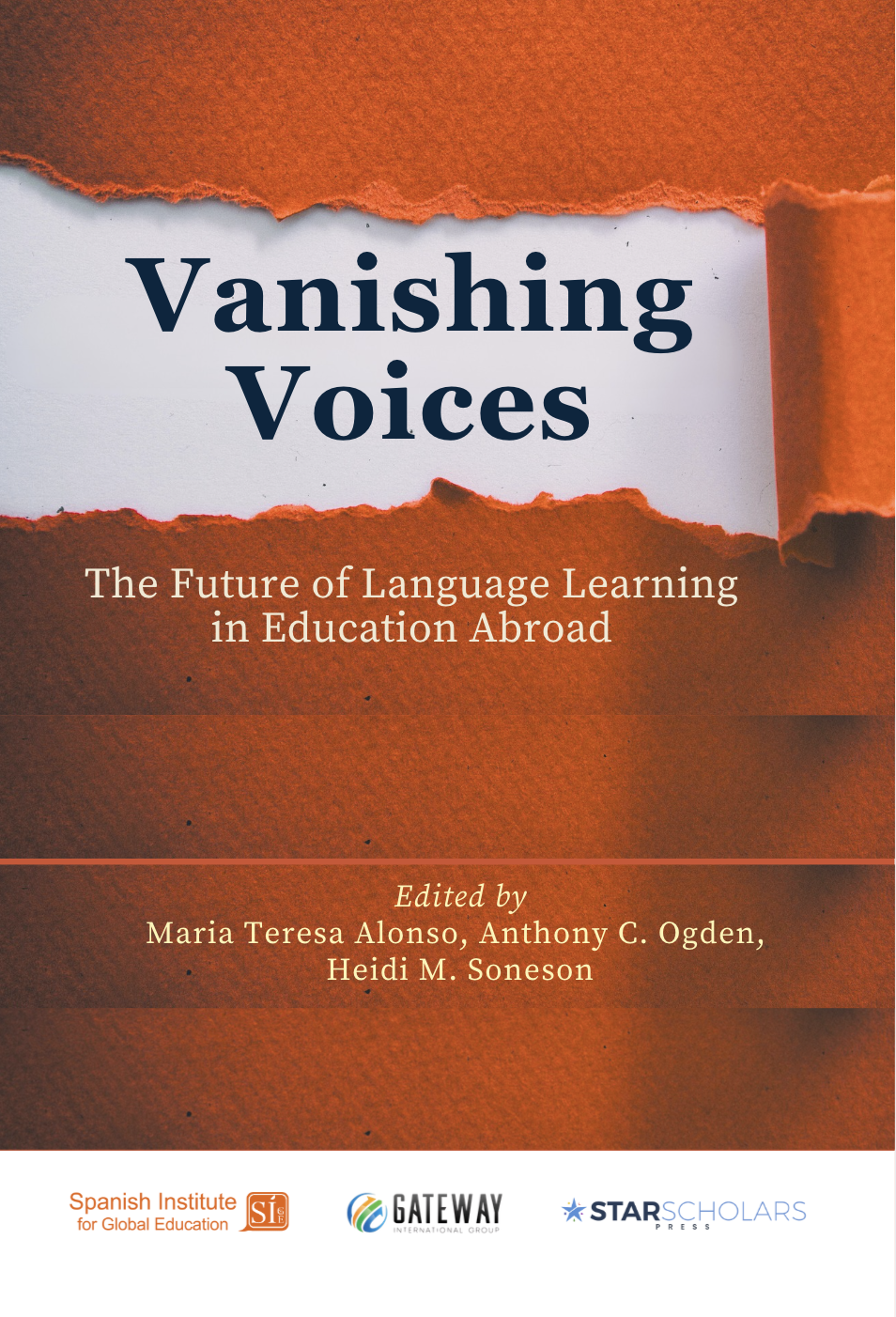
Series : 25
Publisher : STAR SCHOLARS PRESS
Published : June 30, 2026
━━━━━━━━━━━━━━━━━━━━ ORDER YOUR COPIES Print or eBook | Amazon.es | Google Books ━━━━━━━━━━━━━━━━━━━━
Vanishing Voices: The Future of Language Learning in Education Abroad examines one of the most pressing questions facing international education today: What happens when students study abroad without learning the language of the communities that host them? As foreign language enrollments decline and education abroad increasingly shifts toward English-taught, short-term programming, this volume explores the implications for intercultural learning, student engagement, and global understanding. Drawing on research, professional practice, and lived experience, the contributors examine the historical, institutional, and technological forces reshaping language learning in education abroad.
Bringing together leading scholars and practitioners, Vanishing Voices explores the causes and consequences of declining language study, the opportunities and limitations of artificial intelligence, innovative approaches to program design, and the powerful ways language shapes identity, belonging, and intercultural understanding. Grounded in student stories, the volume argues that language remains far more than a tool for communication—it is a gateway to deeper cultural understanding, meaningful engagement, and transformative learning. Essential reading for international educators, faculty, administrators, and researchers, Vanishing Voices challenges readers to reconsider the role of language in preparing students to thrive in an increasingly interconnected world.
Editors
María Teresa Alonso, Ph.D., is the Founder and President of the Spanish Institute for Global Education, and she has been a professor of Anthropology at the University of Seville and Vice Dean of the School of Education at the Loyola Andalusia University. Her major research interests include language learning, teacher training, and innovative methodology.
Anthony C. Ogden, Ph.D., is the Founder and Managing Director of Gateway International Group, a consultancy specializing in international higher education. He is a respected educator with over 25 years of experience and has held senior leadership roles at Pennsylvania State University, the University of Kentucky, Michigan State University, and the University of Wyoming. With more than 60 publications, Dr. Ogden is also a prolific author whose work demonstrates his expertise and influence in international higher education.
Heidi M. Soneson, Ph.D. , has worked in international education since 1983, holding leadership roles at the University of Wisconsin–River Falls and the University of Minnesota. She has led institution-wide initiatives in international student services and education abroad, served in leadership positions with NAFSA and The Forum on Education Abroad, and published extensively on education abroad policy and practice.
Table of Contents
Acknowledgements ..... i The Pillars of Hercules ..... ii Introduction of the Spanish Institute for Global Education ...... 1 Introduction Vanishing Voices: The Future of Language Learning in Education Abroad ..... 15
SECTION ONE Historical Foundations and Shifting Contexts of Language Learning
Engagement in Practice: Immersion, Independence, and Language Learning ..... 23 Chapter 1: Language Learning in U.S. Higher Education: Trends and Tensions ......27 Chapter 2: Language Learning in U.S. Education Abroad: Shifting Realities and Institutional Responses ....... 37
SECTION TWO Artificial Intelligence and Language Learning
Engagement in Practice: Technology, Mediation, and Language in an AI-Enabled World ..... 49 Chapter 3: The Introduction of AI and Its Broader Impact on Higher Education..... 53 Chapter 4: Harnessing AI to Enhance Language Learning: Vocabulary Acquisition, Pre-Departure Preparation, and In-Country Engagement.....63
SECTION THREE Program Modalities and Curricular Strategies for Language Integration
Engagement in Practice: Program Design, Structured Learning, and Language Integration ..... 77 Chapter 5: Integrating Language through Program Design and Curricular Innovation ...... 81 Chapter 6: Redesigning Advising, Orientation and Co-Curricular Learning .....95
SECTION FOUR Language and Identity in Education Abroad
Engagement in Practice: Identity, Belonging, and the Personal Dimensions of Language ...... 109 Chapter 7: Language, Power and the Dynamics of Belonging ..... 113 Chapter 8: Language, Emotion and Vulnerability of Learning Abroad ..... 123 Partnerships in Practice: Community Engagement and Internships ...... 135
Contributing Editors ..... 141 Contributing Authors ..... 142
Contributing Authors
David Becerra Alonso, Ph.D., is an Associate Professor at Universidad Loyola, Andalucía, Spain, and collaborates with the AYRNA research group at the University of Córdoba.
Carlos Aguasaco, Ph.D., is a Professor of Latin American Cultural Studies and Chair of the Department of Interdisciplinary Arts and Sciences of City College of the City University of New York (CUNY).
Giselda Beaudin, M.A., is the Executive Director of Global Initiatives at Rollins College, Winter Park, Florida.
Dan P. Dewey, Ph.D., is a Professor of Linguistics and Second Language Acquisition and Department Chair of Linguistics at Brigham Young University, Provo, Utah.
James Eckler, M.Arch, M.Sc., is a Professor of Architecture, Academic Vice President and Dean of Reap College of Creative and Professional Studies at Marywood University, Scranton, Pennsylvania.
Timothy Lynn Elliott, Ph.D., is the Director of the Office of International Study Programs at Brigham Young University in Provo, Utah.
Chrissie Faupel, Ph.D., is the Director of International Affairs at the University of Minnesota Duluth. An active member of NAFSA and AIEA, she contributes regularly to the advancement of the international education field.
Bethany Galipeau-Konate, MBA, D.Prof. is the Executive Director of Global Education at Shenandoah University in Winchester, Virginia.
Erin Hillis, Ph.D., is the Executive Director of the Buckman Center for Global Engagement and a senior international officer at Rhodes College in Memphis, Tennessee.
Christina Isabelli, Ph.D., is a Professor of Spanish Linguistics and Associate Provost for Global Engagement at Gonzaga University in Spokane, Washington.
Megan Jones, Ph.D., is the Director of the Center for Global Education at Drew University in Madison, New Jersey.
Dana Lindaman, Ph.D., is the Department Head of World Language and Cultures at the University of Minnesota Duluth and Associate Professor of French Studies.
Myriam Monterrubio is a certified English teacher and consultant in Seville, Spain. She is the co-author of five English-language series for kindergarten students and the creator of Talkies-Based Learning (TBL).
Kate Moore, Ed.D., is the Principal and Founder of the Global Career Center in Boston, Massachusetts. She authored the NAFSA book, Internships, Service-Learning and Research Abroad and was lead contributor for the chapter “Program Types: A Matrix for Cross-sectional Analysis” within Education Abroad: Bridging Scholarship and Practice.
Marcia Morgan, Ph.D., is Dean of Global Education and Professor of Philosophy at Muhlenberg College in Pennsylvania. She teaches courses on ethics, social-political thought, law and morality, and organizational leadership.
Mary Kate Naatus, Ph.D., is Associate Professor in the Department of Marketing in the Stillman School of Business, Dean of Continuing Education & Professional Studies, and Associate Provost for Partnerships & Global Initiatives at Seton Hall University in South Orange, New Jersey.
Jessica A. Quintana Hess, Ms.Ed., is the Assistant Dean of Global Initiatives & Programs at Marywood University in Scranton, Pennsylvania.
Sarita Rai, Ph.D., is the Director and a faculty member at the University of Hawaiʻi at Manoa (UHM) Study Abroad Center.
Jennifer Rathbun, Ph.D., is a poet and translator, Professor of Spanish, Chair of the Department of Modern Languages and Cultures, and Chair of the Department of Philosophy at Ball State University, in Muncie, Indiana.
Mary Alice Soriero, MS.Ed, is Director of Academic Affairs at the CEA CAPA Education Abroad, Seville, Spain Center and Adjunct Professor at Loyola University Andalucia.
Leah Spinosa De Vega, M.A . is the Executive Director of Global Initiatives at Augsburg University in Minneapolis, Minnesota. Her research interests include language and intercultural agility in therapeutic relationships.
Therese Tardio, Ph.D., is a Teaching Professor of Hispanic Studies and Director of the Humanities Scholars Program at Carnegie Mellon University in Pittsburgh, Pennsylvania.
Christina Marie Villarreal, Ph.D., is Director of University Partnerships and Development at the Spanish Institute for Global Education in Seville, Spain.
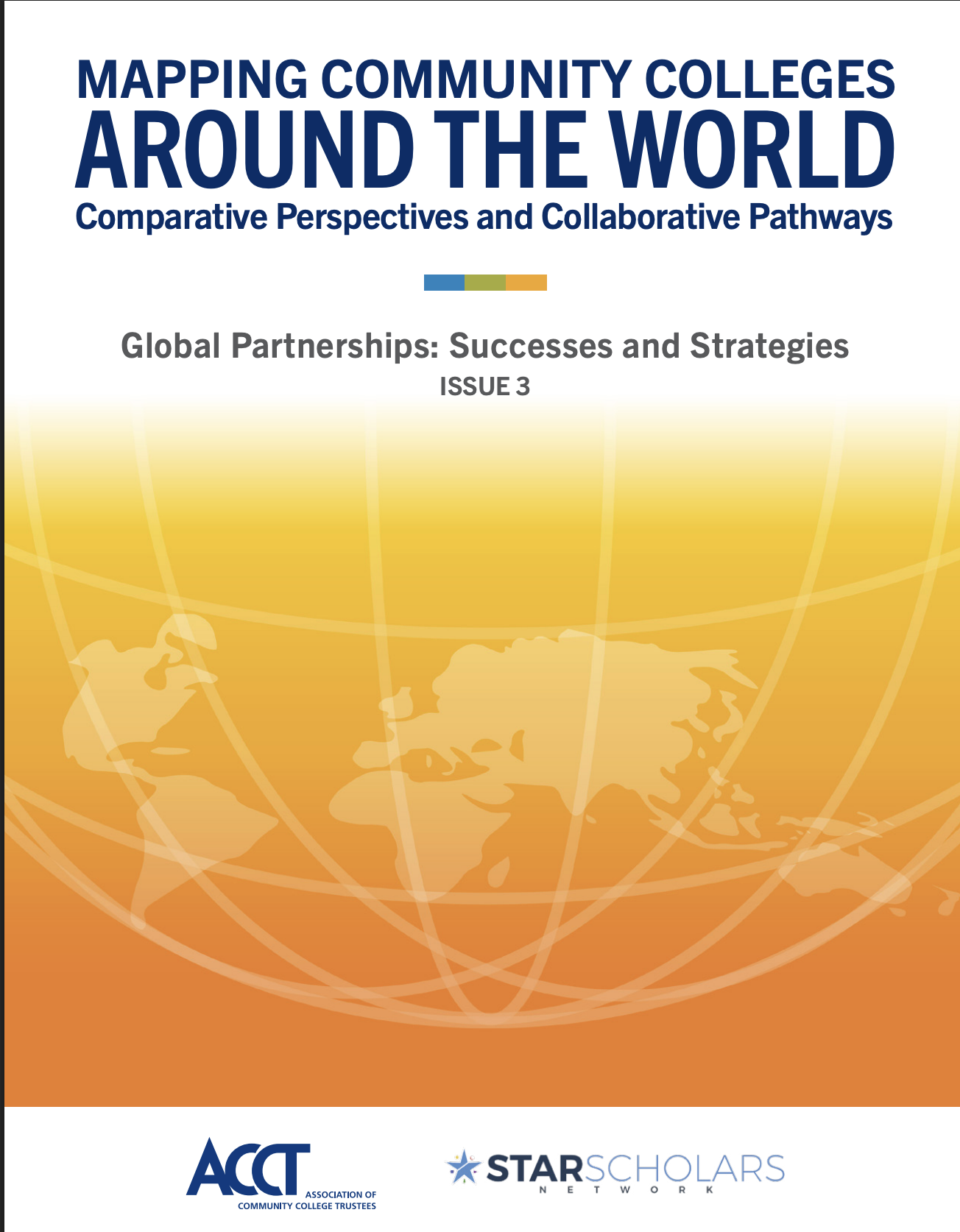
Publisher : STAR SCHOLARS PRESS
Published : November 24, 2025
Global Partnerships: Successes and Strategies brings together a rich collection of articles that illuminate how meaningful international collaborations are built, sustained, and transformed over time. Written from a wide range of institutional perspectives, the volume offers in-depth case studies alongside conceptual pieces that unpack the philosophical foundations of global engagement. Contributors share concrete lessons learned, practical guidance, and candid reflections that shed light on both the opportunities and challenges inherent in international partnership work. A consistent theme across the volume is the importance of flexibility, resilience, and relationship-building. The articles highlight the pivotal roles of individual champions, institutional leaders, and campus-wide support systems in advancing enduring partnerships. Readers will also find compelling stories of unexpected growth, as collaborations evolve into broader activities such as joint lectures, virtual exchanges, and community engagement initiatives. While focused on institution-to-institution partnerships, the volume underscores the power of wider community involvement—an area in which community colleges and similar institutions excel.
Download the ebook here
Table of Contents
Editors’ Introduction Robin Matross Helms and Krishna Bista
Cultivating Wonder: Curriculum, Context, and Connection Wojciech (Voytek) Wloch
Cloud Forest Collaboration: Linn-Benton Community College’s Costa Rica Exchange Partnership Lisa Avery and Katie Winder
An Enduring Relational Partnership: A 30-Year Global Collaboration between McLennan Community College and Masaryk University Amy Antoninka and Johnette McKown
Impactful Collaborations: Using Collaborative Online International Learning (COIL) to Facilitate Meaningful Connections Across Borders at the Alamo Colleges District Lindsey Kline
Mapping Global Partnerships: The Case of Symbiosis Skills Universities and Aalen University Swati Mujumdar
Building Strategic Partnerships for Global Education at Monroe Community College: A Case Study with Cornell University’s Mario Einaudi Center for International Studies Christina Heyon Lee
Establishing Dynamics for Successful Growth of Global Engagement Partnerships: A Step-by-Step Approach Stacye Fraser Thompson
Publisher : STAR SCHOLARS PRESS
Published : January 28, 2026
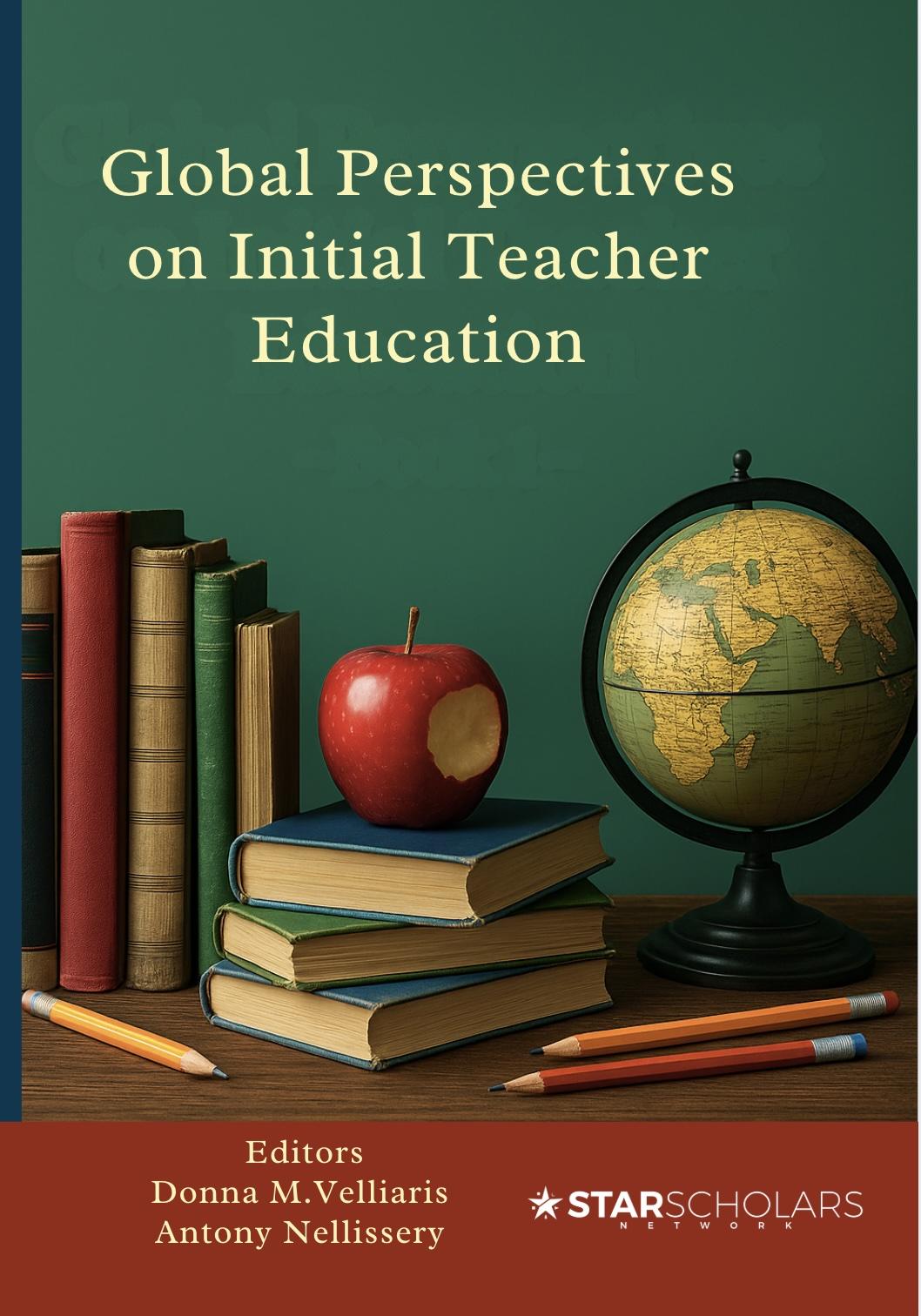
Global Perspectives on Initial Teacher Education offers a timely and incisive examination of how teachers are prepared to enter the profession in an increasingly complex world. Bringing together scholars and practitioners from diverse contexts, this volume explores the foundations, pedagogies, and professional identities that shape early teacher formation. Across its three parts, the book illuminates how globalization, technological innovation, inclusive frameworks, and culturally responsive practice redefine the work of preparing future educators.
With attention to assessment, mentoring, instructional design, and the lived experiences of preservice teachers, the volume underscores the need for preparation models that are rigorous, humane, and globally informed. As the inaugural title in a new series on teacher education, it calls for coherent, research-driven approaches that equip new teachers to thrive amid the shifting demands of 21st century classrooms and to contribute to education as a global public good.
Editors, Donna M Velliaris and Antony Nellissery
Donna M Velliaris is a globally recognized educator, author, and speaker acclaimed for her transformative teaching methods and pioneering contributions to education. She holds Graduate Certificates in Australian Studies, Religious Education, and Guidance & Counselling; Graduate Diplomas in Secondary Education and Language & Literacy Education; three Master’s degrees in Educational Sociology, Studies of Asia, and Special Education; and a PhD in Education (2010) focused on the social-educational development of transnational students. Ranked among the Top 30 Global Gurus in Education for three consecutive years—2023 (No. 30), 2024 (No. 22), and 2025 (No. 9)—she is the author of eight books and more than 40 book chapters, as well as a sought-after international speaker committed to advancing education through excellence, innovation, and systemic transformation.
Antony Nellissery is an education reformer with nearly three decades of experience advancing systemic change through school leadership, life-skills curricula, and teacher empowerment. Holding a PhD from Amity University and an alumnus of IRMA, he has worked across schools, foundations, and nonprofits, mentoring more than 200 professionals. Currently Head of the Sterlite EdIndia Foundation, he has been recognized as a Global Goodwill Ambassador , Reformer in Education – Regional (2023), Great Manager to Work With (2023–24) , Best CSR Head in the Education Domain (2024) , and co-authored The Skills Edge (2021). Guided by his belief that school leadership and trust-building are the cornerstones of lasting transformation, his work is deeply informed by his own experience of a teacher who once transformed his life during a period of struggle.
Publisher : STAR SCHOLARS PRESS
Published : October 5, 2024
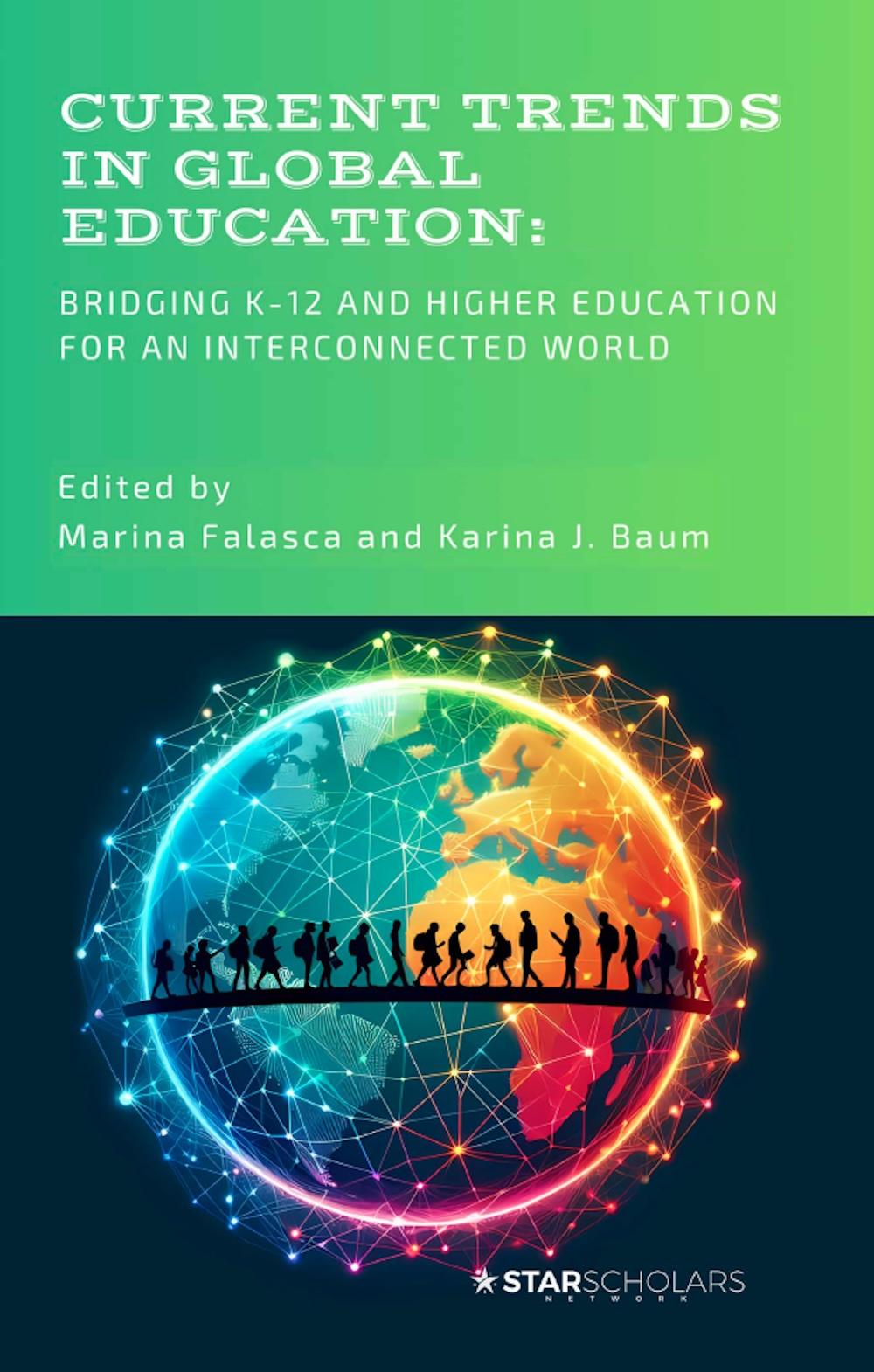
Current Trends in Global Education: Bridging K-12 and Higher Education for an Interconnected World explores the evolving landscape of global education through insights from esteemed educators and researchers. It defines global education and presents multiple rationales for developing global competence along with a literature review of significant challenges over the past two decades. The anthology showcases innovative K-12 practices, emerging trends, and the transformative role of transnational telecollaboration and artificial intelligence (AI) in fostering global citizenship and cross-cultural communication. It also examines higher education focusing on novel pedagogical tools, hybrid learning communities, and virtual exchange initiatives in ESP/EAP courses, as well as key factors affecting AI adoption in this context. Editors
Marina Falasca, M.Ed., M.A. , is an Associate Professor with a focus on pedagogy, didactics, and curriculum at IES en Lenguas Vivas Juan Ramón Fernández in Buenos Aires, Argentina. She also serves as the STAR Country Director for Argentina and is the recipient of the 2024 Klett Award for Sustainable Development Education in the World Language Classroom. Karina J. Baum, Ph.D., is the Director of Global Education at Buckingham Browne & Nichols, a K-12 independent school in Cambridge, Massachusetts. She serves on the Board of Directors of the Global Education Benchmark Group and the Kathleen Stone Island Outward Bound.
Download ebook (complimentary) or order print copies from Amazon and Barnes & Noble | Related books here
Publisher : STAR SCHOLARS PRESS
Published : February 8, 2026
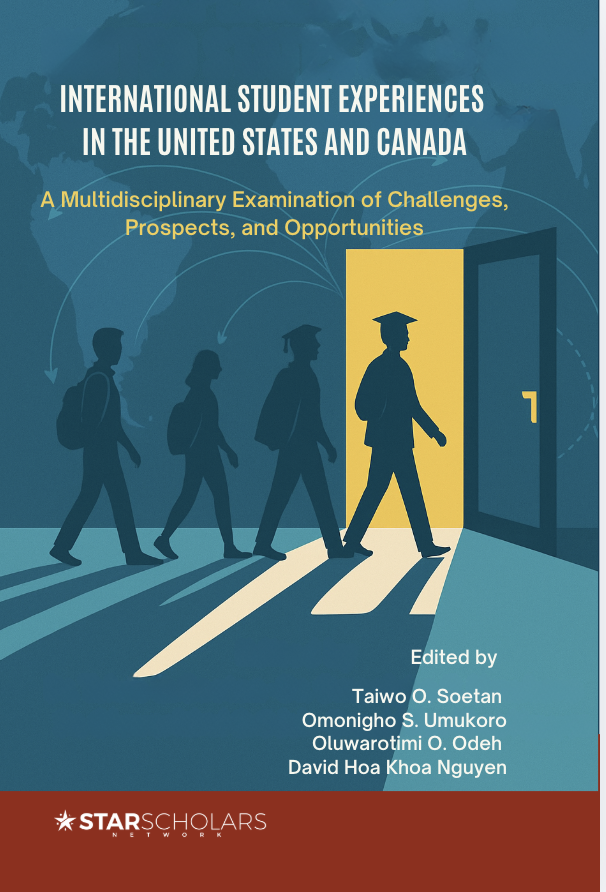
This edited volume offers a rigorous, multidimensional exploration of the international student journey across the United States and Canada. Drawing on diverse disciplinary perspectives and current research, the book illuminates the cultural, academic, and psychosocial challenges students face—from initial adjustment and language barriers to identity development and community integration—while also highlighting the long-term opportunities that shape their educational and professional trajectories.
Beyond documenting student experiences, the book situates international education within broader demographic and workforce realities, particularly the growing reliance on global talent to address aging labor markets in North America. By bringing together scholars from around the world, this volume provides a timely and comprehensive resource for researchers, educators, policymakers, and higher education leaders committed to supporting international student success and strengthening global mobility pathways.
Edited by Taiwo O. Soetan, Omonigho S. Umukoro, Oluwarotimi O. Odeh, and David Hoa Khoa Nguyen
Taiwo O. Soetan (Ph.D.) was an Associate Professor of Business at the School of Business and Entrepreneurship, Dickinson State University (DSU), Dickinson, North Dakota, and an External Examiner in the Graduate (Doctoral) Program at the School of Leadership Studies, Fielding Graduate University, California, United States. Prior to DSU, Soetan taught several business courses as a full-time faculty at two of Canada’s higher education institutions. He obtained his graduate qualifications at the Master level (MBA, ME, MA, and MSc) and Ph.D. from universities in the U.K, Canada, and the U.S. Dr. Soetan is a Project Management Professional (PMP), and his articles have been published in peer review journals and edited books. He is the co-author of the book, “Financial services in Nigeria: The path towards financial inclusion, economic development, and sustainable growth” that was published by Palgrave Macmillan.
Omonigho Simon Umukoro (Ph.D.) is a faculty at the Department of Psychology, Faculty of Social Sciences at the University of Lagos, Nigeria. He is an accomplished scholar and educator with a diverse background in organizational and social psychology. He holds a Ph.D. in Psychology from the University of Ibadan where he received commendations and a prize for the publication of his doctoral thesis. With an impressive academic journey that includes a master’s degree, a Bachelor’s degree and a Professional Diploma in Statistics, Dr. Umukoro has consistently demonstrated his commitment to scholarship. He is an active member of various professional organizations including the Nigerian Psychological Association, the American Psychological Association, and a host of others, showcasing his dedication to advancing the field of Psychology. He is a recipient of Award for the 2023 ARVA-Carnegie Early Career Postdoctoral Fellowship. He recently completed his research fellow at the ARVA Center of Excellence in Notions of Identity at Makerere University, Kampala, Uganda.
Oluwarotimi Odeh (Ph.D.) is a Professor of Agricultural Economics with more than 18 years of experience as a faculty member, a mentor, and advisor to students in three public universities in the United States. Before he immigrated to the United States in early 2001 for his graduate studies, he worked for Nigeria’s premier bank for several years. He is currently the Rolland Starn Endowed Chair of Agriculture at California State University, Stanislaus, California, where he oversees the institution’s agriculture program. Dr Odeh has most recently been a recipient of the Carnegie African Diaspora Program and recently completed a seven-month Fulbright Fellowship in Nigeria, where he was a mentor and advisor to many students and young faculty members. He sits on the advisory board of local schools and provides input to enhance learning experiences of students in and out of the classroom.
David Hoa Khoa Nguyen (Ph.D.) is an Associate Professor of Urban Education Leadership and Policy and an Adjunct Professor of Law at Indiana University, Indianapolis, United States. Prior to academia, Nguyen was a full-time practicing attorney in immigration, family, and administrative law. He is licensed to practice in the state and federal courts of Indiana, North Dakota, and Texas. He has a BSc Ed. In Secondary Education and an MBA, J.D., AND Ph.D. in Education Policy Studies from Indiana University. He obtained a Master of Advanced Legal Studies from Leiden University in the Netherlands as a Rotary Foundation Ambassadorial Scholar.
Table of Contents
Foreword Art R. Malloy
Series Editor’s Note Krishna Bista
Chapter 1
Pre-Departure Preparation for African International Students in U.S. and Canadian Higher Education Institutions Alice Kanyama
Chapter 2
Intercultural Communication Experiences of International Students: An Example from a Post-Soviet Context Oseremi Olivia Jagbojo
Chapter 3
International Transfer Students at U.S. Community Colleges Caitlyn Potter Glaser
Chapter 4
Care and Academic Mobility: Narratives of International Doctoral Student Mothers from the Global South Yulu Hou
Chapter 5
Welcoming the Whole Household: Ethical Responsibilities Toward International Graduate Student Families in Christian Higher Education Junyan (Emma) Zhu
Chapter 6
Navigating Dual Worlds: The Lived Realities of International Graduate Student Parents in U.S. Higher Education Sayyora Ibadullaeva
Chapter 7
“It’s a Bigger Sea, You’re Gonna Need a Strong Boat”: International Students’ Experiences of Academic Expectations and Setbacks in Canada Susan He
Chapter 8
Student Engagement and Leadership as a Support System for International Students Laura Vaughn and Van Anh Tran
Chapter 9
A Review of Syllabus Design for Online Courses in American Higher Education Yusuf Marafa
Chapter 10
From Misconception to Separation: How Race Affects International Students’ Sense of Belonging in the United States Adrijana Miladinović
Chapter 11
Fitting In and Holding On: A Model-Based Autoethnography of Micro-Level Acculturative Stressors Among African-Born International Students in the U.S. Ehi-Kowochio Blessing Ogwiji
Chapter 12
International Students’ Perceptions of Campus Sexual Violence Prevention Programs Wei Dai
Chapter 13
Understanding the Mental Health Experiences of Racialized International Students in Canada JesusMiracle Chiadika
Chapter 14
Contributions of International Student Athletes to the U.S. and Canadian Economies Eniola Soetan and Taiwo O. Soetan
Publisher : STAR SCHOLARS PRESS
Published : August 15, 2026
Order your copies: Print Hardcover | ebook | Amazon | Google Books | Other Distributors
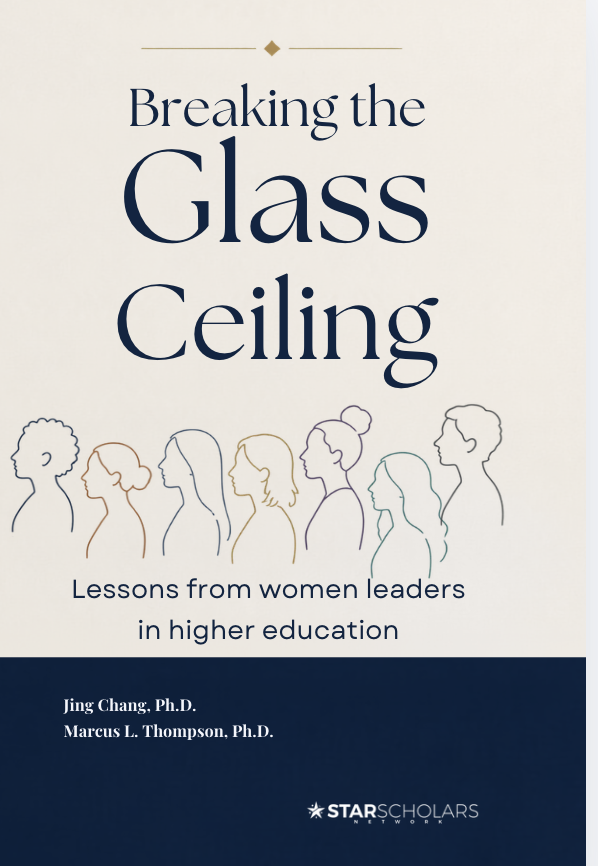
Women make up the majority of college students and advanced-degree holders. So why do they still lead only about one in three universities, and far fewer of the most powerful ones?
Breaking the Glass Ceiling answers that question the way it deserves to be answered: through the people who lived it. Here are seven women who reached senior leadership at a public university in the American South, three African American and four born in China, ranging from a dean in her seventies who helped desegregate her high school in 1963 to a young professor still proving she belongs. In their own candid words, they describe the mentors who pulled them up, the discrimination they outlasted, the families they refused to sacrifice, and the institutions they quietly rebuilt.
From their experience, the authors distill a clear and teachable model, the Three Core Layers of women's leadership, and a clear-eyed account of why so few women reach the top and what would actually change that. Rigorous enough for the seminar and human enough for the nightstand, this is both a study and a map.
Jing Chang, Ph.D. Marcus L. Thompson, Ph.D.
Series : 6
Publisher : STAR SCHOLARS PRESS
Published : August 9, 2026
Order your copies: Print | ebook | Amazon | Google Books | Other Distributors
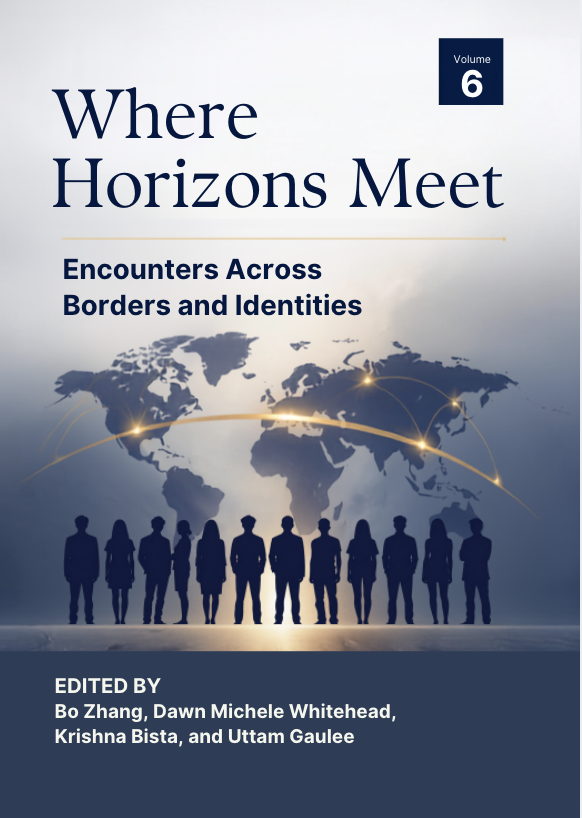
Where Horizons Meet: Encounters Across Borders and Identities brings together powerful personal stories of living, learning, and working across cultures. Edited by Bo Zhang, Dawn Michele Whitehead, Krishna Bista, and Uttam Gaulee, the volume explores identity, belonging, migration, language, resilience, inclusion, and global citizenship through the lived experiences of students, educators, scholars, and professionals. Part of the Global Essay Book Series, this collection shows how crossing borders can challenge assumptions, deepen understanding, and transform the way people see themselves and others. It is an engaging resource for students, educators, international education professionals, and anyone interested in intercultural learning and our increasingly connected world.
Publisher : STAR SCHOLARS PRESS
Published : June 6, 2026
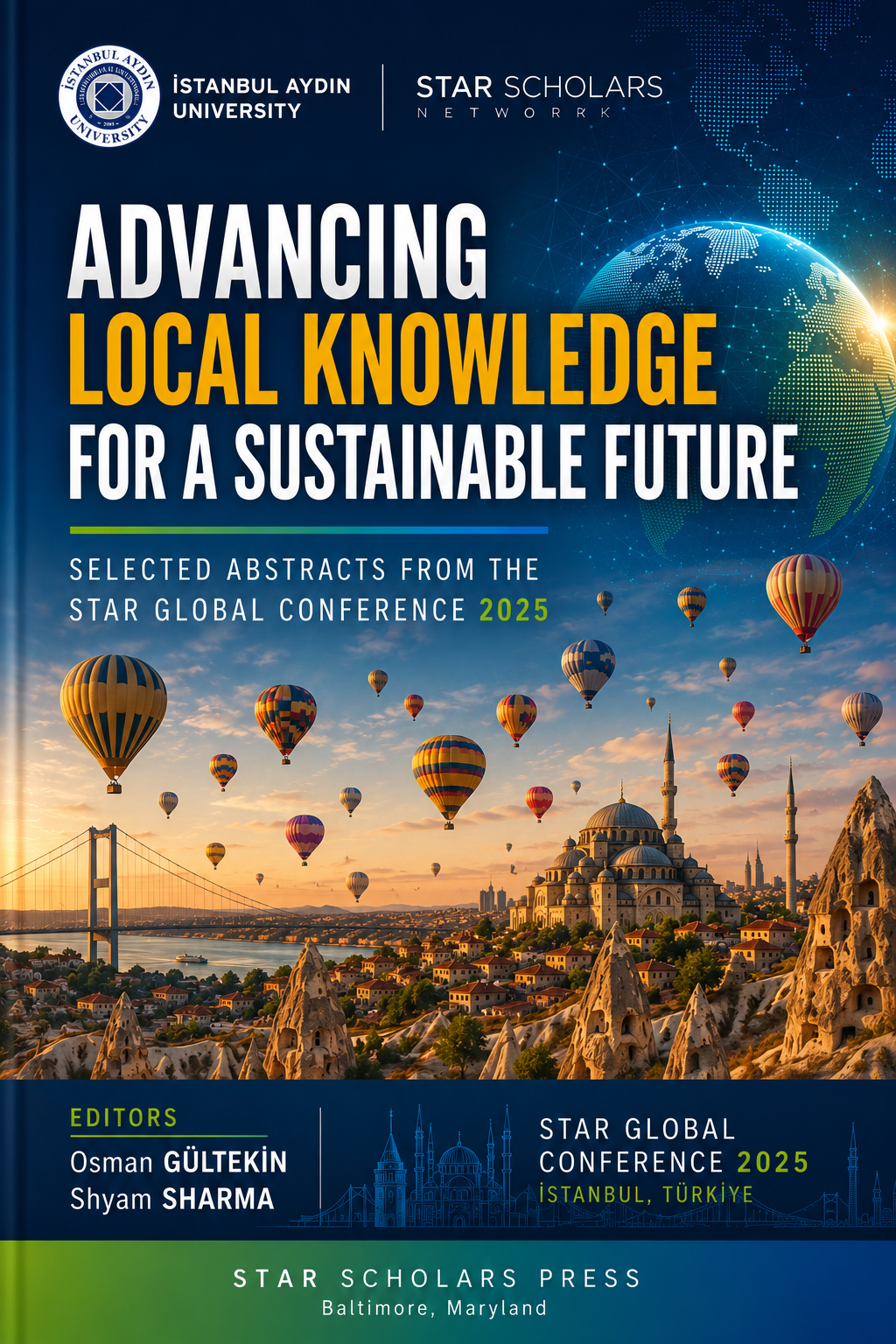
Advancing Local Knowledge for a Sustainable Future: Selected Abstracts from the STAR Global Conference 2025 brings together scholarly abstracts presented at the conference in İstanbul, Türkiye. Reflecting the conference theme, this digital volume highlights diverse perspectives on the role of local knowledge in addressing contemporary global challenges and advancing sustainable development. The collection features contributions from researchers, educators, practitioners, policymakers, and graduate students representing institutions across multiple countries and disciplines. Topics include higher education, artificial intelligence, educational innovation, sustainability, indigenous knowledge systems, community development, cultural heritage, language learning, leadership, social justice, health, architecture, and international collaboration.
Highlights
Global Perspectives: Research and insights from scholars, educators, and practitioners representing diverse countries and disciplines.
Local Knowledge for Sustainable Futures: Innovative approaches that connect indigenous, community-based, and local knowledge with global challenges.
Emerging Trends and Innovation: Contributions exploring artificial intelligence, educational transformation, sustainability, and social development.
Interdisciplinary Scholarship: A rich collection of abstracts spanning education, technology, culture, leadership, health, architecture, and community engagement.
How to cite: Gültekin, O., & Sharma, S. (Eds.). (2026). Advancing local knowledge for a sustainable future . STAR Scholars Press. https://doi.org/10.32674/a2ecr316
Publisher : STAR SCHOLARS PRESS
Published : June 30, 2023
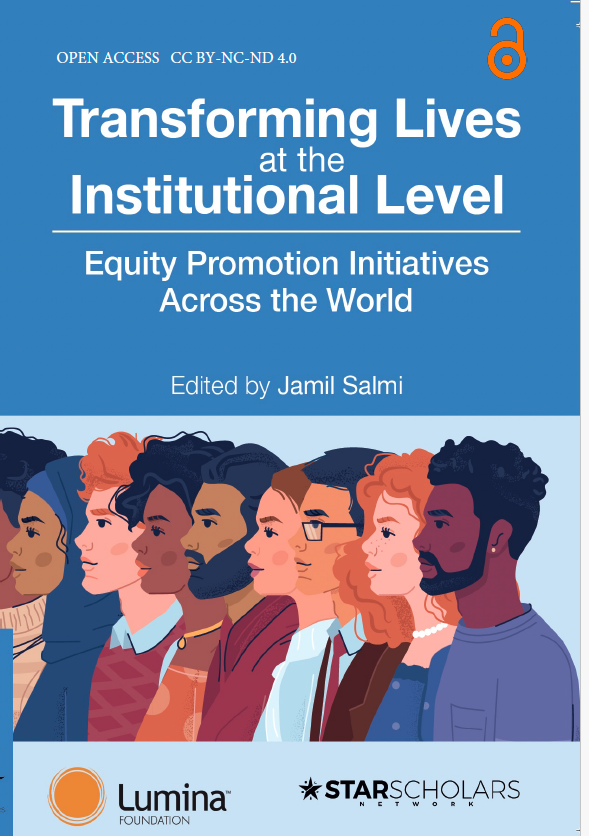
Transforming Lives at the Institutional Level explores innovative higher education initiatives from around the world aimed at enhancing access and success for underrepresented and marginalized groups. Through 31 case studies spanning seven global regions, this volume offers invaluable insights and lessons learned to inform equity promotion policies and practices.
OPEN ACCESS BOOK | CC BY-NC-ND Open access editions of this book can be accessed here . The open access edition of this book is freely available to readers worldwide and may be accessed, downloaded, and shared without charge through the publisher’s website and scholarly discovery platforms.
Praise for this book
Transforming Lives at the Institutional Level: Equity Promotion Initiatives Across the World, edited by Jamil Salmi is a timely and important resource providing insights into innovative policies and practices as well as barriers inhibiting access to and equity in higher education. Professor Ly Tran, Deakin University, Australia *** What a fantastic collection of case studies from around the world! The book is so timely, given the increased focus on the transformative role of higher education, in the light of current geo-political events and increasing precarity of higher education’s mission, influenced too narrowly by the economic benefit perspective. The book is a must read. Aneta Hayes, Keele University, UK **** At a time when too many countries are backsliding from the principles of democracy, including human rights protections for ordinary citizens–which at their very core demand access to educational opportunity–this book could not be more timely. But how do we correct course? This book provides some answers. Bernhard Streitwieser, George Washington University, USA
The event marked the official launch of Transforming Lives: Equity and Access for All Learners in Higher Education . Edited by Dr. Jamil Salmi, the book compiles proven approaches to reach underserved groups with case studies and practical solutions from over 20 countries.
“There is so much talent that goes to waste because millions of young people do not get the same opportunities to access and to be successful,” said editor Dr. Jamil Salmi, a Research Fellow at the Center for International Higher Education (CIHE) at Boston College.
From scholarship initiatives in Ethiopia to refugee support programs in Germany to curriculum decolonization efforts in Scotland and programs to support rural students in China and Australia the book highlights diverse solutions making a difference:
“I hope you’ll be able to glean at least one, if not many, more ideas so we can create a just and equitable post-secondary system,” said Dr. Courtney Brown, Vice President of Impact and Planning at the Lumina Foundation.
Key insights include combining financial and non-monetary policies, capturing intersectionalities, focusing on transitions beyond graduation, collecting better data, and aligning institutional and national approaches. Success factors across initiatives included dedicated leadership, pilot testing, and respecting diverse definitions of success.
“The equity interventions are sustainable when they are embedded in an institutional strategy and benefit from the support of all university stakeholders,” said Dr. Andrée Sursock, Senior Advisor to the European University Association.
“Leadership buy-in is a critical aspect that many people are facing,” added Dr. Renato Pedrosa, Institute of Advanced Studies, University of São Paulo.
Dr. Nidhi S. Sabharwal, Centre for Policy Research in Higher Education, share that “in India, specifically students from the socially disadvantaged groups are offered a relaxation of age and scores at admission…for increasing their access to higher education.”
Dr. Gerry Postiglione, The University of Hong Kong, observed that “the onset of massification in the emerging economies of Eastern Asia…has definitely improved opportunities from students, both men and women, from rural, minority, disabled groups, and particularly low income households.”
Participants included leaders from Australia, Canada, China, Colombia, Egypt, Ghana, India, Indonesia, Kenya, Malaysia, Nepal, Philippines, South Africa, Taiwan, Thailand, United Kingdom, United States.
Publisher : STAR SCHOLARS PRESS
Published : June 30, 2026
Order Print Copies | Amazon | Hardcover | eBook | Google Books
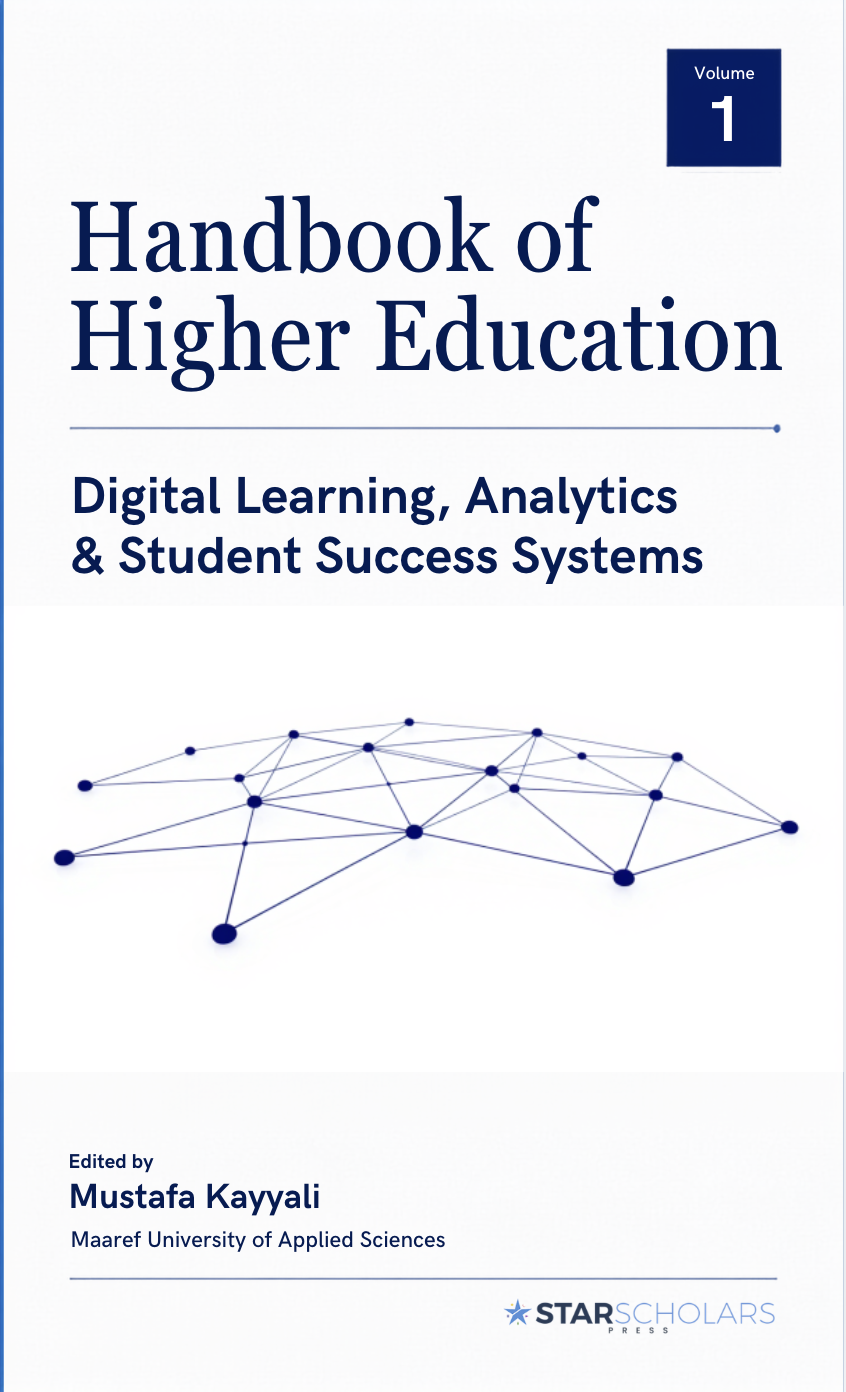
This volume examines the intersection of digital learning, learning analytics, and student success systems in contemporary higher education. Nine chapters written by scholars and practitioners from multiple geographic contexts analyze how artificial intelligence, institutional automation, faculty role transformation, and inclusive access technologies reshape higher education practice and outcomes. The volume combines theoretical frameworks with case evidence from national systems, disciplinary fields, and individual institutions. Core themes include the tension between digitalization and equity, the evolution of immersive and hybrid learning models, the role of data-informed decision-making in institutional performance, and the imperative to design digital transformations that serve all students, not only the advantaged. Intended for researchers, institutional leaders, faculty, graduate students, and policymakers, the volume argues that higher education can become simultaneously more efficient and more humane through thoughtful implementation and critical attention to context.
