
Update Search
Categories
Series
Date
Update Search
Categories
Series
Date
1 - 3 of 3 items
Sort By
Publisher : STAR SCHOLARS PRESS
Published : May 9, 2026
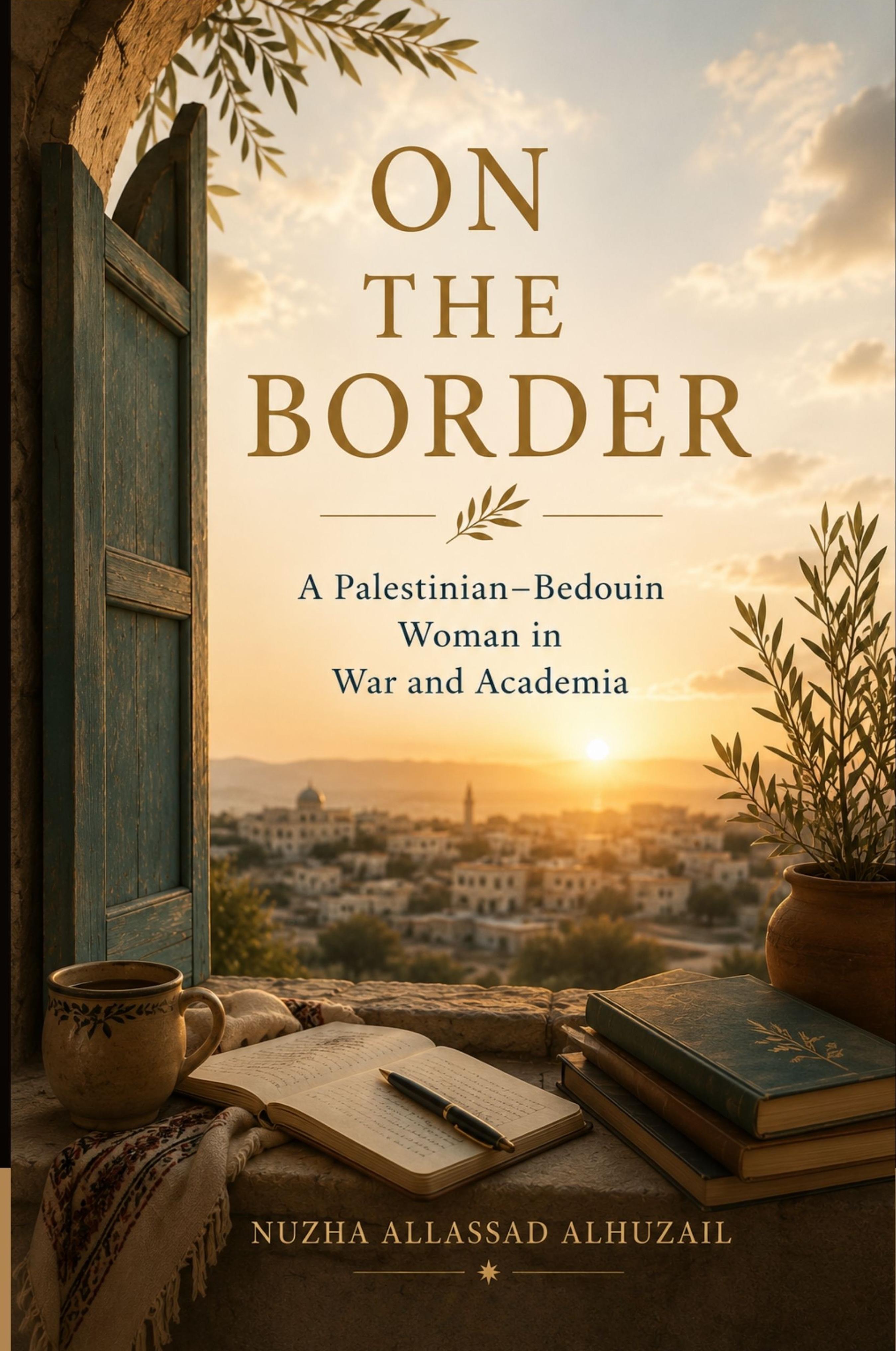
Two kilometers from Gaza, a Palestinian–Bedouin professor begins her mornings in quiet prayer, tending to her garden as rockets arc across the sky. By afternoon, she is in a classroom, teaching Jewish and Arab students in one of Israel’s most politically charged academic spaces. By night, she is a mother and grandmother, carrying memories of Rafah, tribal traditions, and a childhood shaped by crossing invisible lines.
In On the Border , she tells the story of a life lived in tension, between tribe and state, between loyalty and suspicion, between war and scholarship. Accused of betrayal by some and normalization by others, she refuses the simplicity of choosing sides. Instead, she insists on complexity, on dialogue, and on the moral courage to hold multiple truths at once.
Through vivid scenes of childhood in Gaza and her fight to enter university in a society that told her girls should stay home, her rise to become one of the first Bedouin women professors in Israel, and her experience of October 7th from the edge of war, this autoethnography reveals the intimate cost of living at the seam of history.
At once deeply personal and politically urgent, On the Border is a story of resilience, intellect, motherhood, and the quiet strength required to remain human when every side demands allegiance. It is a rare and necessary portrait of what it means to live and to think between worlds.
Author
Nuzha Allassad Alhuzail, Ph.D . , is a Professor of Social Work at Sapir Academic College and a leading scholar on Bedouin society, gender, social justice, and conflict. She serves as Chair of the Committee for the Advancement of Arab Students and the Promotion of Fairness and Partnership between Arabs and Jews on the Sapir campus, and heads the National Center for Knowledge, Policy, and Research on Bedouin Society in the Negev. Dr. Alhuzail is also a Board Member of the European Social Work Research Association and an international lecturer with the Israel Institute.
“A courageous and intellectually compelling memoir that challenges simplistic narratives.” — Kris Clarke, University of Helsinki, Finland
“An illuminating account of resilience, womanhood, and academic life between worlds.” — Collins B. Bugingo, Cornell University, USA
“A timely and necessary work that gives voice to histories too often left untold.” — Jim Campbell, University College Dublin, Ireland
“A unique and insightful perspective on the journey of a Bedouin woman in a changing society.” — Alan Frazier, University of North Dakota, USA
Publisher : STAR SCHOLARS PRESS
Published : February 15, 2025
Tawfiq Zayyad: An Analytic Study of His Literary Oeuvre by Sālim al-ʿAṭāwna, edited and revised by Dr. Saleem Abu Jaber, offers an in-depth exploration of the life and works of Tawfiq Zayyad, one of the most prominent voices in Palestinian literature and political activism. This meticulously researched study examines Zayyad's poetic and literary contributions, delving into the themes of resistance, hope, and identity amidst the socio-political realities of the Palestinian struggle.
With comprehensive analysis spanning Zayyad's biography, the evolution of his poetic style, and the cultural, political, and social contexts influencing his works, this book bridges literary scholarship and historical insight. Dr. Abu Jaber's expert editorial guidance enhances the accessibility of this pivotal study for scholars, students, and anyone interested in Middle Eastern literature and the intersection of art and activism. A valuable addition to literary and cultural studies, this work highlights the enduring impact of Zayyad's voice in advocating for justice, resilience, and peace.
This book is available in ebook , paperback , and hardcover editions.
Publisher : STAR SCHOLARS PRESS
Published : March 15, 2022
This volume investigates how international students in and from the Middle East are constructed by nations, institutions, other students, and themselves. Making a valuable contribution to understanding the nuances and complexities of educational politics and priorities affecting these constructions, the text considers the broader impacts of discourse on internationalisation.
Offering a unique combination of critical analysis of educational policies combined with empirical contributions through authors’ own research, chapters highlight intersections between politics, the internationalisation of higher education, and the construction of mobile learners. Emphasising variation and nuance in the internationalisation of policies in the Gulf Cooperation Countries, and other Middle Eastern countries, the volume offers a theoretical framework to help understand the political, educational, and ethical implications of emerging constructions of international students and their comparison across the Middle East.
This timely volume will benefit researchers, academics, and educators with an interest in higher education, international and comparative education, as well as the Middle East more specifically. Those involved with educational education policy and politics, specifically related to the Middle East, will also benefit from this volume.
Paperback | Hardback | eBook
