
AI and Education Book Series
6 Titles
Series Editor:
Dr. Uttam Gaulee, Professor, Morgan State University, United States at uttam.gaulee@morgan.edu
Explore the forefront of the educational revolution with the "AI and Education Series." This collection is your gateway to a world where AI technologies redefine the very essence of teaching and learning. Explore the pressing questions of how education should adapt, incorporate, and challenge today's formidable AI systems, including the game-changing large language models.
Title: AI and Education Book Series
Online ISSN: 3065-3592
Print ISSN: 3065-3584
Suggested Topics for Inclusion:
1. AI-Powered Personalized Learning: Nurturing Individual Growth
2. Ethical Considerations in AI-Enhanced Education: Balancing Innovation and Responsibility
3. Role of AI in Early Childhood Education: A Developmental Perspective
4. AI-Driven Assessment Tools: Rethinking Evaluation and Feedback
5. AI-Enhanced Classroom Management: Fostering Inclusive and Effective Learning Environments
6. Teacher Training in the Age of AI: Preparing Educators for the Digital Frontier
7. AI-Driven EdTech Startups: Innovations Shaping the Future of Education
8. AI and Special Education: Tailoring Support for Diverse Learning Needs
9. AI and Lifelong Learning: Adapting to the Demands of the Knowledge Economy
10. AI and Global Education Equity: Bridging Gaps in Access and Quality
We invite passionate authors and editors to submit proposals for books and edited volumes contributing to this series.
Submit your inquiries or book idea to Dr Roy Y. Chan at roy.chan@starscholars.org
Length requirements:
Chapter length: 2,500 to 4,000 words per chapter
Total chapters in the book: 5-7 chapters
Resources for authors/editors:
Editors
Dr. Jing Luan, Provost Emeritus of San Mateo Colleges of Silicon Valley, United States at jingluan@my.smccd.edu
Dr. Roy Y. Chan, EdD Program Director, Lee University, United States at rchan@leeuniversity.edu
Dr. Vasileios Paliktzoglou, Bahrain Polytechnic, Bahrain at paliktzoglou@gmail.com
Dr. Mustafa Kayyali, Professor, Maaref University of Applied Sciences, Syria - Azteca University, Mexico kayyali@heranking.com
Brief Bio: Prof. Mustafa Kayyali is a Syrian academic, researcher, and higher education strategist whose work focuses on quality assurance, accreditation, university rankings, internationalization, and academic development. He is the author and editor of 25 published books and is currently leading the ambitious 13-volume Encyclopedia of Higher Education, a major international reference project. His scholarship has gained broad academic visibility, and several of his books have been catalogued, featured, and used for teaching, course guidance, or academic access at universities in multiple countries, reflecting the growing global reach and practical relevance of his work in higher education.
Editorial Fellows
Lecturer, Garissa University, Kenya
Email: ramadhanzainab2@gmail.com
Short Bio:
Zainabu Ramadhan is a lecturer and researcher in education with experience as both a principal investigator and consultant. She holds two master’s degrees—one in Education Research from Nelson Mandela University (South Africa) and another in Educational Communication Technology from Moi University (Kenya). Her work focuses on teaching, learning, and technology integration, with a growing interest in AI-enhanced educational practices.
Teacher & PhD Candidate, Ohio University, USA
Email: fb923721@ohio.edu
Short Bio:
Fatiha Bazouche is a PhD candidate in Instructional Technology at Ohio University. Her research focuses on promoting critical thinking in hybrid and AI-enhanced learning environments. She has designed and led professional development for educators using frameworks such as Merrill’s First Principles of Instruction and Paul & Elder’s Intellectual Standards. As an instructional designer and teacher educator, she collaborates internationally on technology-mediated pedagogy, assessment innovation, and AI literacy. Her work has been presented at international conferences and published in peer-reviewed journals and edited collections.
Associate Professor, Complutense University of Madrid, Spain
Email: mlabra02@ucm.es
Short Bio:
Maribel Labrado-Antolín is an Associate Professor at the Complutense University of Madrid with more than 20 years of experience in the consulting services industry. She teaches Human Resource Management, Business Strategy, and Project Management at both undergraduate and master’s levels. Her research focuses on organizational behavior and employee well-being, particularly the impact of emerging work models such as remote, hybrid, and coworking environments. She is also an experienced lecturer and speaker on talent development and the future of work.
Online ISSN 3065-3592
Print ISSN 3065-3584
All Books

Publisher : STAR SCHOLARS PRESS
Published : September 20, 2025
Our World of Work is a series of photography books that uses the lens to celebrate people working in a particular place, at a specific time, and in a specific space. Images were photographed over 25 years of travel throughout 75 countries, and in most cases with my wife, Vera Valeau. The book's underlying theme is identifying and celebrating the ordinary people who work to survive globally under various influences, conditions, controls and circumstances, over which most often they have no control, little interest, and, most importantly, no knowledge of how it affects them.
Slices of Work in Latin America and the Caribbean: Transcending Place, Space, and Time portrays the social and environmental working conditions of a segment of the region's population. Through narration, poetry, storytelling, and photography, the book aims to introduce readers to a culturally pluralistic, diverse, and dynamic society of ordinary people. It celebrates the unique contributions of each culture and the diversity that enriches our global workforce.
Order Copy Here
Publisher : STAR SCHOLARS PRESS
Published : February 4, 2026
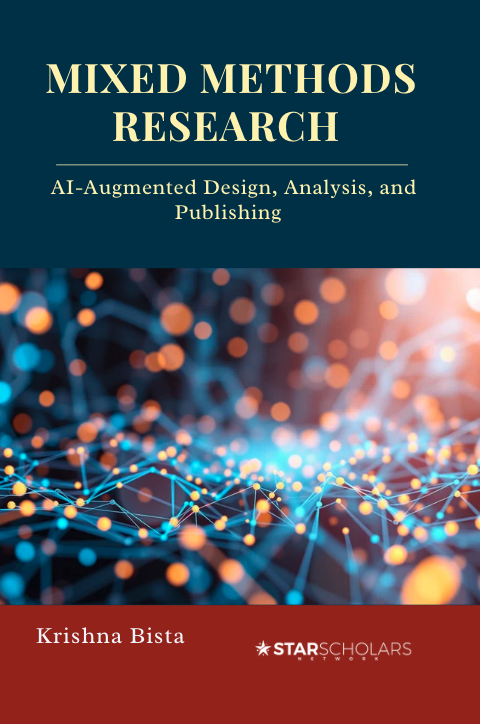
Mixed Methods Research: AI-Augmented Design, Analysis, and Publishing is a practical and scholarly guide for doctoral students, faculty members, institutional researchers, and interdisciplinary scholars seeking to conduct rigorous mixed-methods studies. While grounded in education and the social sciences, it is relevant to researchers in health, policy, business, and STEM fields. The book provides a roadmap from research design to publication. It covers foundational mixed methods paradigms, core designs, integration strategies, and meta-inference development. It also demonstrates how AI tools such as ChatGPT, Google Gemini, and Microsoft Copilot can be used responsibly to support literature reviews, instrument design, data analysis preparation, writing, and revision without compromising rigor or ethics. Each chapter blends conceptual clarity, applied examples, and practical workflows suitable for doctoral courses, faculty development, and research teams.
Key Features
Rigorous Mixed Methods Framework Guidance on design selection, integration, joint displays, and defensible interpretation.
Responsible AI Integration Structured use of AI tools across research phases with attention to ethics, bias, and transparency.
From Research to Publication Strategies for manuscript development, journal targeting, and navigating peer review.
CONTENTS
CHAPTER 1
What Is Mixed Methods Research?
Defining Mixed Methods Research Why Mixed Methods? Key Advantages of Conducting Mixed Methods Research Types of Mixed Methods Research Key Elements of Mixed Methods Research
CHAPTER 2
AI and Philosophical Foundations of Mixed Methods Research
Pragmatism as Methodological Foundation Critical Realism and Ontological Depth Transformative Paradigms and Justice-Centered Inquiry Integration as the Core of Mixed Methods Rethinking Mixed Methods in the Age of AI
CHAPTER 3
Convergent Mixed Methods Design
Definition and Purpose Key Procedures of the Convergent Mixed Methods Design Examples of Convergent Mixed Methods Design AI Applications in the Convergent Mixed Methods Design
CHAPTER 4
Explanatory Sequential Mixed Methods Design
Definition and Purpose Key Procedures of the Explanatory Sequential Design Examples of Explanatory Sequential Design AI Applications in the Explanatory Sequential Design
CHAPTER 5
Exploratory Sequential Mixed Methods Design
Definition and Purpose Key Procedures of the Exploratory Sequential Design Examples of Exploratory Sequential Design AI Applications in the Exploratory Sequential Design
CHAPTER 6
AI-Augmented Mixed Methods Methodology
Conceptual Foundations of AI-Augmented Mixed Methods AI in Instrument Development AI for Qualitative Coding Validation AI for Statistical Assumption Checking Bias Detection and Ethical Safeguards Prompt Engineering for Research Empirical Mini-Case Studies Reporting AI in Mixed Methods Publications
CHAPTER 7
Advanced Integration, Joint Displays, and Meta-Inference
What Is Integration in Mixed Methods? Timing, Weighting, and Connecting Data Strands Building Joint Displays Types of Joint Displays Handling Convergence and Divergence Constructing Defensible Meta-Inferences Weak vs. Strong Meta-Inference AI-Assisted Integration with Human Validation
CHAPTER 8
Writing a Mixed Methods Dissertation Proposal
Structuring a Mixed Methods Proposal Introduction Purpose Statement Research Questions Methodology Anticipated Results Table of Contents for a Mixed Methods Dissertation Proposal AI Applications in Crafting a Mixed Methods Proposal Sample Assignment: Writing a Mixed Methods Research Proposal
BIBLIOGRAPHY AND RESOURCES
Mixed Methods Books Mixed Methods Journals Prompts for AI Tools Research and Literature Review Tools Writing Tools

Publisher : STAR SCHOLARS PRESS
Published : December 1, 2024
This book is a comprehensive guide for doctoral students, early-career researchers, and educators navigating the complexities of qualitative research. This book bridges traditional qualitative methods with innovative AI tools, providing a step-by-step framework from research design to publication.
Key features include:
Practical explanations of major qualitative approaches such as phenomenology, case study, grounded theory, ethnography, and narrative research.
Integrating AI tools (e.g., NVivo, MAXQDA, ChatGPT, EndNote) to enhance data collection, analysis, and writing.
Real-world examples, reflexive prompts, and templates to guide your research process.
Strategies for ensuring rigor, trustworthiness, and ethical considerations in qualitative studies.
Actionable advice for structuring dissertations and publishing in top-tier journals.
With a focus on clarity, innovation, and academic rigor, this book equips researchers with the skills to produce high-quality qualitative research while embracing the potential of emerging technologies. Whether you are starting your dissertation or preparing for publication, this book is an essential companion on your qualitative research journey.
Table of Contents
Chapter 1: AI Tools for Qualitative Research Writing Why Use AI Tools in Qualitative Research? Benefits of Using AI Tools in Qualitative Research Ethical Considerations and Responsible AI Use AI Tools for Writing and Developing Interview Questionnaires AI Tools for Literature Review and Reference Management AI Tools for Data Collection AI Tools for Data Analysis and Coding AI Tools for Proofreading AI Tools for Visualizing and Presenting Data
Chapter 2: Foundations of Qualitative Research Qualitative Research: Nature, Purpose, and Characteristics Philosophical Foundations Types of Qualitative Methods/Approaches Designing a Qualitative Study Activity 1: Identifying Qualitative Approaches Activity 2: Research Design Draft Activity 3: Exploring Philosophical Foundations
Chapter 3: Narrative Research – Life Stories Characteristics of Narrative Research Types of Narratives Steps for Conducting Narrative Research Data Sources in Narrative Research Suggested Topics for Narrative Research Integrating AI Tools in Narrative Research Narrative Research Design Sample
Chapter 4: Phenomenology Research – Lived Experiences Characteristics of Phenomenology Types of Phenomenology Steps in Conducting Phenomenological Research Data Sources for Phenomenology Practical Topics for Phenomenological Research Phenomenological Research Sample
Chapter 5: Grounded Theory Research – Building Theory from Data Characteristics of Grounded Theory Types of Grounded Theory Steps for Conducting Grounded Theory Research Data Sources for Grounded Theory Practical Topics for Grounded Theory Research ChatGPT Prompts for Grounded Theory Grounded Theory Research Design Sample
Chapter 6: Ethnography Research – Exploring Cultures Characteristics of Ethnography Types of Ethnography Steps for Conducting Ethnographic Research Data Sources in Ethnography Practical Topics for Ethnographic Research ChatGPT Prompts for AI Tools in Ethnographic Research Virtual Ethnography Research Design Sample
Chapter 7: Case Study – In-Depth Exploration of Cases Characteristics of Case Study Research Types of Case Study Research Steps for Conducting Case Study Research Data Sources for Case Study Research Practical Topics for Case Study Research ChatGPT Prompts for AI Tools in Case Study Research Case Study Research Design Sample
Chapter 8: Action Research – Solving Real-World Problems Characteristics of Action Research Steps in Conducting Action Research Data Sources in Action Research Practical Topics for Action Research Action Research Cycle ChatGPT or Google Gemini Prompt for Scholars Action Research Design Sample
Chapter 9: Content Analysis – Systematic Data Interpretation Characteristics of Content Analysis Steps in Conducting Content Analysis Data Sources for Content Analysis Practical Topics for Content Analysis Content Analysis Research Design Sample
Chapter 10: Data Collection Methods with AI Integration Interviews and Focus Groups Observations and Field Notes Document and Artifact Analysis Ethical Considerations for Data Collection Sample Size and Sampling Methods
Chapter 11: Data Analysis and Visualization Coding Process Manual vs. AI-Assisted Coding Analyzing Text and Visual Data Representing and Visualizing Data ChatGPT Prompts to Generate Themes/Codes
Chapter 12: Writing and Publishing Qualitative Research Structuring Your Dissertation or Journal Article Sample Research Topic ChatGPT Prompts for Research Papers Publishing Strategies Peer-Reviewed Journals for Qualitative Research Qualitative Journal Article Evaluation Rubric Qualitative Research Terminologies
Publisher : STAR SCHOLARS PRESS
Published : May 13, 2024
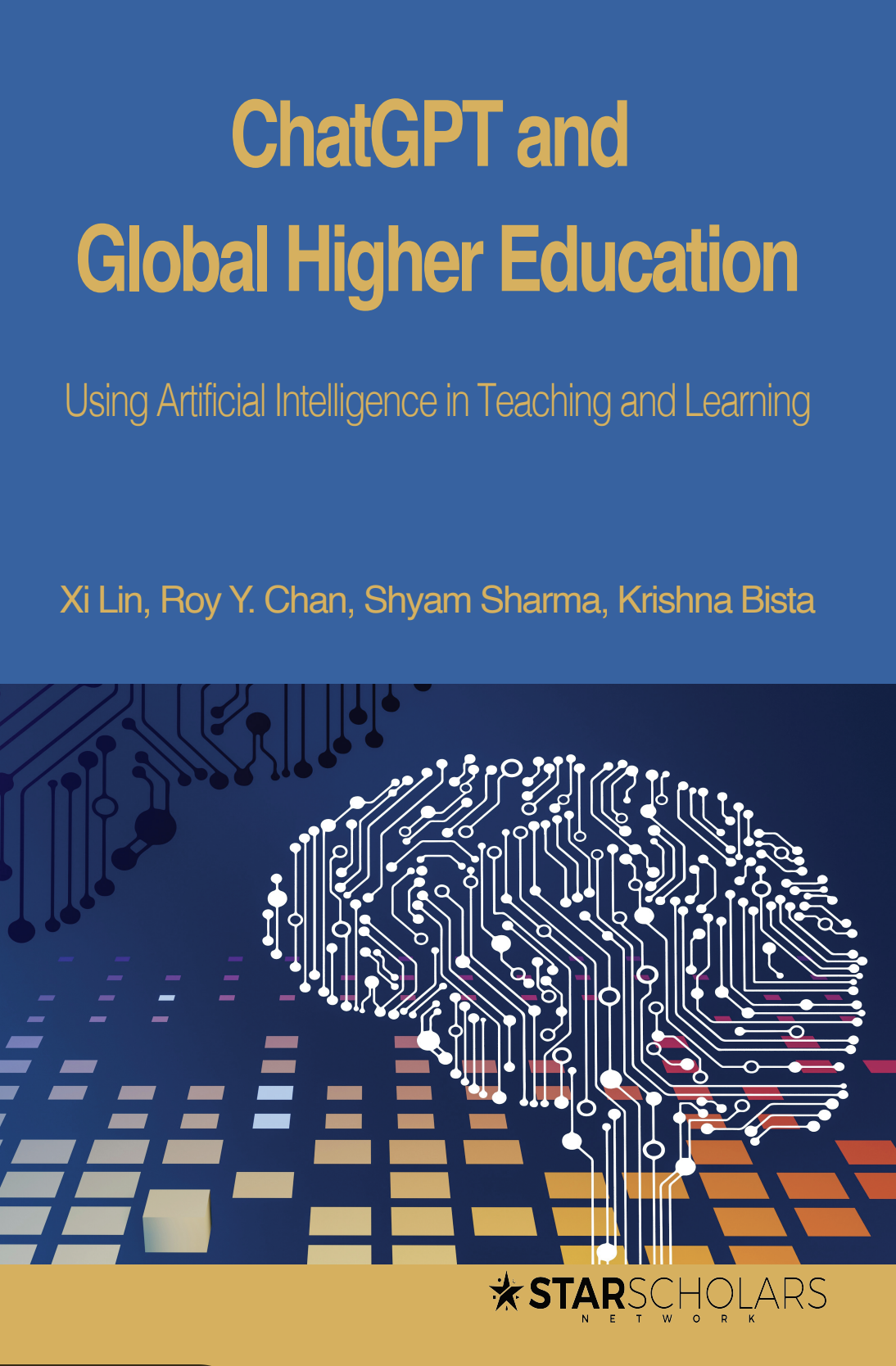
The rise of artificial intelligence (AI) tools based on advanced language models, such as ChatGPT and Bard, is transforming industries and professions worldwide, and higher education is no exception. ChatGPT, an AI-powered chatbot developed by OpenAI, has created a substantial amount of conversation and controversy across academia regarding what generative AI means for teaching and learning in the classroom. There is plenty of speculation not only about how those innovations will affect the academic profession but also what unique opportunities and challenges they present to global higher education. In this book, authors delve into the impact of AI and ChatGPT on higher education leadership and management, examining potential opportunities and challenges that this innovative technology presents to teaching, research, program, and policy.
The primary purpose of this volume is to provide a comprehensive, research-driven analysis of AI chatbots’ roles in shaping institutions of higher education around the world. By exploring the transformative potential of ChatGPT in academic settings, this timely book aims to bridge the gap between technological innovation and its practical applications. In the long run, we anticipate that this volume will provide valuable insights and guidance for teacher-scholars, university administrators, and policymakers on leveraging this cutting-edge technology effectively and responsibly.
Edited By Xi Lin, Roy. Y Chan, Shyam Sharma, Krishna Bista
OPEN ACCESS BOOK Creative Commons License | CC BY-NC-ND Open access editions of this book can be accessed here This book is published as an open-access publication by STAR Scholars Press. The digital edition of this book is freely available to readers worldwide and may be accessed, downloaded, and shared without charge through the publisher’s website and scholarly discovery platforms.
Order hard copies | Open Access Book (free)
Table of Contents
Prologue Keeping the Human (Educator) in the Loop Matthew Salzano
Chapter 1
The Impact of Artificial Intelligence (AI) on Global Higher Education: Opportunities and Challenges of Using ChatGPT and Generative AI Xi Lin, Roy Y. Chan, and Shyam Sharma
UNIT 1
The Use of ChatGPT and AI in Global Higher Education: A Historical View of Current Innovations
Chapter 2 Considering the History of Technologies in Education, the Distinctiveness of AI Apps, and the Future of Educational Systems Kenneth J. Luterbach
Chapter 3 The Influence of ChatGPT on Student Learning Outcomes in Higher Education: A Meta-Analysis of the Initial Empirical Literature Yankun He and Leslie Cordie
Chapter 4 The Evolution of Technology in Education and the Emerging Role of Generative AI Abdulrahman Alsharif
Chapter 5 ChatGPT as a Pedagogical Tool for Decolonizing Curriculum Bhavika Sicka
UNIT 2
Effective Practices and Standards of ChatGPT Use: Lessons Learned and Recommendations for Colleges and Universities
Chapter 6 Transforming STEM Education: Leveraging ChatGPT for Enhanced Learning in Psychology and Neuroscience Lingfei Luan, Xi Lin, Yan Dai, Laura Allen, and Shanhua Hu
Chapter 7 Hearing Students’ Voices: Access, Use Patterns, and Attitudes toward Generative AI Technologies among Chinese Students Ling Angela Xia, Olivia Yiqun Sun, and Charlie Reis
Chapter 8 Using ChatGPT to Improve Access, Inclusion, and Equity in and Through English-Medium Instruction in Higher Education Thatcher A. Spero
Chapter 9 A Comparative Study of ChatGPT and Seq2Seq Chatbot for Effective Student Advising Suha Khalil Assayed, Manar Alkhatib, and Khaled Shaalan
UNIT 3
Policy Implications and Ethical Considerations: Assessment and Accountability in Higher Education
Chapter 10 Generative Creations, Code, and Data: How Intellectual Property Rights over Ownership, Use, and Image Apply to Higher Education Jeffrey C. Sun
Chapter 11 ChatGPT and Research Ethics Lisa M. Rubin
Chapter 12 ChatGPT on Student Learning Outcomes in Higher Education: A Meta-Analysis of Early Studies Bo Zhang
Chapter 13 Rethinking Assessment and Feedback: Adapting Evaluation Methods for the Age of Artificial Intelligence Allen Farina
Chapter 14 Artificial Intelligence in Undergraduate Assignments: An Exploration of the Effectiveness and Ethics of ChatGPT in Academic Work Luke Parker, Christopher W. Carter, Alice Karakas, A. Jane Loper, and Ahmad Sokkar
UNIT 4
Current Issues and Future Concerns about Teaching and Learning
Chapter 15 Communities of Practice and Preservice Teachers in the Rise of the Artificial Intelligence Era: ChatGPT as a Method of Inquiry and Reflection Gabriela Mocanu
Chapter 16 Unlocking the Promise of AI: Exploring the Crucial Role of Faculty Members’ Growth Mindset, Self-Efficacy, and University AI Policies: A Study at Vietnam National University, Hanoi Kim Manh Tuan, Pham Van Thuan, Duong Thi Hoang Yen, and Nguyen Phuong Huyen
Chapter 17 Creating Context-Specific Critical Incidents with ChatGPT for Effective Soft Skill Training Stephan Ruppert
Chapter 18 Applications of ChatGPT in Work-Based Learning Programs: Opportunities, Challenges, and Ethical Considerations Hon Jie Teo
Publisher : STAR SCHOLARS PRESS
Published : June 24, 2026
Order Print Copies | Download eBook | Google Books | Amazon | Other Distributors
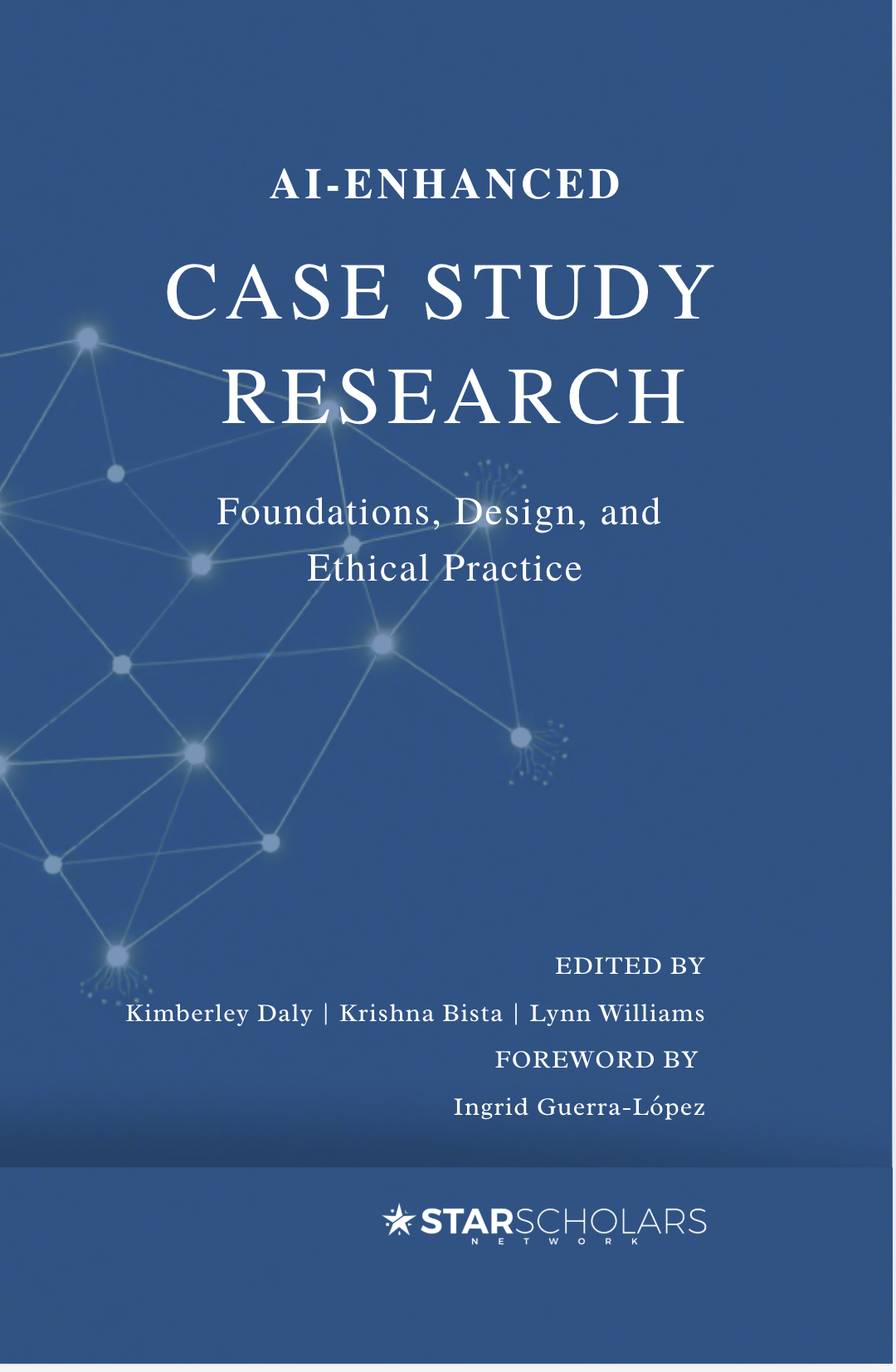
AI-Enhanced Case Study Research: Foundations, Design, and Ethical Practice offers a comprehensive and contemporary guide to conducting case study research in the evolving landscape of artificial intelligence. Bringing together international scholars from Asia, the Middle East, Europe, and the Americas, this volume explores the theoretical foundations, methodological design, analytical strategies, and ethical considerations that shape rigorous case study inquiry.
The book examines key distinctions between case study and other qualitative approaches, the philosophical roots of the method, and the conditions under which case study research is most effective. It also introduces emerging practices such as AI-assisted research design, the use of generative AI tools in drafting case narratives, and new perspectives on validity, triangulation, and researcher reflexivity.
Combining methodological rigor with practical guidance, this volume serves as a valuable resource for graduate students, researchers, and educators seeking to integrate traditional qualitative inquiry with innovative digital tools while maintaining strong ethical and scholarly standards.
List of Contributors
Asma Majeed, Kinnaird College for Women, Pakistan Bilgehan Ayik, George Mason University, United States Franklin García-Godoy, University of Tennessee Health Science Center, United States Hayfa Jafar, American University of Iraq, Iraq Ingrid Guerra-López, George Mason University Jisha John, St. Teresa’s College, India Kimberley Daly, George Mason University, United States Krishna Bista, Morgan State University, United States Laura Reyes Alardo, Universidad Federico Henríquez y Carvajal (UFHEC) / UNAPEC, Dominican Republic Maartandan Suppiah, Universiti Utara Malaysia, Malaysia María Cruz Cuevas Álvarez, Universidad Juárez Autónoma de Tabasco, México Nabiha El Khatib, Lebanese International University, Lebanon Nikan Fujii, Kyoto Notre Dame University, Japan Pinki Chahal, Indian Institute of Technology Kanpur, India Prashanth Beleya, INTI International University, Malaysia Rita Licelot Cruz, Universidad Federico Henríquez y Carvajal (UFHEC), Dominican Republic Shahin Hossain, University of Maryland, Baltimore County, United States Sreeramulu Gosikonda, Banaras Hindu University, India Tina Jaber Radhi, Birzeit University, Palestine Tridip Patir, Center of Policy Research and Governance, India
Contents
Acknowledgements ........................................................................ ix Foreword .................................................................................... x Introduction .............................................................................. xiii
Chapter 1 Case Study as Human Inquiry Reasserting Its Value in the Age of Generative AI Tridip Patir .................................................................................... 1
Chapter 2 Case Study vs. Other Qualitative Designs Key Distinctions Hayfa Jafar .................................................................................... 9
Chapter 3 Core Characteristics and Defining Features of Case Study Research Maartandan Suppiah and Sreeramulu Gosikonda .......................... 24
Chapter 4 Types of Case Studies Single, Multiple, Embedded, Intrinsic, and Instrumental Nikan Fujii, Pinki Chahal, and Prashanth Beleya ............................ 29
Chapter 5 Philosophical Roots and Key Methodologists in Case Study Research Asma Majeed ................................................................................. 39
Chapter 6 When and Why to Use a Case Study in Qualitative Inquiry Tina Jaber Rafidi and Nabiha El Khatib ......................................... 49
Chapter 7 Validity and Triangulation in Case Study Research María Cruz Cuevas Álvarez ............................................................ 57
Chapter 8 Data Analysis in Literary Case Studies Themes and Cross-Text Synthesis Jisha John ...................................................................................... 66
Chapter 9 Designing AI-Augmented Case Study Protocols From Research Questions to Pilot Testing Laura Reyes Alardo, Franklin García-Godoy, and Rita Licelot Cruz ............................................................................... 75
Chapter 10 AI-Assisted Professional Writing Using ChatGPT, Claude, and Gemini to Draft Case Narratives and Grant Proposals Shahin Hossain .............................................................................. 88
Chapter 11 Ethical Considerations in AI-Assisted Case Study Research Nikan Fujii and Bilgehan Ayik ....................................................... 97
Chapter 12 Reflexivity, Researcher Voice, and AI Balancing Human and Machine Insight Bilgehan Ayik ............................................................................... 107
Publisher : STAR SCHOLARS PRESS
Published : September 4, 2025
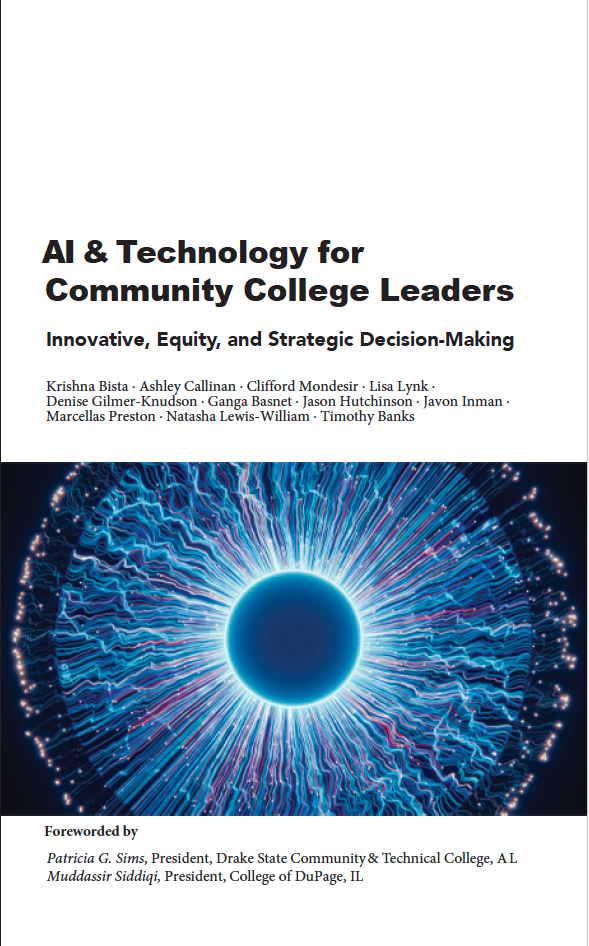
This book offers a practical and research-informed foundation for future community college leaders navigating the evolving digital landscape. Centered on the integration of educational technology into institutional planning, pedagogy, student success, and leadership, the book guides readers in critically evaluating digital tools, designing inclusive solutions, and anticipating emerging trends such as generative AI, cybersecurity, and equity-driven innovation. Blending theory, case studies, and reflective practice, this book equips doctoral students and practitioners with the skills needed to lead transformation in community colleges through ethical and strategic use of technology.
Order your hardcopies
"This book is a vital resource for community college leaders, offering practical strategies to navigate technological change while prioritizing equitable student success. Its concise, actionable insights make it essential for shaping inclusive and innovative educational environments."
— Lance D. Bowen, PhD, Dean, School of Science, Technology & Education, Anne Arundel Community College, Maryland
"A timely and transformative contribution, this book illuminates how community colleges can embrace digital innovation while staying true to their mission of access and equity. It is both practical and visionary, offering strategies that leaders, faculty, and staff can immediately apply to strengthen student success in a rapidly evolving landscape."
— Roshelle Lemon-Howard, EdD, MSN, RN, Assistant Professor & Coordinator, Practical Nursing Certificate Program, Baltimore City Community College
"This book provides an authentic look into the challenges and opportunities within community colleges. It highlights innovative practices that empower faculty and future educators, making it an invaluable guide for those committed to student success and educational equity."
— Melenese Sivells, EdD, Professor of Education, Northampton Community College
"This book powerfully demonstrates how community college leaders can harness AI to drive innovation while keeping equity at the center of decision-making. It is an essential guide for faculty and program directors preparing students—and institutions—for the future of higher education." — Huong Nguyen, EdD, Program Director, Montgomery College
“As a community college administrator, I found this book an invaluable guide that bridges innovation with access, showing how AI can be leveraged to enhance equity, efficiency, and student achievement.”
— Lesley Shotts, EdD, Dean of Institutional Effectiveness, Grants, and Research / Title III Administrator / Accreditation Liaison, Drake State Community & Technical College
