
Update Search
Categories
Series
Date
Update Search
Categories
Series
Date
26 - 50 of 100 items
Sort By
Publisher : STAR SCHOLARS PRESS
Published : May 24, 2026
Order your copies| Hardcover | Softcover | eBook (PDF) | Google Book | Amazon | STRAND Books | Booktopia | Kogan Books | ibs Books | orellfussli books | Yes24 China | goodreads | AbeBooks | Boomerang Books Australia |
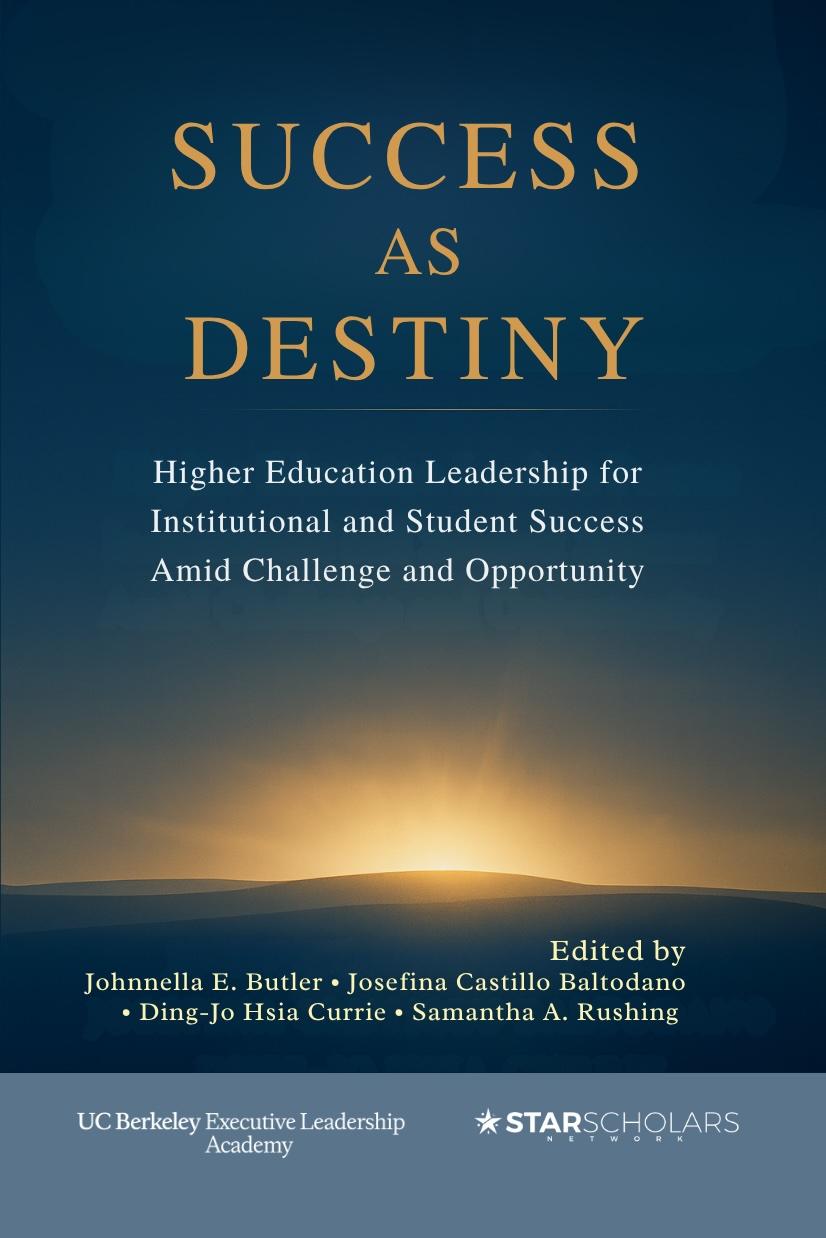
Success as Destiny explores how institutional leaders at every level can strengthen structures, processes, and approaches to advance both institutional and student success during moments of profound challenge and opportunity. Drawing on the expertise of distinguished faculty of the Executive Leadership Academy (ELA) at the University of California, Berkeley, this volume illuminates leadership practices rooted in collaboration, integrated decision-making, and servant leadership. Covering essential areas such as shared governance, legal issues, AI, enrollment, student affairs, data-informed practice, financial leadership, and strategic planning, the book offers actionable insights for current and future leaders. This is the second volume in ELA’s leadership trilogy. It stands as both a practical guide and a deeply reflective exploration of what it means to lead with purpose, integrity, and vision in higher education today.
Editors Johnnella E. Butler, Ed.D. Former Provost and Vice President for Academic Affairs, Spelman College | Atlanta, Georgia and former Associate Dean, The Graduate School, University of Washington | Seattle, Washington
Josefina Castillo Baltodano, J.D. Founder and Executive Director Emerita, Executive Leadership Academy, University of California, Berkeley | Berkeley, California and former President, Marian University | Fond du Lac, Wisconsin
Ding-Jo H. Currie, Ph.D. Distinguished Faculty and Director, Leadership Institute for Tomorrow, California State University, Fullerton | Fullerton, California and former Chancellor, Coast Community College District | Costa Mesa, California
Samantha A. Rushing Associate Director and Executive Assistant to the Advisory Board, Executive Leadership Academy, and former Program Administrator, Berkeley Global Executive Education, University of California, Berkeley | Berkeley, California
Table of Contents
Introduction .................. xix
1. Leadership Power Across Cultures ........................................ 1 Ding-Jo H. Currie
2. Leadership Modeling: A Personal Approach to Identity Development ....................... 17 David C. Wilson
3. From Successful Candidate to Transformational Leader ............. 30 Shirley Robinson Pippins
4. Presidential Leadership: Communicating Across Constituencies to Achieve Institutional and Student Success ............................... 40 Janet L. Holmgren
5. Utilizing Data to Inform the Presidency .................................. 49 Richard Yao
6. Faculty Governance and Academic Freedom ............................. 69 George R. Blumenthal
7. Legal Issues Facing Higher Education Amid Public Skepticism ........................ 81 Joseph I. Castro
8. Demystifying the AI Magic: Navigating Opportunities and Challenges of Artificial Intelligence in Higher Education ............. 94 Andrew W. Reddie
9. Student Affairs and Reimagining the University Student Experience ................... 104 Kent L. Willis and Barbara D. Holmes
10. The Enrollment Management Challenge .......... 117 Olufemi Ogundele
11. University Business and Finance .............. 133 Sarah C. Latham
12. Strategic Planning in Our Challenging Environment ................. 144 Johnnella E. Butler and Tarshia L. Stanley
Publisher : STAR SCHOLARS PRESS
Published : January 30, 2026
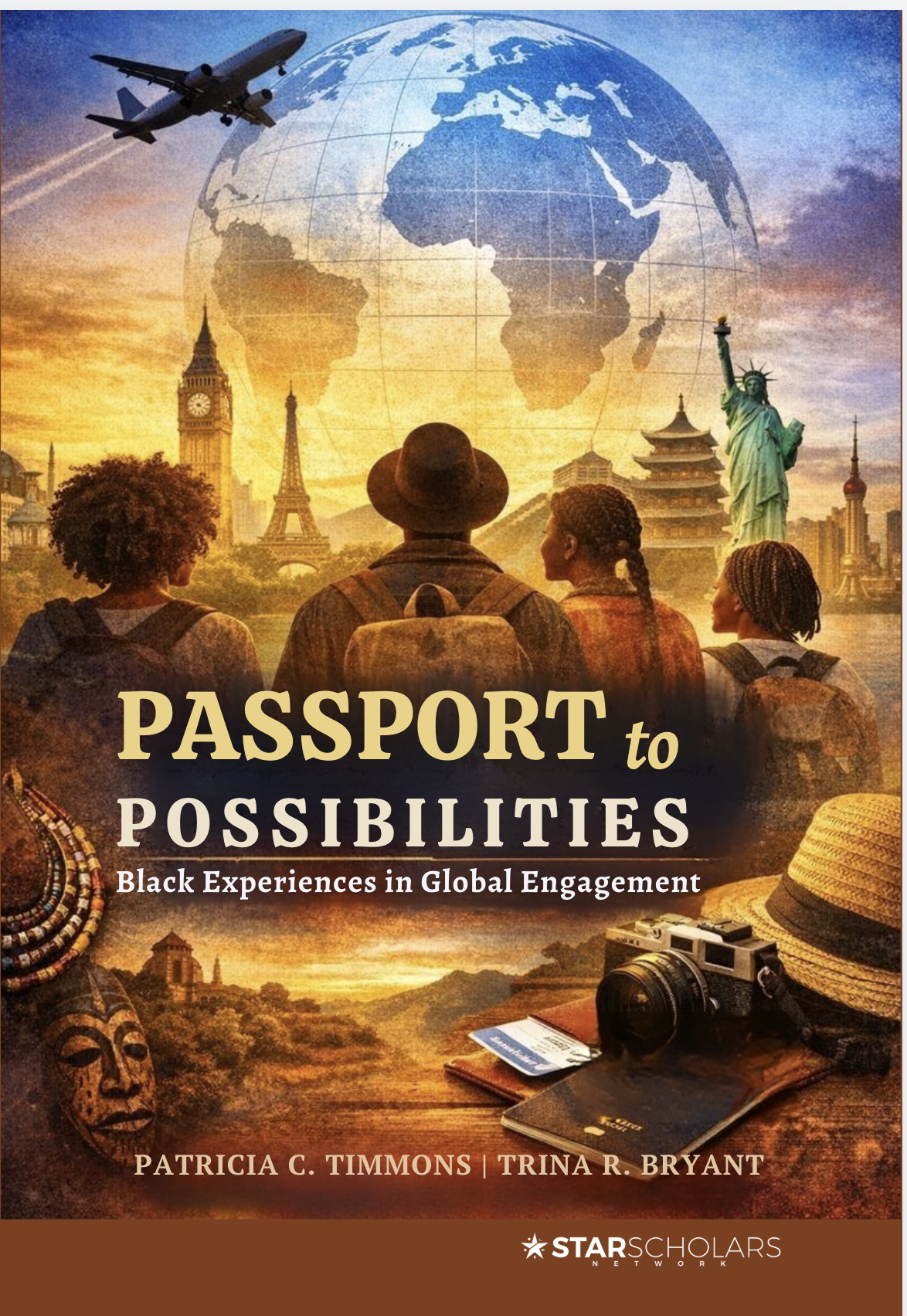
Passport to Possibilities: Black Experiences in Global Engagement brings together reflections from thirteen Black contributors across the globe, including Black students, faculty, staff, educators, and professionals based in the United States, Canada, Germany, and South Africa, offering powerful insights into what it means to be Black and abroad. Through research, storytelling, and critical reflection, the book centers Black experiences in global education, challenging long-standing assumptions about who participates in international learning and why it matters. Each chapter presents a deeply personal narrative that explores the intersections of race, identity, belonging, access, and mobility within global contexts. The contributors reveal both the challenges and transformative potential of international engagement, framing global learning as a pathway to personal empowerment and social justice. The book calls for a reimagined global education field—one where Black voices, leadership, and lived experiences are essential to creating more inclusive, equitable, and transformative forms of global mobility.
Editors Patricia C. Timmons, Harvard Kennedy School Trina R. Bryant, Suffolk University
Table of Contents
1. Bridging the Gap: Black Students’ Experiences in Global Mobility Programs at U.S. Community Colleges
2. Improving Access & Engagement: Black Lives in Global Spaces
3. Neurodivergence and Study Abroad: Strategies to Create Inclusive Opportunities for Neurodivergent Students
4. Reshaping Identity and Finding Belonging in the Global Community
5. Teaching With the Ancestors’ Compass: An Endarkened Journey Through Global Classrooms
6. Navigating the Grey Area of Studying Abroad While Black
7. Becoming A Scholar: Resilience, Community, and the Journey to Study Abroad
8. Voices From the South: Reflections from Black, Southern Female Scholars Breaking Myths and Charting New Territory Abroad
9. A Tale of Two Cities: Hospitality and Discovery
10. Likkle But Tallawah: A Black Jamaican Woman's Journey Through Student Affairs in the Us and the Middle East
11. Traveling While Black: Reimagining Mobility and Self-Image
12. Becoming American in Japan: A Black Woman’s Reflection On Identity and Belonging in Japan
13. Leaping the Boundaries of Access: A Reflexive Account of Black Caribbean Mobility Through Japan’s Jet Program
14. The Proof and the Promise: Reclaiming History, Belonging, and Joy
Publisher : STAR SCHOLARS PRESS
Published : January 28, 2026
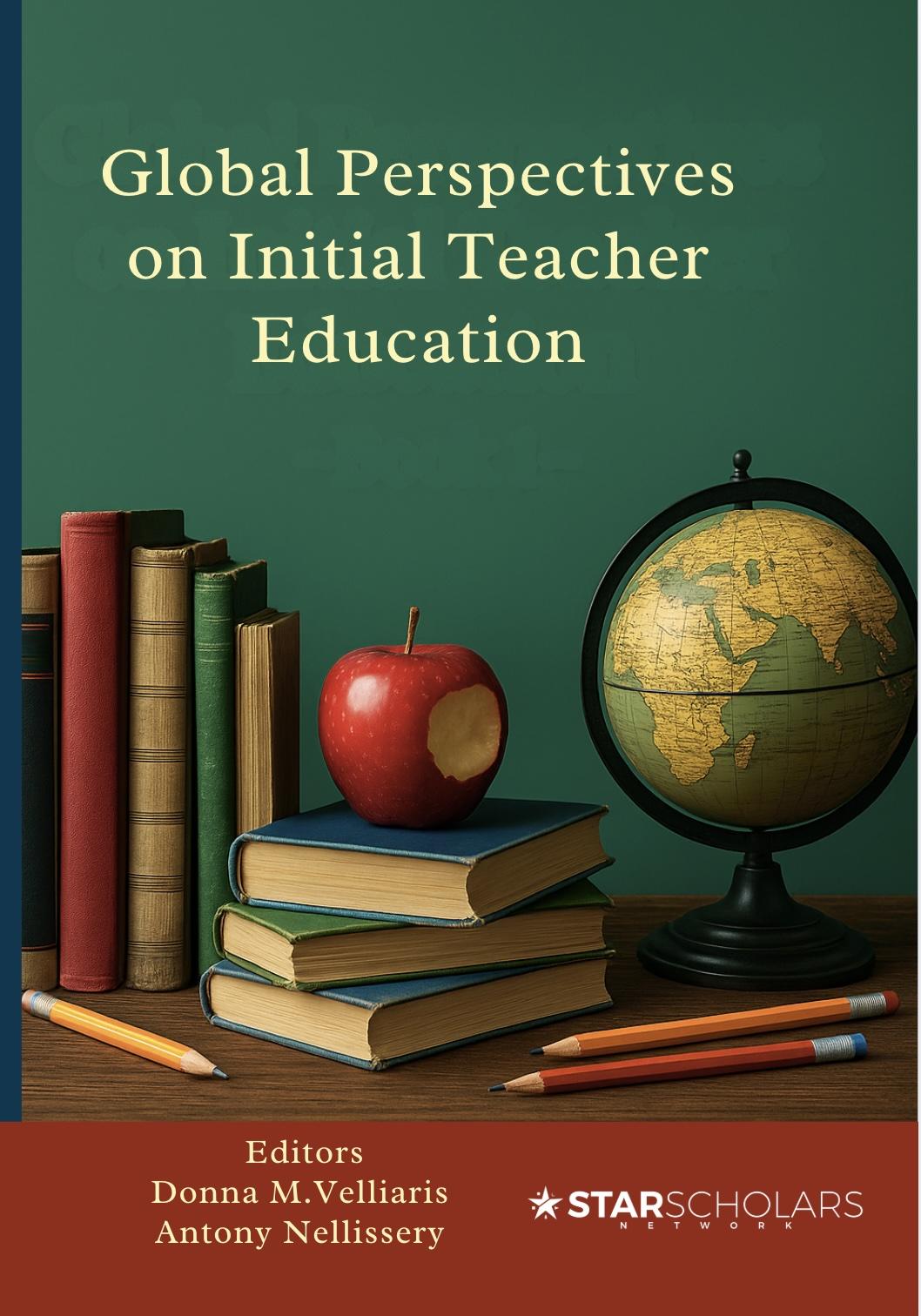
Global Perspectives on Initial Teacher Education offers a timely and incisive examination of how teachers are prepared to enter the profession in an increasingly complex world. Bringing together scholars and practitioners from diverse contexts, this volume explores the foundations, pedagogies, and professional identities that shape early teacher formation. Across its three parts, the book illuminates how globalization, technological innovation, inclusive frameworks, and culturally responsive practice redefine the work of preparing future educators.
With attention to assessment, mentoring, instructional design, and the lived experiences of preservice teachers, the volume underscores the need for preparation models that are rigorous, humane, and globally informed. As the inaugural title in a new series on teacher education, it calls for coherent, research-driven approaches that equip new teachers to thrive amid the shifting demands of 21st century classrooms and to contribute to education as a global public good.
Editors, Donna M Velliaris and Antony Nellissery
Donna M Velliaris is a globally recognized educator, author, and speaker acclaimed for her transformative teaching methods and pioneering contributions to education. She holds Graduate Certificates in Australian Studies, Religious Education, and Guidance & Counselling; Graduate Diplomas in Secondary Education and Language & Literacy Education; three Master’s degrees in Educational Sociology, Studies of Asia, and Special Education; and a PhD in Education (2010) focused on the social-educational development of transnational students. Ranked among the Top 30 Global Gurus in Education for three consecutive years—2023 (No. 30), 2024 (No. 22), and 2025 (No. 9)—she is the author of eight books and more than 40 book chapters, as well as a sought-after international speaker committed to advancing education through excellence, innovation, and systemic transformation.
Antony Nellissery is an education reformer with nearly three decades of experience advancing systemic change through school leadership, life-skills curricula, and teacher empowerment. Holding a PhD from Amity University and an alumnus of IRMA, he has worked across schools, foundations, and nonprofits, mentoring more than 200 professionals. Currently Head of the Sterlite EdIndia Foundation, he has been recognized as a Global Goodwill Ambassador , Reformer in Education – Regional (2023), Great Manager to Work With (2023–24) , Best CSR Head in the Education Domain (2024) , and co-authored The Skills Edge (2021). Guided by his belief that school leadership and trust-building are the cornerstones of lasting transformation, his work is deeply informed by his own experience of a teacher who once transformed his life during a period of struggle.
Series : Volume 2
Publisher : STAR SCHOLARS PRESS
Published : December 15, 2025
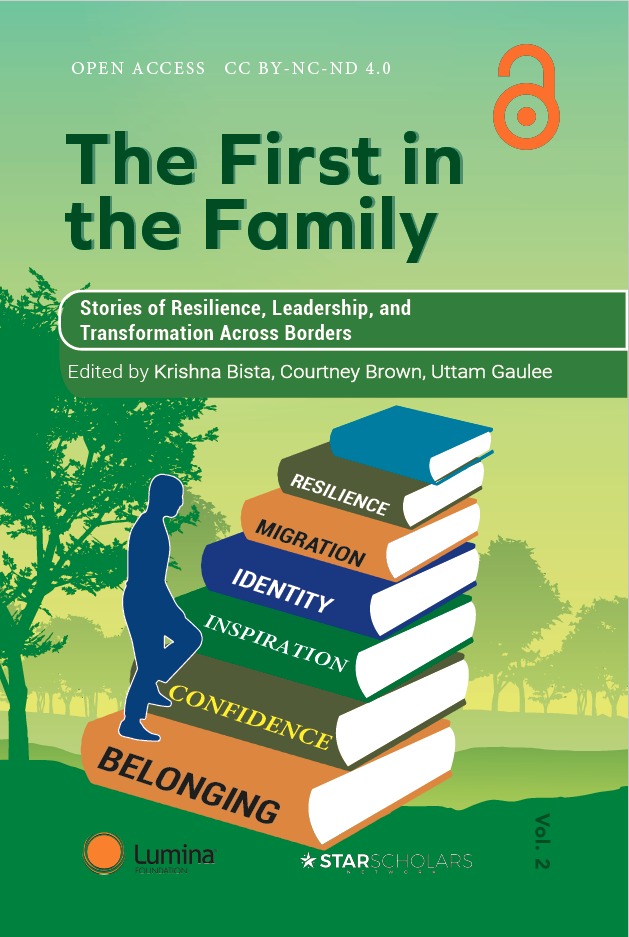
First in the Family is a compelling anthology that amplifies the voices of first-generation college students and scholars from around the world. This volume captures deeply personal narratives shaped by resilience, identity, migration, and mentorship. Across diverse contexts—from remote villages to prestigious global universities—contributors share their experiences navigating systemic barriers and cultural expectations to achieve academic success. These transformative stories not only honor the legacy of first-generation learners but also serve as a powerful call for inclusive practices that empower future generations.
OPEN ACCESS BOOK | CC BY-NC-ND Open access editions of this book can be accessed here . The open access edition of this book is freely available to readers worldwide and may be accessed, downloaded, and shared without charge through the publisher’s website and scholarly discovery platforms.
Buy on Amazon | Print copies (other vendors) | Open Access Book (Free)
Editors
Krishna Bista is Professor of Higher Education at Morgan State University, Maryland. His scholarship focuses on global student mobility, international education policy, and equity in higher education. A prolific author and editor, Dr. Bista also serves as Senior Executive Vice President of the STAR Scholars Network. He earned his doctorate in Educational Leadership/Higher Education from Arkansas State University.
Courtney Brown is Vice President of Impact and Planning at Lumina Foundation, where she leads strategic planning, evaluation, and international engagement initiatives to expand access to learning beyond high school. With a background in education policy and performance measurement, she has published widely and is a frequent speaker on postsecondary success, data-driven strategies, and equity in higher education. Dr. Brown holds a Ph.D. from the University of Virginia.
Uttam Gaulee is Professor of Community College Leadership at Morgan State University, Maryland and President of the STAR Scholars Network. Dr. Gaulee's research explores community colleges, international higher education, and global development. He earned his Ph.D. in Higher Education Administration and Policy from the University of Florida. His research focuses on community colleges, international education, diaspora studies, and global development.
Project Editors
Professor Mirka Koro, Arizona State University Professor Meghan MacNamara, Morgan State University Professor Eugene Hammond, Stony Brook University Professor Stewart E. Sutin, University of Pittsburgh
Praise for this book This book reminds us that transformation in higher education often begins in places we least expect, and with people too often overlooked. George F. Kacenga, PhD, Vice President of Enrollment Management, William Paterson University of New Jersey, USA
As the first in my family to earn a Ph.D. through my own hard work and determination, I can attest that this volume serves as a compelling blueprint for institutions committed to empowering individuals who are not only the first in their families—but the first to lead with courage and conviction. Jing Luán, PhD, Governing Board Member, MISK Schools, Provost Emeritus An inspiring narrative emphasizing the need for democratizing access to higher education across cultures, while advocating for the need for more inclusive academic spaces. Pankaj Mittal, PhD, Secretary General of the Association of Indian Universities and Former Vice Chancellor of Bhagat Phool Singh Women's University, India
A priceless compass for educators, First in the Family charts the paths of their students' transformative journeys of discovery and perseverance, illuminating the way for them to overcome obstacles, transcend borders, and realize their dreams. Elena de Prada Creo, PhD, Vice Dean for International Affairs, Facultad de Relaciones Internacionales, Campus Universitario, Spain.
These powerful narratives beautifully capture how intercultural growth and academic resilience converge in the lives of first-generation learners, challenging racism, gender bias, and structural inequality. A moving testament to transformation, resistance, and intergenerational commitment. Sarah Carrica-Ochoa, Profesora Titular, Facultad de Educación y Psicología, Universidad de Naarra, Spain
A moving tribute to the grit and grace of first-generation scholars—this anthology is both an inspiration and a blueprint for a more inclusive academy. Pankhuri Aggarwal, PhD,Assistant Professor, Department of Psychology, University of Cincinnati, USA
A powerful collection of stories from diverse first-generation scholars, highlighting their struggles, resilience, and the vital role of support systems in achieving academic and personal success. Siu-Man "Raymond" Ting, PhD, Professor, Director of Graduate Programs, NC State University, USA As a rural education advocate, this book is a valuable resource for academic praxis and serves as a compass to guide young scholars in promoting social justice. Arlyne C Marasigan, PhD, Professor, College of Advanced Studies, Philippine Normal University, Manila, Philippines This volume situates the voices of first-generation university graduates in their own unique personal contexts and provides insight into the breadth of pathways that these graduates take to earn their degrees. As a first-gen graduate myself, the stories resonated, and will for others who are seeking guidance on how to be successful in this important life journey. Shannon N. Davis, PhD, Associate Dean for Faculty and Academic Affairs, George Mason University, Korea
Series : Volume 3
Publisher : STAR SCHOLARS PRESS
Published : January 2, 2026
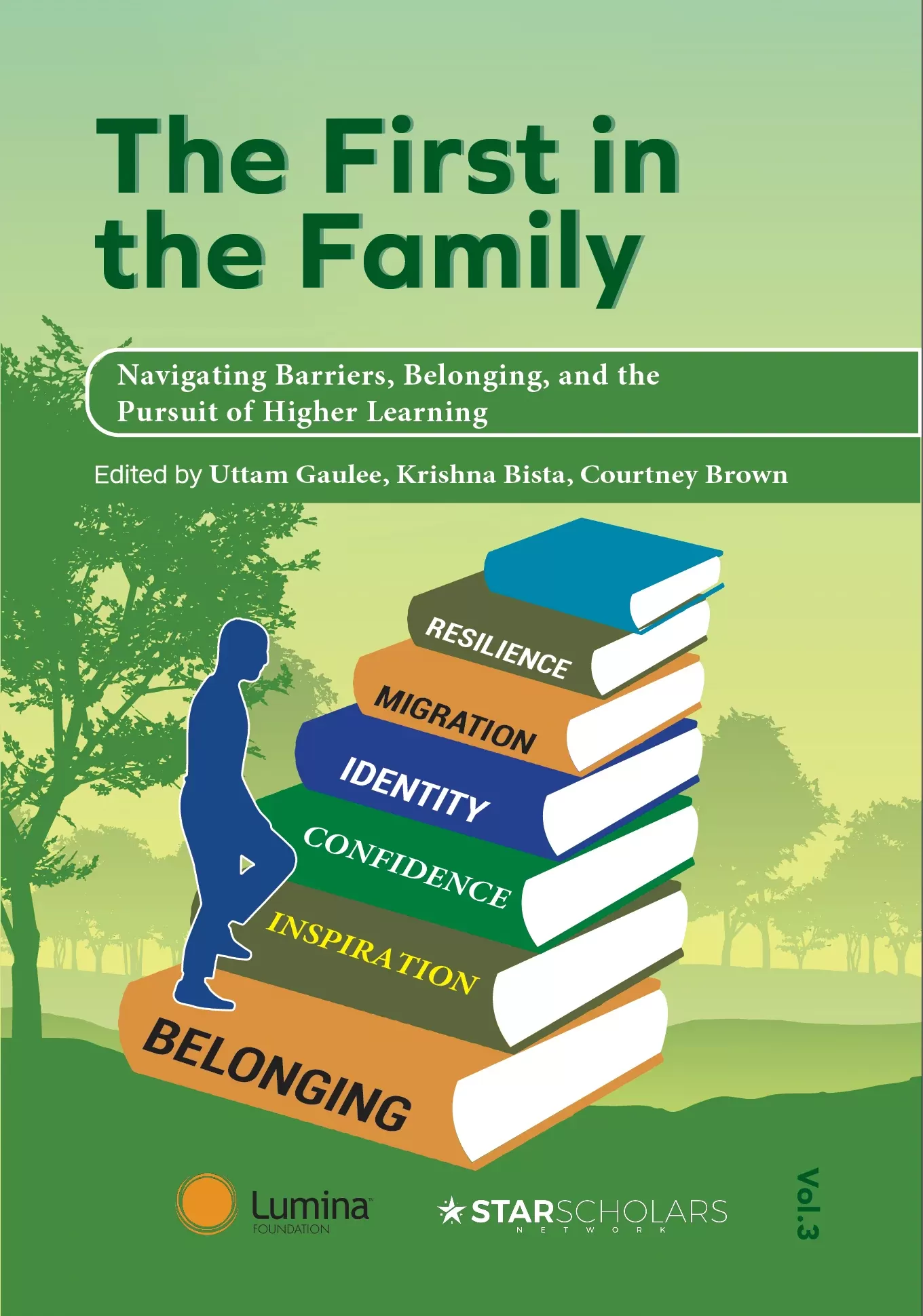
First in the Famil y brings together powerful narratives of first-generation students who have crossed borders—geographical, cultural, and social—to pursue higher education. Spanning continents and diverse experiences, the chapters explore themes of identity, gender, resilience, and belonging. From navigating privilege and overcoming shame to embracing agency and transforming lives through education, these stories reveal both the struggles and triumphs of being “first.” Each chapter offers a testament to courage, perseverance, and the transformative power of learning to uplift families and communities. Inspiring and deeply human, this volume serves as a vital resource for students, educators, and policymakers committed to expanding access and equity in education worldwide.
Editors
Uttam Gaulee is Professor of Community College Leadership at Morgan State University, Maryland and President of the STAR Scholars Network. Dr. Gaulee's research explores community colleges, international higher education, and global development. He earned his Ph.D. in Higher Education Administration and Policy from the University of Florida. His research focuses on community colleges, international education, diaspora studies, and global development.
Krishna Bista is Professor of Higher Education at Morgan State University, Maryland. His scholarship focuses on global student mobility, international education policy, and equity in higher education. A prolific author and editor, Dr. Bista also serves as Senior Executive Vice President of the STAR Scholars Network. He earned his doctorate in Educational Leadership/Higher Education from Arkansas State University.
Courtney Brown is Vice President of Impact and Planning at Lumina Foundation, where she leads strategic planning, evaluation, and international engagement initiatives to expand access to learning beyond high school. With a background in education policy and performance measurement, she has published widely and is a frequent speaker on postsecondary success, data-driven strategies, and equity in higher education. Dr. Brown holds a Ph.D. from the University of Virginia.
Project Editors
Professor Mirka Koro, Arizona State University Professor Meghan MacNamara, Morgan State University Professor Eugene Hammond, Stony Brook University Professor Stewart E. Sutin, University of Pittsburgh
Praise for this book This book reminds us that transformation in higher education often begins in places we least expect, and with people too often overlooked. George F. Kacenga, PhD, Vice President of Enrollment Management, William Paterson University of New Jersey, USA
As the first in my family to earn a Ph.D. through my own hard work and determination, I can attest that this volume serves as a compelling blueprint for institutions committed to empowering individuals who are not only the first in their families—but the first to lead with courage and conviction. Jing Luán, PhD, Governing Board Member, MISK Schools, Provost Emeritus An inspiring narrative emphasizing the need for democratizing access to higher education across cultures, while advocating for the need for more inclusive academic spaces. Pankaj Mittal, PhD, Secretary General of the Association of Indian Universities and Former Vice Chancellor of Bhagat Phool Singh Women's University, India
A priceless compass for educators, First in the Family charts the paths of their students' transformative journeys of discovery and perseverance, illuminating the way for them to overcome obstacles, transcend borders, and realize their dreams. Elena de Prada Creo, PhD, Vice Dean for International Affairs, Facultad de Relaciones Internacionales, Campus Universitario, Spain.
These powerful narratives beautifully capture how intercultural growth and academic resilience converge in the lives of first-generation learners, challenging racism, gender bias, and structural inequality. A moving testament to transformation, resistance, and intergenerational commitment. Sarah Carrica-Ochoa, Profesora Titular, Facultad de Educación y Psicología, Universidad de Naarra, Spain
A moving tribute to the grit and grace of first-generation scholars—this anthology is both an inspiration and a blueprint for a more inclusive academy. Pankhuri Aggarwal, PhD,Assistant Professor, Department of Psychology, University of Cincinnati, USA
A powerful collection of stories from diverse first-generation scholars, highlighting their struggles, resilience, and the vital role of support systems in achieving academic and personal success. Siu-Man "Raymond" Ting, PhD, Professor, Director of Graduate Programs, NC State University, USA As a rural education advocate, this book is a valuable resource for academic praxis and serves as a compass to guide young scholars in promoting social justice. Arlyne C Marasigan, PhD, Professor, College of Advanced Studies, Philippine Normal University, Manila, Philippines This volume situates the voices of first-generation university graduates in their own unique personal contexts and provides insight into the breadth of pathways that these graduates take to earn their degrees. As a first-gen graduate myself, the stories resonated, and will for others who are seeking guidance on how to be successful in this important life journey. Shannon N. Davis, PhD, Associate Dean for Faculty and Academic Affairs, George Mason University, Korea
Publisher : STAR SCHOLARS PRESS
Published : January 10, 2026
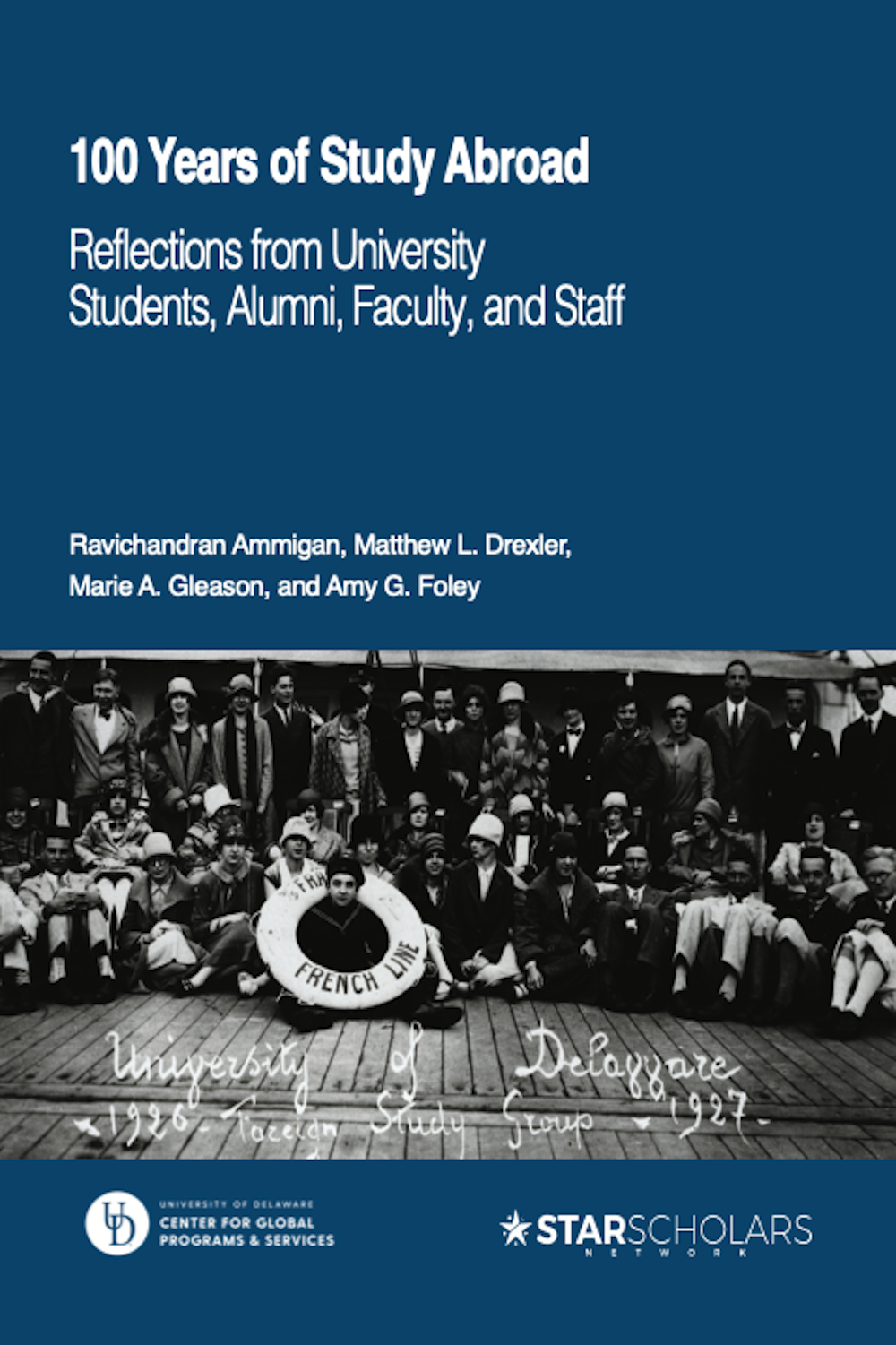
This volume presents a diverse collection of short personal essays that illuminate the experiences of study abroad students, alumni, faculty, and staff as they reflect on the lasting impact of their intercultural encounters and interactions in new environments and communities around the world. The stories explore themes ranging from culture shock and adaptation to resilience and personal growth, revealing how individuals gain new perspectives and develop deeper self-awareness by stepping outside their comfort zones. The authors share moments of perseverance and discovery, the challenges of building connections across cultures, and the rewards of learning and living in unfamiliar settings. Current and former students, in particular, describe their journeys of personal and academic growth through immersive coursework, internships, and community engagement, despite the initial hurdles of adjusting to new norms and expectations. This collection of reflective essays takes readers on a journey alongside those who have lived the study abroad experience while also offering insights from international educators and university administrators who design, direct, and support these programs at the University of Delaware—home to the nation’s first study abroad program for over a century.
OPEN ACCESS BOOK Creative Commons License | CC BY-NC-ND Open access editions of this book can be accessed here This book is published as an open-access publication by STAR Scholars Press . The digital edition of this book is freely available to readers worldwide and may be accessed, downloaded, and shared without charge through the publisher’s website and scholarly discovery platforms. Download Open Access Book (Free) | Hardcover (Print)
About the Editors
Ravichandran Ammigan, Ph.D. , serves as Vice Provost for Global Engagement and Senior International Officer at the University of Delaware. With 25 years of experience in the field of international higher education, he is responsible for leading the institution’s internationalization strategy and global engagement portfolio. He holds a secondary faculty appointment as Associate Professor in the School of Education, where his main research focuses on the academic, social, and cultural experiences of students in higher education worldwide. Dr. Ammigan has published numerous research articles, co-edited several books, and is a regular speaker at conferences internationally.
Matthew L. Drexler, M.A., serves as Director of Study Abroad at the University of Delaware, an operation that supports more than 125 faculty-led and semester education abroad programs each year. Matt has more than 17 years of experience facilitating international exchange and collaboration, and currently oversees collaborative efforts to internationalize UD’s campus through international mobility and internationalization at home programs. He also manages the evaluation and assessment of the study abroad student experience at UD and leverages that data to drive strategic efforts to expand and improve global programming at the university.
Marie A. Gleason, M.A., is a Senior Study Abroad Program Coordinator in the Center for Global Programs and Services at the University of Delaware. During her 24-year career in international education at the University, she has coordinated over 150 study abroad programs, supporting students and faculty in developing transformative global experiences. She also administers the Study Abroad Office’s need-based scholarship program and collaborates with academic departments to design and implement sustainable education abroad initiatives, including faculty-led and semester programs.
Amy G. Foley, Ed.D., serves as Director for Global Outreach and Partnerships at the University of Delaware. She is the founding director of the UD World Scholars Program and oversees the strategic coordination of international partnerships and agreements at the Center for Global Programs and Services. Dr. Foley brings over 35 years of knowledge as a higher education professional. She earned a B.A. in Communications from the University of Miami, a certificate in Museum Studies from the International University of Art in Florence, Italy, an M.A.T. in Museum Education from The George Washington University, and an Ed.D. in Educational Leadership from the University of Delaware.
Publisher : STAR SCHOLARS PRESS
Published : November 24, 2025
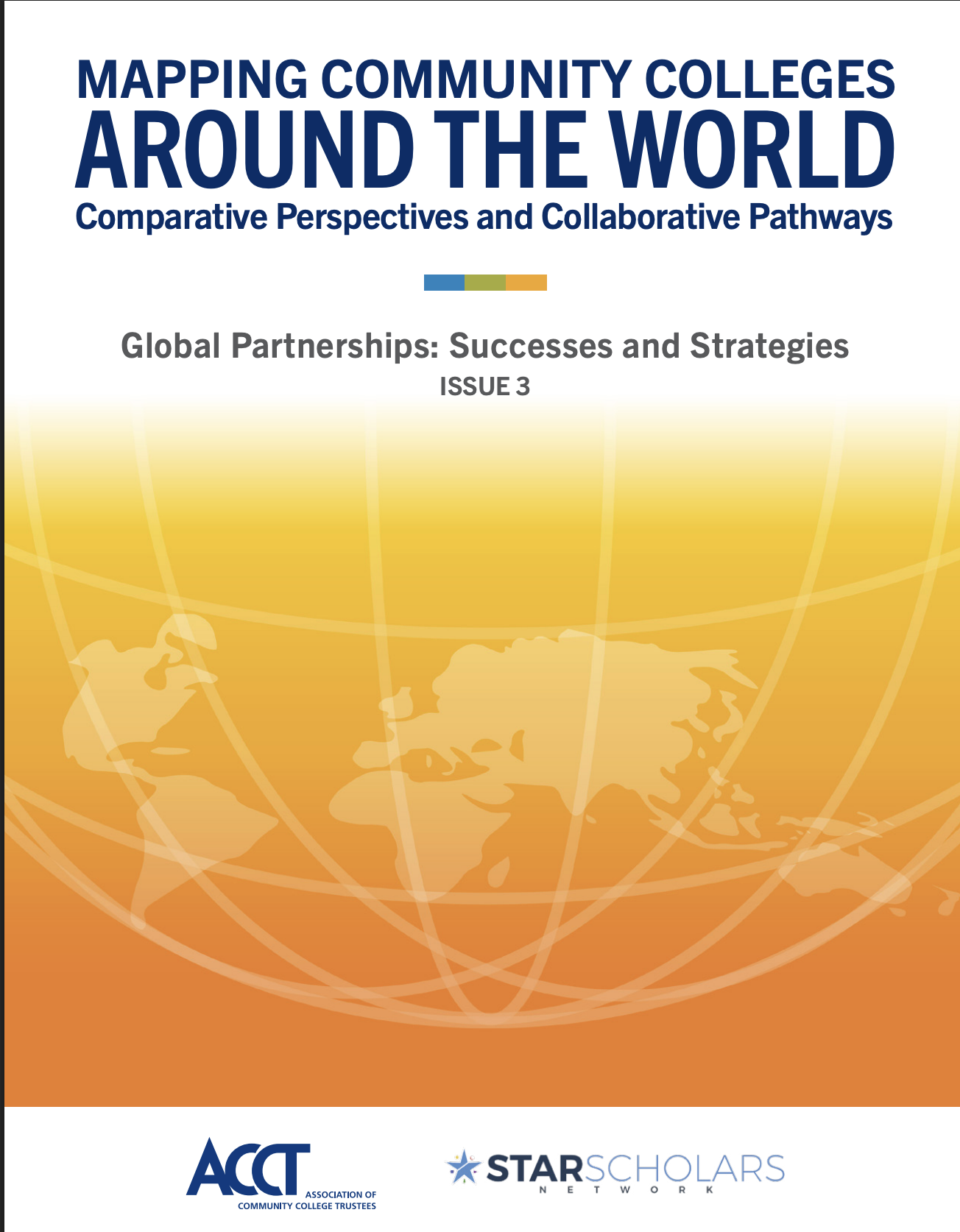
Global Partnerships: Successes and Strategies brings together a rich collection of articles that illuminate how meaningful international collaborations are built, sustained, and transformed over time. Written from a wide range of institutional perspectives, the volume offers in-depth case studies alongside conceptual pieces that unpack the philosophical foundations of global engagement. Contributors share concrete lessons learned, practical guidance, and candid reflections that shed light on both the opportunities and challenges inherent in international partnership work. A consistent theme across the volume is the importance of flexibility, resilience, and relationship-building. The articles highlight the pivotal roles of individual champions, institutional leaders, and campus-wide support systems in advancing enduring partnerships. Readers will also find compelling stories of unexpected growth, as collaborations evolve into broader activities such as joint lectures, virtual exchanges, and community engagement initiatives. While focused on institution-to-institution partnerships, the volume underscores the power of wider community involvement—an area in which community colleges and similar institutions excel.
Download the ebook here
Table of Contents
Editors’ Introduction Robin Matross Helms and Krishna Bista
Cultivating Wonder: Curriculum, Context, and Connection Wojciech (Voytek) Wloch
Cloud Forest Collaboration: Linn-Benton Community College’s Costa Rica Exchange Partnership Lisa Avery and Katie Winder
An Enduring Relational Partnership: A 30-Year Global Collaboration between McLennan Community College and Masaryk University Amy Antoninka and Johnette McKown
Impactful Collaborations: Using Collaborative Online International Learning (COIL) to Facilitate Meaningful Connections Across Borders at the Alamo Colleges District Lindsey Kline
Mapping Global Partnerships: The Case of Symbiosis Skills Universities and Aalen University Swati Mujumdar
Building Strategic Partnerships for Global Education at Monroe Community College: A Case Study with Cornell University’s Mario Einaudi Center for International Studies Christina Heyon Lee
Establishing Dynamics for Successful Growth of Global Engagement Partnerships: A Step-by-Step Approach Stacye Fraser Thompson

Publisher : STAR SCHOLARS PRESS
Published : November 16, 2025
Fighting the Blemish of Caste offers a deeply researched and compelling history of the Dalit movement in Nepal. Drawing on historical records, religious texts, and eyewitness accounts, Om Prakash VK Gahatraj examines the roots of caste-based discrimination, the social and legal systems that institutionalized untouchability, and the enduring struggles faced by Dalit communities. The book chronicles the courage of early reformers and grassroots leaders who mobilized against centuries of exclusion, linking their efforts to broader democratic and human rights movements in South Asia. Both a historical record and a manifesto for change, this book underscores the urgent need for social justice and equality in Nepal and beyond.
Author: Om Prakash VK Gahatraj Language: English Print length: 676 pages Item Weight: 2.45 pounds Dimensions: 6x9 inches ISBN: 979-8895240397 DOI: https://doi.org/10.32674/g0wyv462
Order your copies : Print book | eBook | Kindle Book | Related Books
Download the Flyer
About the author: Om Prakash VK Gahatraj is a social activist, writer, and researcher dedicated to documenting and advancing the struggle for Dalit rights and social justice in Nepal. With decades of involvement in grassroots organizing, advocacy, and scholarship, he has worked tirelessly to amplify marginalized voices and challenge systemic inequality. His writings blend historical inquiry with personal engagement, offering readers both critical analysis and lived perspectives on caste, democracy, and human rights. Through this work, Gahatraj continues his lifelong commitment to creating an inclusive and equitable society.
Series : Vol 2
Publisher : STAR SCHOLARS PRESS
Published : November 5, 2025
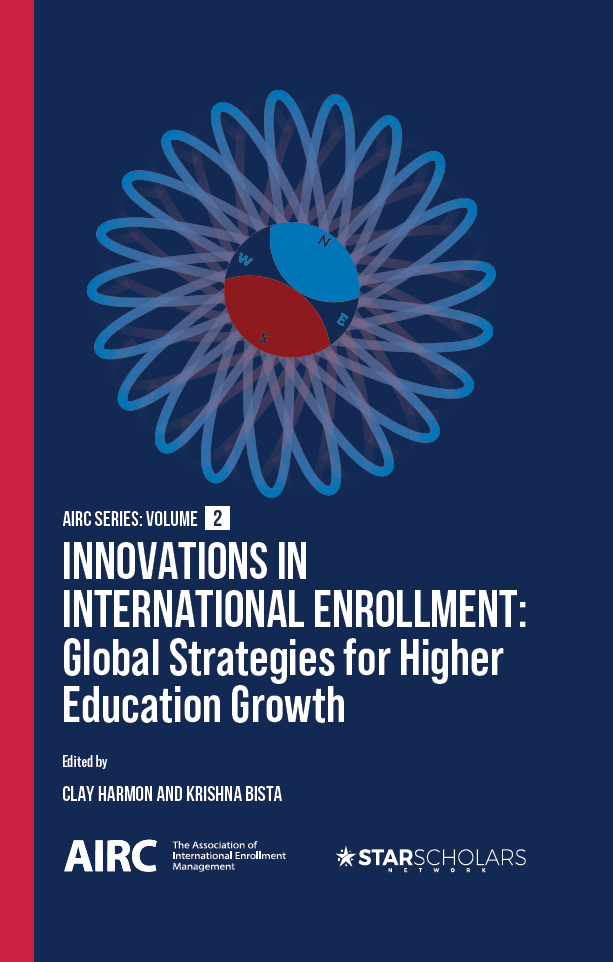
This volume examines international student enrollment from multiple perspectives across the globe. Contributors explore how digital transformation, artificial intelligence, and new marketing strategies are reshaping recruitment and engagement, while also addressing the cultural, political, and social factors that influence the international student experience. The book includes case studies from the United States, Latin America, Asia, and Africa, showcasing the interplay between technology, policy, and student success.
Readers will find discussions that range from the role of English language programs in soft diplomacy to the impact of creative economies in Indonesia, from Japanese enrollment rebounds to the challenges faced by Mexican and Brazilian students, and from the promises of AI in higher education to the dilemmas of fostering democracy and inclusion in classrooms and research. Together, these contributions illustrate the complex realities of international student enrollment today and provide actionable insights for educators, policymakers, and institutional leaders seeking to build inclusive, resilient, and globally connected campuses.
Editors: Clay Harmon and Krishna Bista
OPEN ACCESS BOOK | CC BY-NC-ND Open access editions of this book can be accessed here . The open access edition of this book is freely available to readers worldwide and may be accessed, downloaded, and shared without charge through the publisher’s website and scholarly discovery platforms.
Available as Hardcover | Open Access | Related books
Contents Introduction: Framing the Future of International Student Enrollment
Chapter 1: Beyond Politics: The Role of Inclusion in U.S. Higher Education for International Student Success Chapter 2: What International Students Want and What They Actually Get: Bridging Expectations with Outcomes Chapter 3: English Language Programs as Facilitators of Soft Diplomacy Chapter 4: AI-Driven, Human-Led: The New Rules of SEO Applied to Higher Education Chapter 5: Sustainable Disruption: AI and Digital Transformation Chapter 6: Transforming the Impact of AI in India: Emerging Trends in Student Enrollment and Engagement Chapter 7: Navigating Cultural Transitions: Unfolding the Acculturation Puzzle of International Students Chapter 8: Rebounding Japanese Student Enrollment in U.S. Education: Successes and Strategies Chapter 9: Mexican International Students and the Impact of Contemporary U.S. Political Shifts Chapter 10: Leveraging Digital Transformation for International Student Enrollment Growth in Ghana Chapter 11: Empowering Indonesian Students in the Creative Economy: Strategic Insights for a Competitive Future Chapter 12: Democracy in Practice: Challenges from Teaching, Research, and Student Inclusion in Brazil Chapter 13: Emerging Trends and Adaptive Strategies in International Student Enrollment: Regional Insights and Institutional Responses Chapter 14: From Home to Host: Challenges and Resilience in Cross-Cultural Transition
Publisher : STAR SCHOLARS PRESS
Published : September 20, 2025
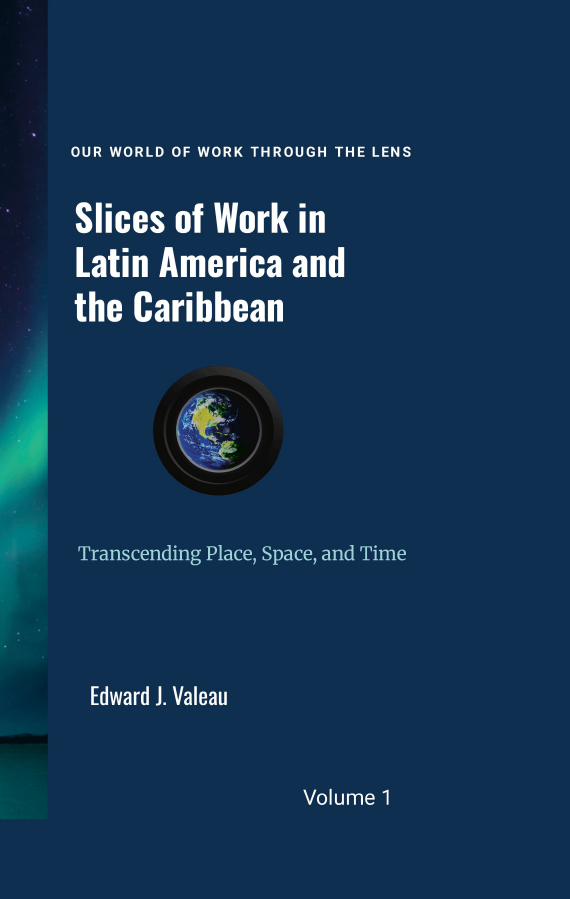
Our World of Work is a series of photography books that uses the lens to celebrate people working in a particular place, at a specific time, and in a specific space. Images were photographed over 25 years of travel throughout 75 countries, and in most cases with my wife, Vera Valeau. The book's underlying theme is identifying and celebrating the ordinary people who work to survive globally under various influences, conditions, controls and circumstances, over which most often they have no control, little interest, and, most importantly, no knowledge of how it affects them.
Slices of Work in Latin America and the Caribbean: Transcending Place, Space, and Time portrays the social and environmental working conditions of a segment of the region's population. Through narration, poetry, storytelling, and photography, the book aims to introduce readers to a culturally pluralistic, diverse, and dynamic society of ordinary people. It celebrates the unique contributions of each culture and the diversity that enriches our global workforce.
Order Copy Here

Publisher : STAR SCHOLARS PRESS
Published : September 19, 2025
From Ruin to Renewal is a powerful eco-philosophical poetic epic that confronts the crises of the Anthropocene and envisions a path toward the Symbiocene—an era of harmony between humanity and the Earth. Blending scientific insight, ethical urgency, and lyrical beauty, Dr. Gopi Upreti’s poetry bears witness to ecological devastation while offering a compelling call for restoration, stewardship, and hope.
This landmark work, inspired by the legacy of Wangari Maathai, challenges readers to move beyond despair and embrace their role as caretakers of a living planet. With clarity and grace, From Ruin to Renewal invites us to listen, to awaken, and to begin again.
Gopi Upreti is an acclaimed eco-poet and global voice for environmental wisdom, honored with the North STAR Noam Chomsky Lifetime Achievement Award . His work bridges language and ecology, inspiring transformative thought on sustainable living.
Series : Vol 1
Publisher : STAR SCHOLARS PRESS
Published : September 4, 2025
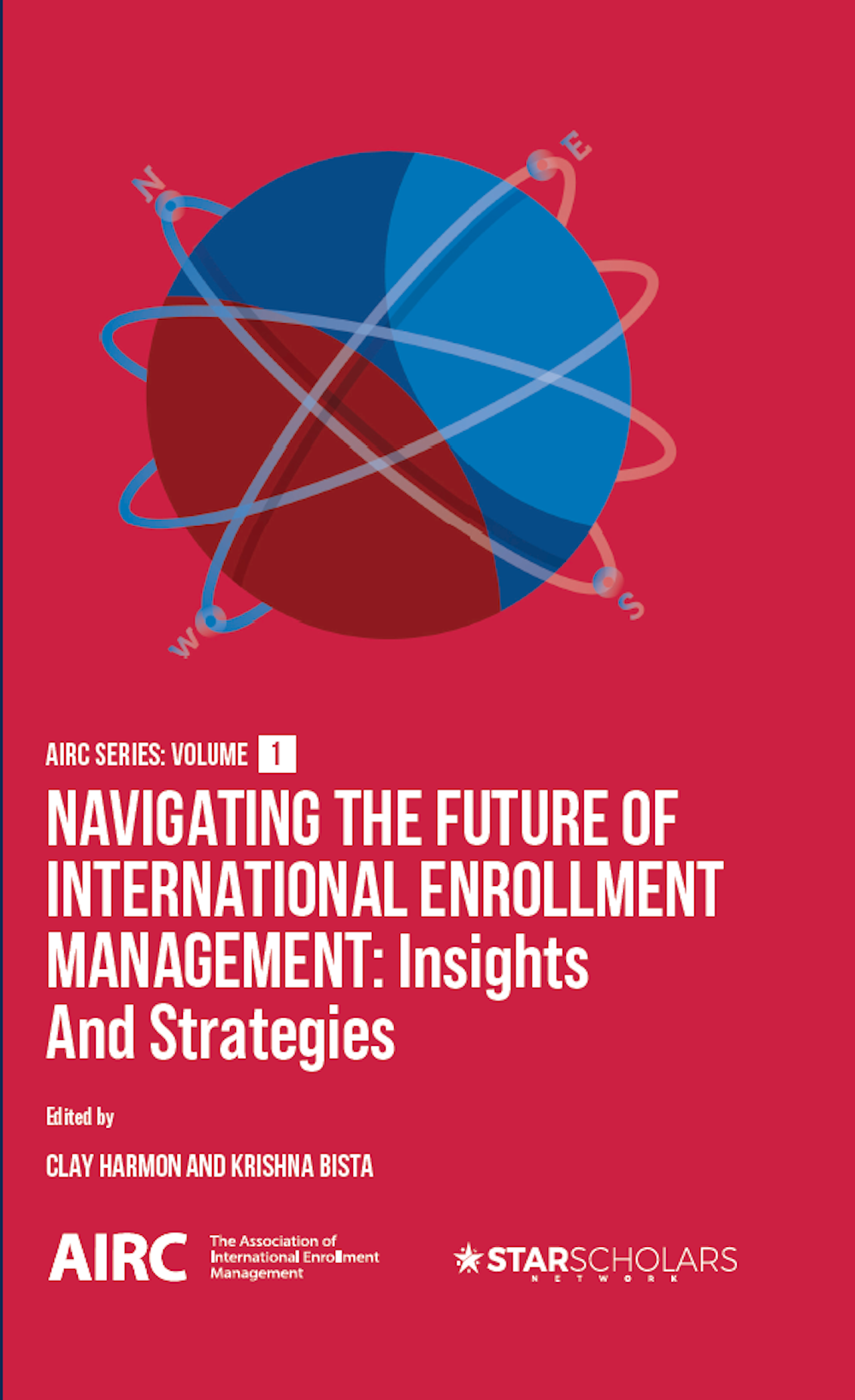
This scholarly volume examines the shifting dynamics of international student enrollment within an increasingly complex global higher education. Drawing on contributions from experienced practitioners and researchers, this work addresses critical themes, including international branch campuses, transnational education models, data-informed decision-making, student success, and institutional transformation. Through evidence-based analysis and case studies from diverse contexts, the book offers actionable strategies for fostering ethical, inclusive, and sustainable enrollment management practices. It serves as an essential reference for higher education leaders, enrollment professionals, and policymakers committed to advancing global engagement in a time of rapid change.
Editors Clay Harmon and Krishna Bista
OPEN ACCESS BOOK | CC BY-NC-ND Open access editions of this book can be accessed here. The open access edition of this book is freely available to readers worldwide and may be accessed, downloaded, and shared without charge through the publisher’s website and scholarly discovery platforms.
Order Print Copies: Hardcover | Paperback | Open Access Book (free)
A compelling framework that transforms international enrollment from a complex challenge into a strategic opportunity for global academic excellence. Thomas Tinnefeld, PhD Professor of Applied Languages, Saarland University of Applied Sciences, Germany A valuable resource for higher education administrators and scholars. John D Branch, PhD, EdD Professor of Business Administration, University of Michigan, USA An essential resource offering innovative strategies and crucial insights for education leaders navigating international enrollment in today's rapidly evolving global landscape. Chunipha Poedloknimit, PhD Lecturer, Department of Public Administration, Western University, Thailand A rich collection of perspectives that deepens our understanding of how to create supportive and globally connected learning environments for international students. Lu Lu, PhD Beijing Language and Culture University, China In a rapidly changing world, Navigating the Future of International Enrollment offers both clarity and vision for building more inclusive, resilient, and globally engaged campuses. Drawing on diverse voices and practical experience, it inspires educators and policymakers to reimagine internationalization for the future. Thatcher A. Spero, PhD Professor of Education, Musashino University, Japan
With clarity and vision, the authors provide timely strategies that will guide institutions in navigating the evolving global enrollment landscape and highlight the central role of student success and well-being. Praveen Kumar Rudra, PhD Assistant Professor, University of Nebraska at Omaha, NE, USA
A thought-provoking volume that empowers education leaders to embrace diversity and innovation in global enrollment strategies. Sirirat Na Ranong, PhD, Assistant Professor, Faculty of Liberal Arts, Thammasat University, Thailand
Contents
Introduction
Navigating the Future of International Enrollment Management
Chapter 1
Rethinking International Enrollment Management: Looking Inward to Support a Global Perspective
Chapter 2
International Branch Campuses and U.S. Universities: Global Enrollment Opportunities in a Changing World
Chapter 3
Transforming Business Education: A Management Information System as a Major in STEM to Attract International Talent
Chapter 4
A World Unbound: The Fusion of Trends Redefining International Education
Chapter 5
Using Data Wisely for International Enrollment Management
Chapter 6
From Home to Host: Challenges and Resilience in Cross-Cultural Transition
Chapter 7
Managing International Academic Collaboration in a Turbulent World: Swedish Perspectives
Chapter 8
Intentional Enrollment Management: A Scalable Approach to Student Success and Institutional Transformation
Chapter 9
A Niche in Transnational Higher Education: The Microcampus Model of the University of Arizona
Chapter 10
From Recruitment to Graduation: A Comprehensive Approach to International Enrollment Management
Publisher : STAR SCHOLARS PRESS
Published : September 4, 2025
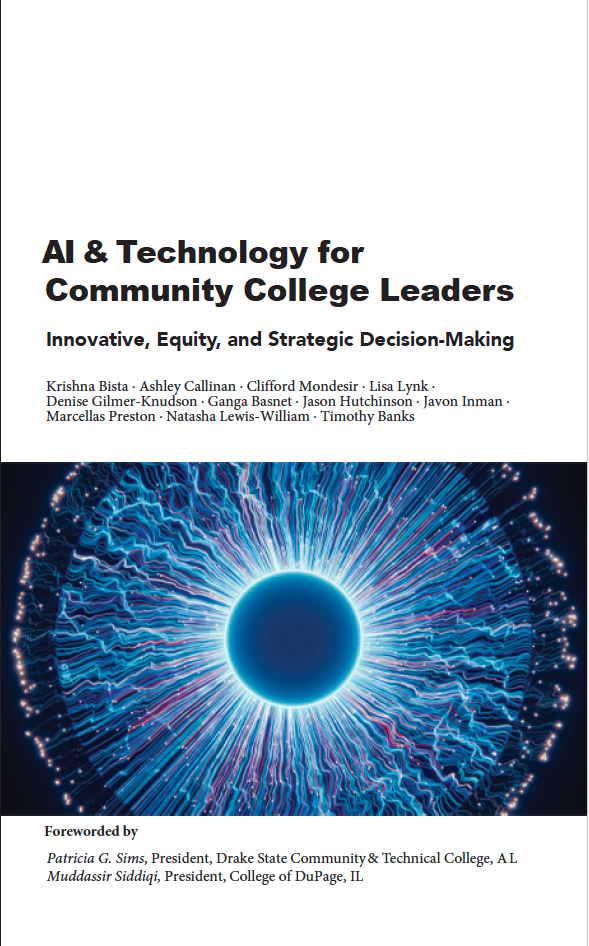
This book offers a practical and research-informed foundation for future community college leaders navigating the evolving digital landscape. Centered on the integration of educational technology into institutional planning, pedagogy, student success, and leadership, the book guides readers in critically evaluating digital tools, designing inclusive solutions, and anticipating emerging trends such as generative AI, cybersecurity, and equity-driven innovation. Blending theory, case studies, and reflective practice, this book equips doctoral students and practitioners with the skills needed to lead transformation in community colleges through ethical and strategic use of technology.
Order your hardcopies
"This book is a vital resource for community college leaders, offering practical strategies to navigate technological change while prioritizing equitable student success. Its concise, actionable insights make it essential for shaping inclusive and innovative educational environments."
— Lance D. Bowen, PhD, Dean, School of Science, Technology & Education, Anne Arundel Community College, Maryland
"A timely and transformative contribution, this book illuminates how community colleges can embrace digital innovation while staying true to their mission of access and equity. It is both practical and visionary, offering strategies that leaders, faculty, and staff can immediately apply to strengthen student success in a rapidly evolving landscape."
— Roshelle Lemon-Howard, EdD, MSN, RN, Assistant Professor & Coordinator, Practical Nursing Certificate Program, Baltimore City Community College
"This book provides an authentic look into the challenges and opportunities within community colleges. It highlights innovative practices that empower faculty and future educators, making it an invaluable guide for those committed to student success and educational equity."
— Melenese Sivells, EdD, Professor of Education, Northampton Community College
"This book powerfully demonstrates how community college leaders can harness AI to drive innovation while keeping equity at the center of decision-making. It is an essential guide for faculty and program directors preparing students—and institutions—for the future of higher education." — Huong Nguyen, EdD, Program Director, Montgomery College
“As a community college administrator, I found this book an invaluable guide that bridges innovation with access, showing how AI can be leveraged to enhance equity, efficiency, and student achievement.”
— Lesley Shotts, EdD, Dean of Institutional Effectiveness, Grants, and Research / Title III Administrator / Accreditation Liaison, Drake State Community & Technical College
Series : Volume 1
Publisher : STAR SCHOLARS PRESS
Published : August 29, 2025
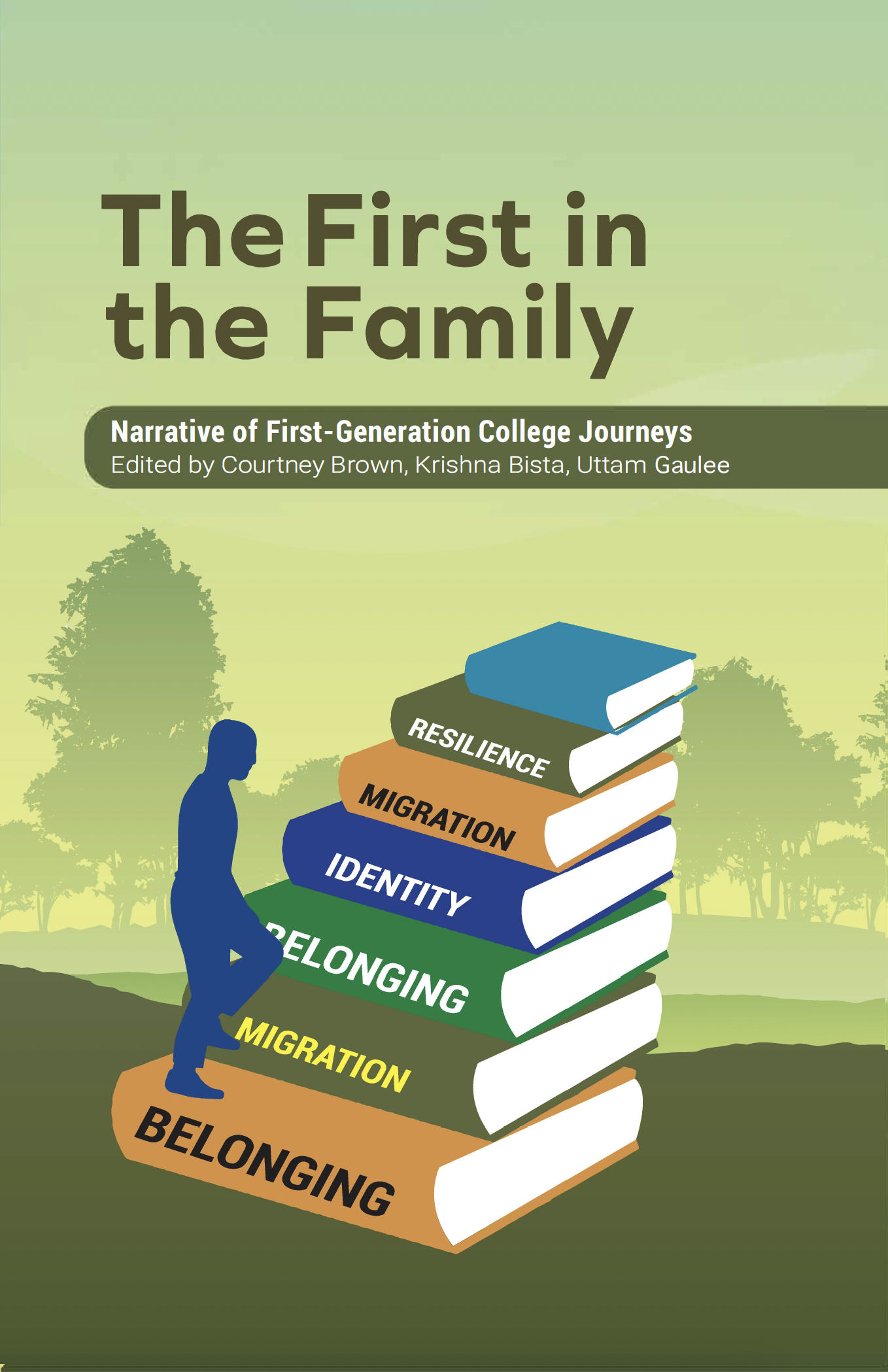
First in the Family is a compelling anthology that amplifies the voices of first-generation college students and scholars from around the world. This volume captures deeply personal narratives shaped by resilience, identity, migration, and mentorship. Across diverse contexts—from remote villages to prestigious global universities—contributors share their experiences navigating systemic barriers and cultural expectations to achieve academic success. These transformative stories not only honor the legacy of first-generation learners but also serve as a powerful call for inclusive practices that empower future generations.
OPEN ACCESS BOOK | CC BY-NC-ND Open access editions of this book can be accessed here . The open access edition of this book is freely available to readers worldwide and may be accessed, downloaded, and shared without charge through the publisher’s website and scholarly discovery platforms.
Available as Paperback | Hardcover | Open-Access
Praise for this book This book reminds us that transformation in higher education often begins in places we least expect, and with people too often overlooked. George F. Kacenga, PhD, Vice President of Enrollment Management, William Paterson University of New Jersey, USA
As the first in my family to earn a Ph.D. through my own hard work and determination, I can attest that this volume serves as a compelling blueprint for institutions committed to empowering individuals who are not only the first in their families—but the first to lead with courage and conviction. Jing Luán, PhD, Governing Board Member, MISK Schools, Provost Emeritus An inspiring narrative emphasizing the need for democratizing access to higher education across cultures, while advocating for the need for more inclusive academic spaces. Pankaj Mittal, PhD, Secretary General of the Association of Indian Universities and Former Vice Chancellor of Bhagat Phool Singh Women's University, India
A priceless compass for educators, First in the Family charts the paths of their students' transformative journeys of discovery and perseverance, illuminating the way for them to overcome obstacles, transcend borders, and realize their dreams. Elena de Prada Creo, PhD, Vice Dean for International Affairs, Facultad de Relaciones Internacionales, Campus Universitario, Spain.
These powerful narratives beautifully capture how intercultural growth and academic resilience converge in the lives of first-generation learners, challenging racism, gender bias, and structural inequality. A moving testament to transformation, resistance, and intergenerational commitment. Sarah Carrica-Ochoa, Profesora Titular, Facultad de Educación y Psicología, Universidad de Naarra, Spain
A moving tribute to the grit and grace of first-generation scholars—this anthology is both an inspiration and a blueprint for a more inclusive academy. Pankhuri Aggarwal, PhD,Assistant Professor, Department of Psychology, University of Cincinnati, USA
A powerful collection of stories from diverse first-generation scholars, highlighting their struggles, resilience, and the vital role of support systems in achieving academic and personal success. Siu-Man "Raymond" Ting, PhD, Professor, Director of Graduate Programs, NC State University, USA As a rural education advocate, this book is a valuable resource for academic praxis and serves as a compass to guide young scholars in promoting social justice. Arlyne C Marasigan, PhD, Professor, College of Advanced Studies, Philippine Normal University, Manila, Philippines This volume situates the voices of first-generation university graduates in their own unique personal contexts and provides insight into the breadth of pathways that these graduates take to earn their degrees. As a first-gen graduate myself, the stories resonated, and will for others who are seeking guidance on how to be successful in this important life journey. Shannon N. Davis, PhD, Associate Dean for Faculty and Academic Affairs, George Mason University, Korea
Publisher : STAR SCHOLARS PRESS
Published : August 29, 2025
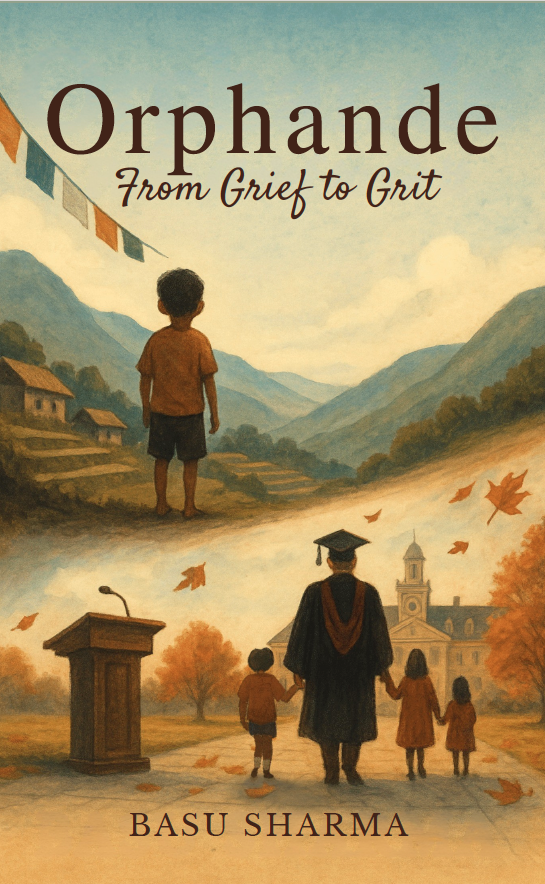
Orphande is a moving memoir of loss, resilience, and transformation. Orphaned as a child in rural Nepal, the author faced grief that could have broken him. Instead, it became the force that carried him forward—from a village childhood shadowed by absence to the pursuit of education, love, and purpose.
With honesty and lyrical reflection, this book traces the journey of turning sorrow into strength and grief into grit. Each chapter captures the quiet courage of choosing perseverance over despair.
A story both deeply personal and universally human, Orphande is an inspiring testament to the power of resilience and the dignity of becoming.
Orphande is a powerful memoir—an odyssey of a soul that refused to be broken by sorrow. The author reclaims grief as a space for reflection, resistance, and renewal. A deeply human story that lingers in the heart. Ambika P.Adhikari , Author of Nepali Diaspora: A Global Perspective In Orphande , the arc of a life is drawn with care, courage, and lyrical honesty. The book is not only a memoir but a manifesto—for education, for perseverance, and for becoming. I love it. Bhanu Bhakta Acharya, Author of Sabda Brahma
The success of Orphande , who hails from a remote village in Nepal where access to education is a rare privilege and child marriage and infant mortality are common, stands as a testament to resilience in the face of relentless adversities. This compelling story is an inspiring example of triumph over profound challenges. It is, without doubt, one of the best books I have read. Gopalan Srinivasan, Author of Musings of Mannarkoil Professor
Orphande is a luminous story of resilience—transforming grief into strength and sorrow into hope. A deeply inspiring journey that speaks to every heart. Amrita Bhandari , Author of Waves of Wonder: A Caribbean Cruise Adventure
Orphande is not merely a memoir—it is a blueprint of survival and becoming. With unflinching honesty, it shows how pain can be reimagined as strength and how adversity can carve pathways to purpose. Paul Mukund , Author of Preventing Things from Falling Further Apart
Order your copies here

Publisher : STAR SCHOLARS PRESS
Published : August 11, 2025
This volume brings together global case studies, innovative curricula, and collaborative strategies that equip students for today’s interconnected economy. This volume explores how community colleges and similar institutions integrate enduring skills, technology, and experiential learning to prepare graduates for career success. Highlighting models from diverse regions, it offers adaptable approaches for educators, policymakers, and industry leaders committed to building a skilled and globally competent workforce.
Edited by Robin Matross Helms & Krishna Bista
How to cite:
Helms, R. M., & Bista, K. (Eds.). (2025). Preparing a global workforce: Curriculum design and learning outcomes . Association of Community College Trustees & STAR Scholars Press.
Download eBook Here
Publisher : STAR SCHOLARS PRESS
Published : April 24, 2025
This volume highlights effective policies, frameworks, and practices that strengthen community colleges and their global counterparts. It examines challenges and opportunities across diverse contexts, offering shared and context-specific solutions. The collection fosters collaborative pathways among institutions, industries, and governments to promote student success and socioeconomic development. Featuring contributions from trustees, presidents, scholars, and practitioners, the book amplifies the visibility of this vital educational sector and advances the global discourse on community college models.
Editors:
Robin Matross Helms, Ph.D., Vice President for Membership and Educational Services, Association of Community College Trustees Krishna Bista, EdD, CEO & Executive Vice President, STAR Scholars Network
Download your copies here .
Table of Contents
Editors’ Introduction Robin Matross Helms and Krishna Bista
The Global “College Sector”: Definitions, Characteristics, and Challenges Rosalind Latiner Raby and Edward J. Valeau
Pioneering Skills for Tomorrow: Croatia’s Regional Centers of Competence Lucia Brajkovic
“Respected and Growing”: Technical Education in Colombia Thomas Milligan
South African Community Colleges: The Impact of South Africa’s TVET Sector on the Development of South Africa Birgit Schreiber
Foundations and Evolution of Community Technical Colleges in Malawi Mastano N. Dzimbiri
Regional Approaches: TVET in the South African Development Community Birgit Schreiber
Life-Long and Open Learning Centers in the Syrian Arab Republic Ranwa Khorsheed
Community Colleges in Pakistan: Promoting Access and Quality Education Aisha Naz Ansari, Sohail Ahmad, and Sadia Muzaffar Bhutta
Can We Fill the Seats Next Year? Challenges Facing Two-Year Colleges in South Korea Jungmin Lee
Igniting Innovation: Lessons Learned from U.S. Community College Leadership Julius Fleschner and Michael Lanford
Publisher : STAR SCHOLARS PRESS
Published : February 27, 2025
This book, Global Pathways: Insights on Studying, Working, and Thriving Abroad , offers a captivating collection of stories that illuminate the challenges, triumphs, and transformative power of international experiences. Each chapter presents a unique perspective on life abroad, from adapting to new academic environments and overcoming cultural barriers to pursuing career aspirations and forging meaningful connections across borders. These narratives highlight the importance of resilience, mentorship, and cross-cultural understanding in navigating the complexities of a globalized world. By delving into the personal and professional transformations of those who have ventured beyond their home countries, this book inspires readers to embrace their journeys with courage and an open mind. It is a testament to the profound rewards of stepping outside one’s comfort zone and celebrating the diversity and interconnectedness of our shared world.
Editors
Krishna Bista, Morgan State University, USA Bo Zhang , STAR Scholars Network, USA Uttam Gaulee, Morgan State University, USA Dawn Michele Whitehead, Association of American Colleges and Universities, USA
Paperback and hardcover or eBooks are available online to purchase in the following countries: US , UK , DE , FR , ES , IT , NL , PL , SE
Publisher : STAR SCHOLARS PRESS
Published : February 15, 2025
Tawfiq Zayyad: An Analytic Study of His Literary Oeuvre by Sālim al-ʿAṭāwna, edited and revised by Dr. Saleem Abu Jaber, offers an in-depth exploration of the life and works of Tawfiq Zayyad, one of the most prominent voices in Palestinian literature and political activism. This meticulously researched study examines Zayyad's poetic and literary contributions, delving into the themes of resistance, hope, and identity amidst the socio-political realities of the Palestinian struggle.
With comprehensive analysis spanning Zayyad's biography, the evolution of his poetic style, and the cultural, political, and social contexts influencing his works, this book bridges literary scholarship and historical insight. Dr. Abu Jaber's expert editorial guidance enhances the accessibility of this pivotal study for scholars, students, and anyone interested in Middle Eastern literature and the intersection of art and activism. A valuable addition to literary and cultural studies, this work highlights the enduring impact of Zayyad's voice in advocating for justice, resilience, and peace.
This book is available in ebook , paperback , and hardcover editions.
Publisher : STAR SCHOLARS PRESS
Published : November 21, 2024
Few enjoy the privilege of creating their own identities. Jews, Blacks, Roma, Hillbillies, Witches, and a myriad of others, demonized, erased or eradicated, demonstrate that identities are not necessarily a matter of individual choice. These ostensibly diverse figures do not control their own narratives and are subject to various forms of dehumanization and marginalization. They are defined by stereotypes that generate hate, fear, ridicule or romantic mythologies, sometimes, paradoxically, simultaneously. The author’s research integrates perspectives drawn from myth, literature, religious belief, histories, political ideologies, popular culture, and other sources, from the distant past to the disturbing present, to reveal the pervasive power of bigotry.
This book exposes those dynamics that have created a spectrum of hate from prejudice, through discrimination, towards persecution, exclusion and, in its darkest manifestations, ethnic cleansing, erasure, genocide. These figures, and the spaces they inhabit, are profoundly connected. Their identities are formed by the interaction, or collision, between who they believe they are and how they are imagined to be through the hostility of others. They are invented as pariahs, outsiders who threaten or subvert the imagined cohesion of dominant communities. New imperatives emerge for international higher education. Conventional, simplistic concepts of identity or “culture” distort the unfamiliar environments students will encounter throughout their lives. The insights offered here indicate that a key task is to help students unlearn assumptions, to discard the baggage with which they travel across borders, real and metaphorical. The author deconstructs orthodoxies and demands that attention be paid to those silenced, ignored, dehumanized, victims of cruel myopia and immoral deafness.
Author:
Michael Woolf’s career has been spent substantially in international contexts. Prior to working in education abroad, he completed a PhD in American Studies, taught literature at universities in the UK and Italy, and worked for BBC radio. He has held leadership roles in international education for many years and has published and edited extensively. He received the Peter A. Wollitzer Award (2020) from the Forum on Education Abroad. Pariahs draws directly upon his identity as a Jew born in London in 1947. The Holocaust was rarely discussed but fear of the hostility of others was palpable in landscapes of anxiety.
How to cite this book:
Woolf, M. (2024). PARIAHS: Marginalized voices in education abroad . STAR SCHOLARS PRESS.
______________________________________
PRAISE for this book
"In this time of extraordinary ethnic and racial hatred across the globe, PARIAHS: Marginalized Voices in Education Abroad provides readers with a truly global context for recognizing the potential and the power of intercultural understanding, respect, and compassion. In this increasingly globalizing century, one must first recognize and then overcome the biases that are as second-nature to us as the air we breathe. PARIAHS helps us take this first step; the next step is up to the reader." — Benjamin Rifkin, Provost and Senior Vice President for Academic Affairs, Fairleigh Dickinson University, USA
" In PARIAHS , Woolf presents a profound study of identity and cultural exchange that resonates with challenges we see in Nepal’s evolving international education. His insights on marginalized communities speak to the global need for equity, offering valuable perspectives that can inspire Nepalese educators and policymakers to foster greater inclusivity and empathy in both local and international educational contexts." — Tirth Raj Khaniya, Professor and Former Vice-Chancellor, Tribhuvan University, Nepal
"PARIAHS: Marginalized Voices in Education Abroad is a transformative exploration of the layered experiences of marginalized identities within global education. Woolf’s insightful analysis challenges educators to foster empathy and inclusivity, making this essential reading for those committed to a more equitable landscape in international education." — Meghna Mehndroo, Principal, University Institute of Teachers Training and Research, Chandigarh University, India
"PARIAHS is a must-read that illuminates the lived experiences of marginalized communities in international education, urging readers to challenge and expand their understanding of identity and cultural exchange. Woolf’s work is both timely and transformative, offering a critical lens that encourages educators and students alike to engage with the complexities of diversity in global learning environments." — Dr. ‘Dimeji R. Togunde, Vice Provost for Global Education & Professor of International Studies, Spelman College, USA
“ PARIAHS is first and foremost a book about identities and how these are constructed. It focuses on those identities that are imposed on a group of individuals and lead to their marginalization. It is a wonderful book which reminds us of the complexity of the world and warns all of us working in international education to avoid falling into the trap of oversimplification and generalization about the concepts of culture and intercultural learning in study abroad” — Giorgio Marinoni, Manager, HE and Internationalization, International Association of Universities, France
"Michael Woolf in Pariahs challenges us to question the conventional notions of identity and culture in international higher education which are often simplistic and fail to reflect the diverse and complex realities that students encounter. The book aims to deconstruct these orthodoxies, encouraging readers to unlearn assumptions and challenge stereotypes." — Amany Saleh, Ph. D., Professor of Curriculum and Instruction, Arkansas State University, USA
"Woolf's PARIAHS is a thought-provoking exploration of marginalized voices in international education. By examining complex identities and the impact of cultural exchange, the book challenges us to reimagine the role of education in fostering empathy and inclusivity. Through insightful analysis and compelling case studies, Woolf sheds light on the often-overlooked experiences of those who navigate the intersections of race, ethnicity, and class in global learning environments." — Marina Falasca, Professor, I.E.S. en Lenguas Vivas "Juan Ramón Fernández", Buenos Aires, Argentina
"PARIAHS: Marginalized Voices in Education Abroad is a compelling exploration of identity, marginalization, and cultural awareness. It examines the harmful impact of stereotypes while challenging readers to question and unlearn deeply ingrained biases." — Andrea Lee, Ed.D., Assistant Professor, Austin Peay State University, USA
"A wonderful book about identity from one of the most important voices in education abroad. Compassionate, wise, insightful and a must-read." — Michael Punter, Global Director of Theatre Education, CEA CAPA London, UK
In Pariahs, Michael Woolf offers a wide-ranging, nuanced, and timely discussion of how stereotypes have been created and used, historically as well as recently, to represent various marginalized groups globally. — Ted Olson, Professor, Department of Appalachian Studies, East Tennessee State University, USA
"Pariahs" is a much-needed multidimensional road map showing scholars and students a new path towards self-discovery and identity, one that requires leaving our luggage behind and exploring the roads with an empathic and inclusive mindset." — Elena de Prada Creo, Vice Dean for International Affairs, University of Vigo, Spain
"A rich, in-depth review of many key cultural stereotypes we hold that often prevent us from truly listening and learning while on study-abroad programs." — Gene Hammond, Professor Emeritus of Rhetoric, Stony Brook University, USA
This book profusely and insightfully interrogates the assumptions we hold about others and the ones they hold about us, especially when viewed from the reality of education abroad and international education and cultural exchange. Written in fine flowing prose, well-researched, and garnished with rich knowledge of history, politics, race, Christian mythologies, and critical events that shaped the interactions between “The West and the Rest of Us,” Michael Woolf paints a portrait of what it means to live in a divided world as the “other,” existing at the mercy of the mainstream, and its deeper implications to study abroad and cultural exchanges. — Emmanuel E. Akanwa, Frederick Douglass High School, Upper Marlboro, Maryland, USA
"PARIAHS is an essential contribution to international education, providing readers with a nuanced understanding of the societal forces that shape marginalized voices. His work is both enlightening and necessary for anyone committed to diversity in global academia." — Uttam Gaulee, President, STAR Scholars Network, USA
"As an international graduate student, I resonate with the insights and stories thoughtfully told by Michael Woolf. PARIAHS provides readers with diverse viewpoints on the transformational experience of being in a foreign land." — John Jefferson Besa, MD, Harvard University, USA
_________________________________________
Hardcopies and ebooks are available in the following countries through Amazon, Barnes & Noble , and other vendors.
US | UK | DE | FR | ES | IT | NL | PL | SE | JP | CA | AU
Publisher : STAR SCHOLARS PRESS
Published : October 5, 2024
This book examines the international student question by utilizing a holistic and multi-faceted approach to understanding not only the influence of socialization on the international student experience but also presents a historical background to international student contact; the influence of globalization and student mobility; U.S. international student enrollment trends; exploration of research on socialization; socialization theory/theoretical framework; an annotated bibliography of research on socialization/acculturation. This book contributes to the discourse on international student socialization. It is geared toward enriching international student socialization experiences and informing higher education policies and practices to serve better and service international students.
Author
Emmanuel E. Akanwa teaches Reading, English, and Language Arts at Frederick Douglass High School, Upper Marlboro, Maryland, U.S.A. Dr. Akanwa was formerly a fixed-term faculty at Central Michigan University and an adjunct professor of English at Mid-Michigan Community College.
Download ebook (complimentary) or order print copies on Amazon and Barnes & Noble | Related books here
How to cite this book:
Akanwa, E. E. (2024). International student socialization . Star Scholars Press. https://doi.org/10.32674/1kqb8x16
Publisher : STAR SCHOLARS PRESS
Published : July 15, 2024
Based on their personal experiences spanning various facets of the international student life cycle in the U.S., the authors of the book “ Navigating the ‘American Dream’ ” recognized the pressing need for a resource that goes beyond and above, offering comprehensive information, resources, and practical tips. Unlike existing publications, this book is a trailblazer, covering the entire spectrum of international students’ educational journey in the U.S., providing essential insights, resources, and strategies to address students’ diverse needs.
Authors
Bo Zhang University of Hartford, USA Emmah Muema University of Nebraska-Lincoln, USA Shenhaye Ferguson University of Denver, USA Rachel Kamnkhwani University of Denver, USA Luke Parker University of Kansas, USA Candice Peters Appalachian State University, USA
Order digital copies | Kindle eBook | Print Copies
Publisher : STAR SCHOLARS PRESS
Published : May 15, 2024
Current Perspectives on Intercultural and Global Competence offers a compelling exploration of the evolving landscape of intercultural and global competence through a variety of lenses. This insightful book delves into the complexities of navigating the practical implications of getting along together across difference and similarity. With collective contributions from scholars and practitioners worldwide, this book presents a diverse array of perspectives from different disciplines, contexts, languages, and cultures. Through rich discussion and insights, contributors to this book invite readers to engage in delving further into the complexities of the crucial understanding needed to thrive in today’s interconnected and yet often polarized world.
Editors
Dr. Darla K. Deardorff is Founding President of the World Council on Intercultural and Global Competence. She is also the UNESCO Chair on Intercultural Competence at Stellenbosch University (South Africa) as well as appointed faculty at other universities in Japan, China, the US and Canada. She has worked in the international education field for thirty years and is the author/editor of 14 books and over 60 other publications including the seminal work on intercultural competence, Sage Handbook of Intercultural Competence as well as the open access UNESCO Manual on Developing Intercultural Competence: Story Circles. Regularly invited to speak around the world, she is working on the intersections of intercultural competence with peacebuilding, gender equality and climate action.
Mizuho Tatebayashi, a Japanese scholar-practitioner, who is enthusiastic about intercultural communication and international education. Her roots lie in Japan, yet she had the privilege to explore outside the country during her undergraduate years, where she discovered the transformative power of cross-cultural experiences. As a doctoral student in North Carolina State University's Educational Psychology program, her focus centers on the development of intercultural competence and fostering enriching learning environments. She currently serves as an Executive Fellow at the World Council on Intercultural and Global Competence.
OPEN ACCESS BOOK | CC BY-NC-ND Open access editions of this book can be accessed here . The open access edition of this book is freely available to readers worldwide and may be accessed, downloaded, and shared without charge through the publisher’s website and scholarly discovery platforms.
Order print copies here | Open Access Book (Free)
Publisher : STAR SCHOLARS PRESS
Published : May 15, 2024
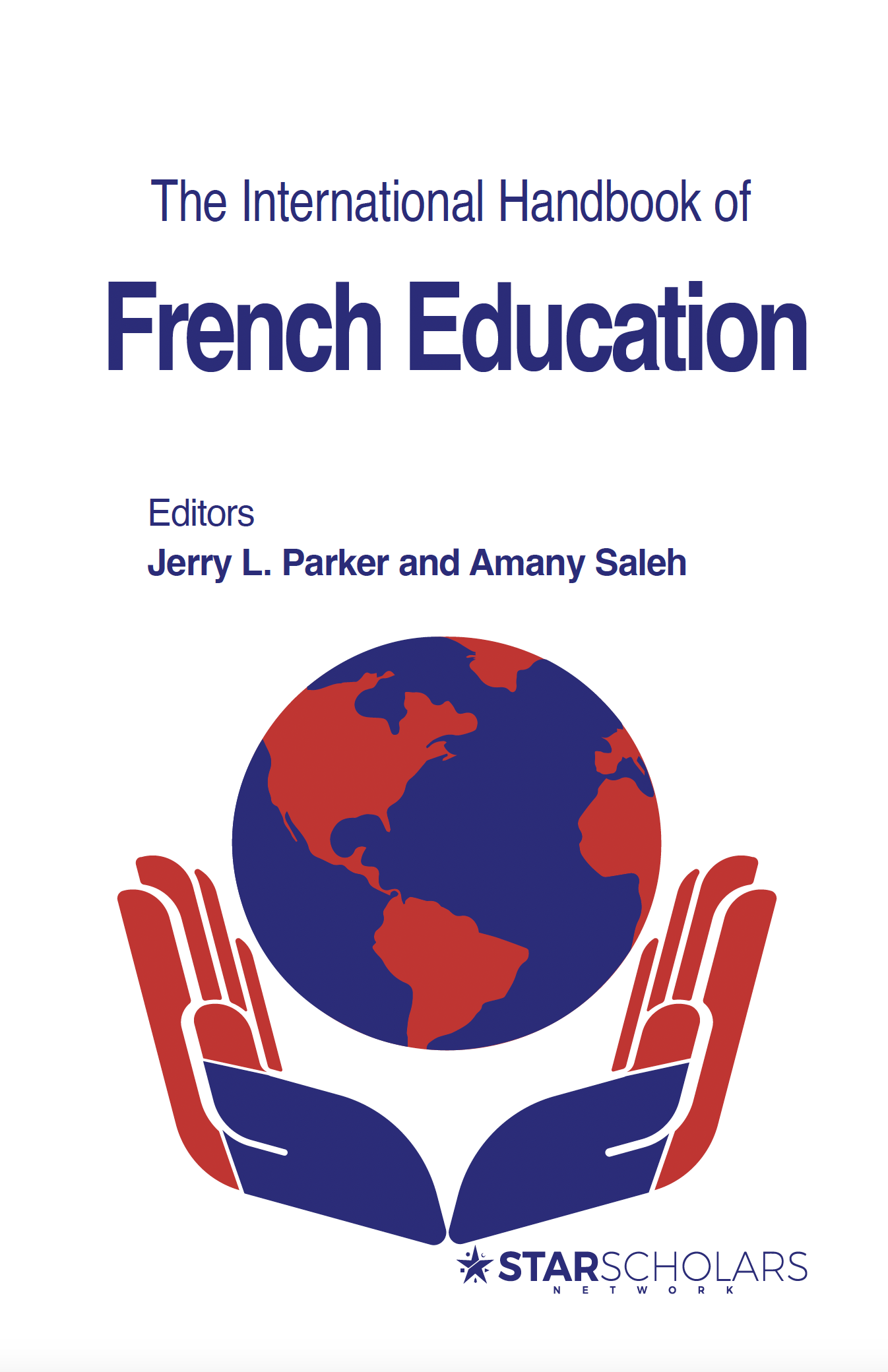
The International Handbook of French Education is a comprehensive and diverse collection that gathers the insights of educators, students, and leaders from across the globe to explore the enduring value and future prospects of teaching French language and Francophone culture. This handbook features 13 chapters that showcase perspectives from researchers, practitioners, and stakeholders, shedding light on the continued significance of French education in an increasingly interconnected world. As French remains a language of diplomacy, culture, and education with a vast global presence, this volume underscores why its teaching and learning are of enduring importance.
Editors Jerry L. Parker, Ed.D. is an instructor in French, Spanish, and World Language Education in the Department of World Languages and Cultures at Southeastern Louisiana University, USA.
Amany Saleh, Ph.D., is a Professor of Curriculum and Instruction and Comparative Education at the Center of Excellence in Education at Arkansas State University, USA.
_____________________________
Print and digital copies are available.
_____________________________

Publisher : STAR SCHOLARS PRESS
Published : April 1, 2024
This book presents a wide range of themes of perseverance, cultural exploration, transformative journeys, and reflections on life’s lessons. Each chapter offers unique perspectives on overcoming challenges, embracing cultural diversity, and finding profound meaning in life’s experiences. From tales of enduring determination to reflections on identity and global citizenship, the book invites readers to explore the complexities of the human spirit and find inspiration in the shared stories of resilience and growth.
Editors
Krishna Bista is a Professor of Higher Education in the Department of Advanced Studies, Leadership and Policy at Morgan State University (USA). Uttam Gaulee is a Professor of Higher Education in the Advanced Studies, Leadership, and Policy Department at Morgan State University (USA). Dawn Michele Whitehead is Vice President of the Office of Global Citizenship for Campus, Community, and Careers at the Association of American Colleges and Universities (USA). Bo Zhang is a TESOL Instructor and District Administrator at Providence Public Schools in Rhode Island (USA).
Order your copies: eBook | Paperback
