
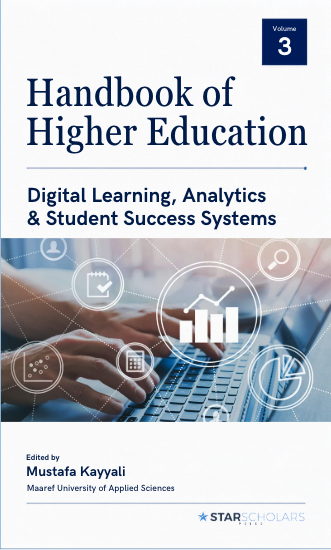
Categories

Behavioral Sciences

Transnational Higher Education and Borderless Accreditation Reshaping Quality Assurance in A Global Economy

Authors

By 
Chikuvadze Pinias
Chikuvadze Pinias, Directorate for International Partnerships and Relations, University of the Free State, South Africa; Department of Curriculum and Educational Management Studies, Bindura University of Science Education, Zimbabwe
Orcid https://orcid.org/0000-0002-8569-0009

Dr. Chikuvadze Pinias, PhD, is a Lecturer in Curriculum and Educational Management Studies at Bindura University of Science Education, Zimbabwe, and Research Fellow in the Directorate for International Partnerships and Relations at the University of the Free State, South Africa. He has published extensively, including numerous peer-reviewed articles, five books and ten book chapters, advancing debates in higher education harmonisation, curriculum theory, science education, and policy. His research explores Indigenous Knowledge Systems, inclusive higher education, and restorative justice in pedagogy. Through teaching and scholarship, he promotes decolonization, epistemic diversity, and equitable learning environments responsive to marginalized and under-resourced contexts.

Makuvire Claretah
Makuvire Claretah, Department of Curriculum and Educational management Studies Bindura University of Science Education, Zimbabwe
Orcid https://orcid.org/0009-0008-5527-7898

Dr Makuvire Claretah (https://orcid.org/0009-0008-5527-7898) holds a PhD degree in Curriculum Studies from the Zimbabwe Open University, Zimbabwe. She is a lecturer in the Department of Curriculum and Educational Management Studies at Bindura University of Science Education. Her research interests include curriculum development, stakeholder participation, and community empowerment. Significantly, her expertise in curriculum innovation and participatory approaches provides critical insights into designing educational frameworks that support restorative justice and offender rehabilitation.

Ncube Nozinhle
Ncube Nozinhle, Hillside Teachers’ College, Zimbabwe
Orcid https://orcid.org/0000-0002-6040-0474

Dr. Nozinhle Ncube is a PhD graduate from the University of The Free State, South Africa. She holds a Doctor of Philosophy degree with specialization in Higher Education Studies. She is a principal lecturer at a secondary teacher training college and holds a Master of Science degree in Counseling. Dr. Ncube serves as the Assistant Dean of Students at her college and is also a Women’s Representative Officer at the national level in the College Lecturers Association in Zimbabwe. As a registered professional counselor, she is dedicated to advocating for students with disabilities and their mental health issues in higher learning institutions in Zimbabwe. With pragmatic empathy and a humanistic approach, she aims to contribute to the implementation of inclusivity in tertiary institutions and advocate for women’s empowerment at the national level in colleges.

Pazvakavambwa Tabetha Nyarai
Pazvakavambwa Tabetha Nyarai, Ministry of Education and Training, Kingdom of Eswatini
Orcid https://orcid.org/0009-0000-0868-808X

Tabetha Nyarai Pazvakavambwa (https://orcid.org/0009-0000-0868-808X) is a holder of a Master of Science Education degree in Measurement, Assessment and Evaluation and Bachelor of Science Education (Honours) degree in Chemistry from Bindura University of Science education. She is keen on curriculum development and pedagogical innovations that improve student engagement and performance in STEM subjects. Additionally, she is a dedicated and experienced science educator with over 24 years of teaching expertise in Chemistry, Biology, Physical Science, and Integrated Sciences. Her career spans both secondary and advanced levels, including Ordinary Level, Advanced Level, and IGCSE/EGCSE curricula, where she has consistently demonstrated a passion for fostering scientific curiosity and academic excellence. She has taught in inclusive classrooms, working effectively with students who are hearing or visually impaired.

STAR SCHOLARS PRESS

Published

Publication date : August 6, 2026

Synopsis

This chapter examines how transnational higher education and borderless accreditation are reshaping quality assurance in a globalized academic economy. It explains how branch campuses, international partnerships, and digital platforms challenge nationally bounded accreditation systems. The chapter analyzes the rise of international accreditation frameworks, their effects on governance, student mobility, global competition, and institutional reputation, while also highlighting tensions between universal benchmarks and local realities. It argues that borderless accreditation can support transparency and collaboration but must address equity, sovereignty, and contextual diversity.


Copyright
