
Higher Education Studies Series
11 Titles
Senior Editors:
Dr. (Mrs.) Pankaj Mittal, Secretary General, Association of Indian Universities
Dr. Amarendra Pani, Director (Research), Association of Indian Universities
Dr. Karla Bailey, Director (Research), STAR Scholars Network
Dr. Benjamin Smith, Professor, University of Oxford
This peer-reviewed, open-access book series highlights innovative scholarship, policy analysis, and institutional best practices shaping the future of higher education in India and around the world. Designed for scholars, university leaders, practitioners, and policy experts, the series provides a rigorous platform for research that advances equity, quality, governance, internationalization, and institutional transformation.
Each volume brings together high-quality, original chapters that reflect methodological rigor, conceptual depth, and global relevance. Contributors examine the evolving landscape of higher education—its systems, reforms, challenges, and emerging futures—through diverse disciplinary and comparative perspectives.
Thematic areas include, but are not limited to:
- Higher Education Governance, Leadership, and Policy
- Quality Assurance, Accreditation, and Institutional Effectiveness
- Equity, Access, and Inclusion in Higher Education
- Internationalization, Mobility, and Global Partnerships
- Digital Transformation, AI, and Technology-Enhanced Learning
- Financing, Sustainability, and Resource Management
- Curriculum Reform, Pedagogy, and Teaching Innovation
- Research, Innovation, and Knowledge Production
- Community Engagement and Societal Impact
- Indian Higher Education: NEP 2020 Implementation and Reform Pathways
- Global Comparative and International Higher Education Studies
Editorial and Review Process
All submissions undergo a double-blind peer-review process facilitated by experts in higher education research, policy, and practice. Each volume is led by a guest editor or a thematic editorial board, with the support of the Series Editors. Manuscripts are professionally edited to ensure clarity, coherence, and scholarly impact.
Editor Dr. Patriece Campbell-PalmerDirector of Graduate Admissions and Enrollment Management
University of Louisville
2211 South Brook Street, Louisville, KY 40292
Phone: (502) 852-6495
Email: p0camp03@louisville.edu
Dr. Patriece Campbell-Palmer is an accomplished higher education administrator with extensive experience in international education, graduate enrollment management, and public administration. As Director of Graduate Admissions and Enrollment Management at the University of Louisville, she provides strategic leadership for recruitment, admissions operations, and enrollment systems across more than 120 graduate programs. A former Senior International Officer at Millersville University and long-serving international education leader at the University of Michigan–Flint, she has led comprehensive internationalization initiatives, launched an English Language Institute, strengthened global partnerships, and contributed to a 280% increase in international enrollment. Her work is grounded in transformative leadership, student advocacy, and a commitment to fostering globally engaged, inclusive, and supportive learning environments.
Dr. Victoria Qin, Ed.D.
Director of Recruitment and Residencies
Trinity University, San Antonio, Texas
Email: vtianqin@trinity.edu
Dr. Victoria Qin is a higher education leader specializing in enrollment management, academic advising, and global student success. She serves as Director of Recruitment and Residencies at Trinity University’s Department of Health Care Administration, where she oversees admissions strategy, graduate recruitment, and national residency partnerships for the MSHA programs. Her professional experience spans institutions including the University of British Columbia’s School of Public Policy and Global Affairs, NYU Shanghai, and Texas Tech University, where she led international recruitment initiatives across multiple global regions. Dr. Qin holds an Ed.D. in Higher Education Administration from Texas Tech University and an M.Ed. in Post-Secondary Administration and Student Affairs from the University of Southern California.
All Books
Publisher : STAR SCHOLARS PRESS
Published : August 9, 2026
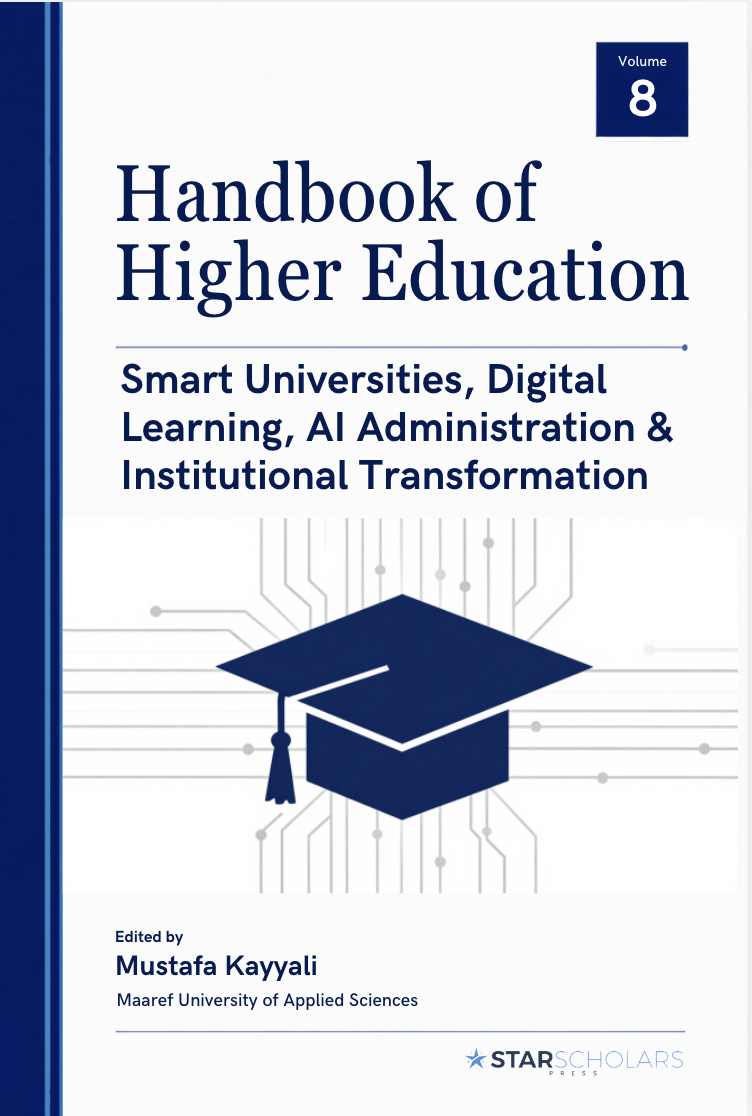
This volume examines the transformation of higher education through smart university models, digital learning, artificial intelligence, and administrative innovation. Twelve chapters connect global collaboration, adaptive learning in sports education, responsible AI feedback, decentralized and hybrid pedagogy, institutional digital transformation, faculty role change, student online experiences, academic quality, teaching capital, and AI-driven university administration. The contributors combine conceptual reviews, empirical cases, governance analysis, and practice-oriented frameworks from diverse geographic and institutional contexts. Rather than treating smartness as a collection of technologies, the volume asks how universities can integrate data, automation, learning platforms, and intelligent systems while protecting equity, trust, privacy, and professional judgment. It highlights student experience and faculty capability as critical tests of whether digital transformation creates genuine educational value. Intended for researchers, university leaders, faculty, quality assurance professionals, policymakers, administrators, IT teams, and graduate students, the volume argues that smart universities must be designed as humane, accountable, and continuously learning institutions.
Publisher : STAR SCHOLARS PRESS
Published : August 9, 2026
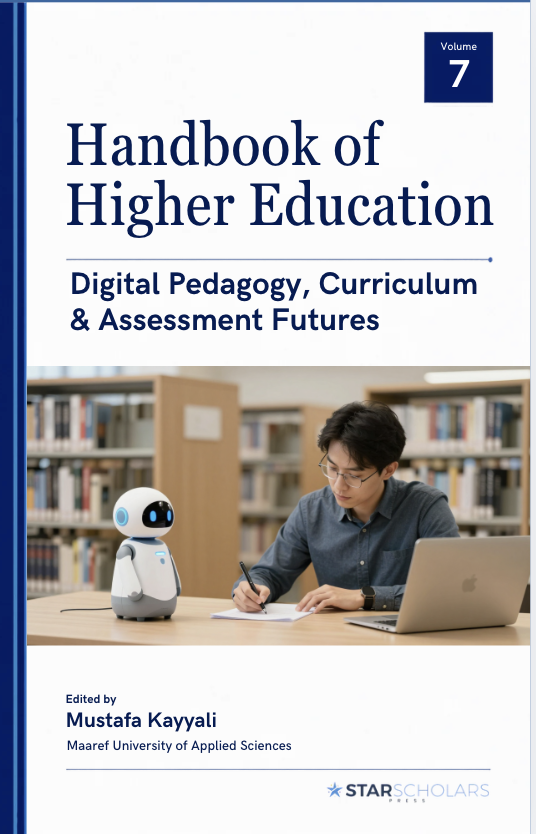
This volume investigates the future of digital pedagogy, curriculum, assessment, and quality assurance across rapidly changing higher education systems. Twelve chapters address decentralized and hybrid learning, personalized and adaptive education, smart institution roadmaps, teaching efficiency, fragmented quality frameworks, accreditation and research excellence, Faculty 4.0, the faculty role as a human safeguard in AI-rich environments, hospitality employability, and assessment integrity. The contributors draw on international contexts to examine how institutional design, faculty capability, technology, and governance influence learning outcomes and public trust. The volume gives particular attention to the tension between flexibility and coherence, innovation and quality, automation and human judgment. It also considers how graduate attributes and assessment practices must evolve as artificial intelligence becomes embedded in learning and professional work. Intended for researchers, curriculum designers, faculty, institutional leaders, quality assurance professionals, graduate students, and policymakers, the volume argues that credible digital futures require pedagogical purpose, ethical assessment, inclusive access, and sustained investment in human expertise.
Series : 6
Publisher : STAR SCHOLARS PRESS
Published : August 9, 2026
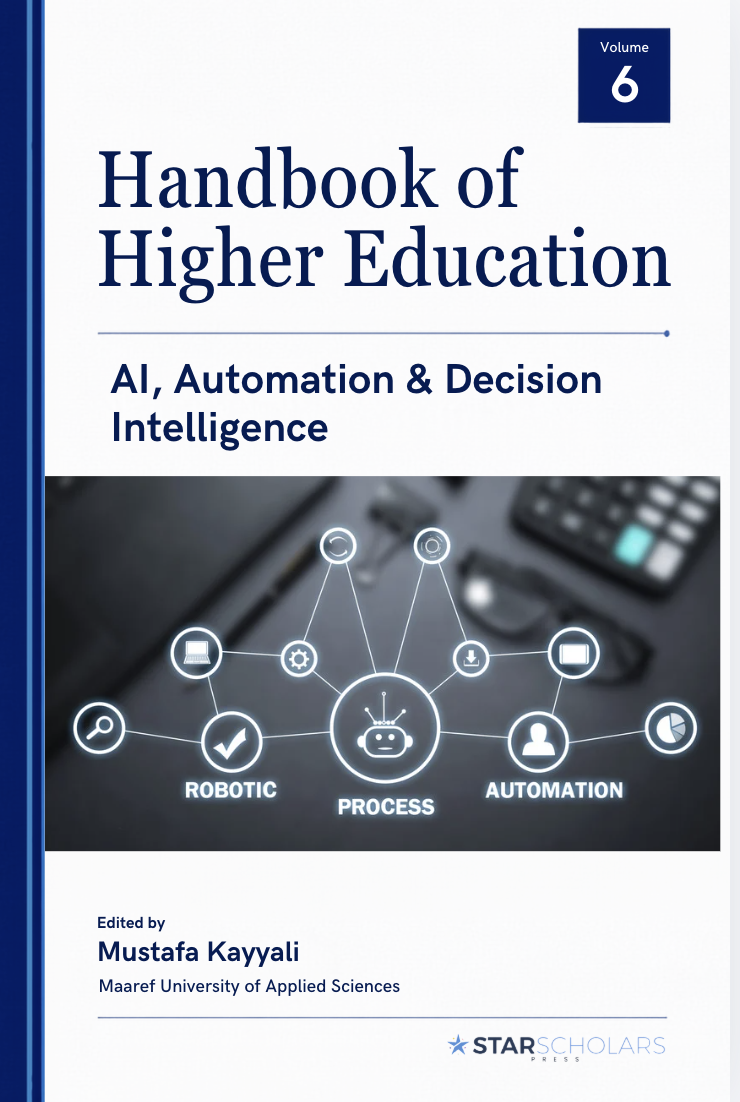
This volume examines how artificial intelligence, automation, blockchain, and data-informed governance are changing decision-making in higher education. Ten chapters move from academic credentials and learning records to educator roles in open and distance learning, university digital transformation strategies, faculty capability development, smart teaching governance, AI-supported teaching tools, disability inclusion, and digital-age policy. Contributions from multiple national and institutional contexts combine conceptual analysis, case comparison, technical architectures, and practical institutional recommendations. A central concern is how universities can use intelligent systems to improve efficiency, trust, access, and responsiveness while preserving professional judgment, transparency, privacy, and human responsibility. The volume treats faculty development and inclusion as essential parts of technological transformation rather than secondary implementation issues. Intended for researchers, university leaders, faculty developers, quality assurance professionals, policymakers, IT teams, and graduate students, it argues that decision intelligence becomes educationally valuable only when automation is governed ethically, interpreted critically, and aligned with institutional learning.
Publisher : STAR SCHOLARS PRESS
Published : August 9, 2026
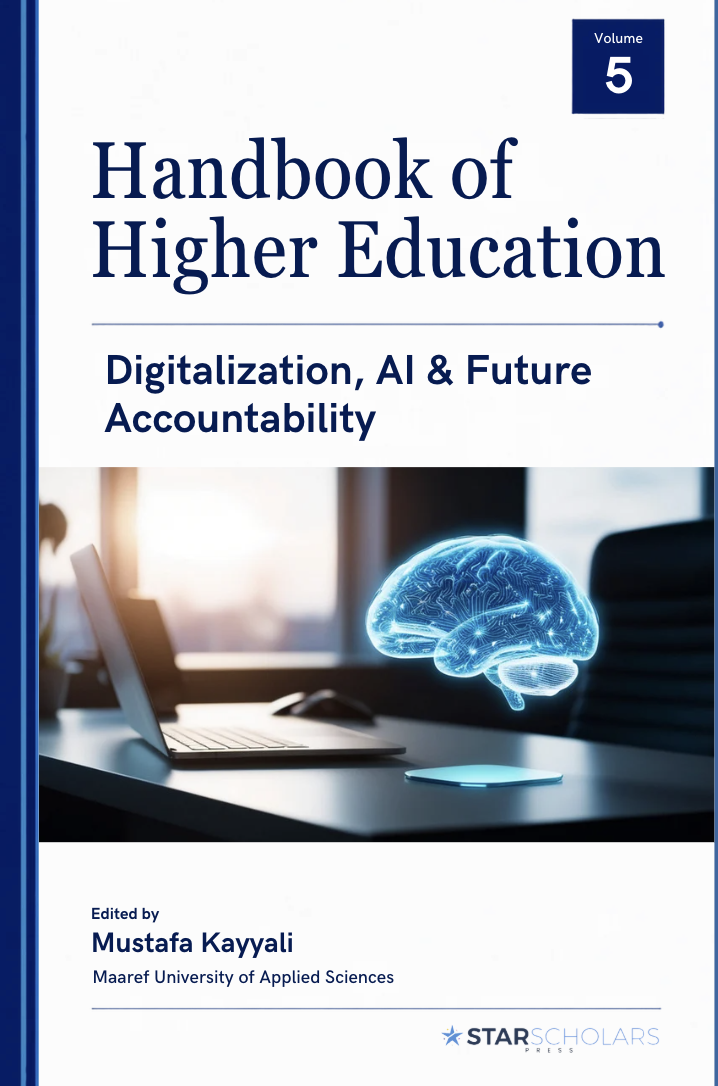
This volume analyzes digitalization, artificial intelligence, accreditation, rankings, and internationalization through the lens of future accountability in higher education. Ten chapters bring together Pacific, African, Asian, European, and broader Global South perspectives on prestige, inclusion, governance, and institutional transformation. The volume examines ethical foundations of academic reputation, inclusive quality assurance, accreditation as governance and political practice, ranking actors and algorithms, India’s National Education Policy 2020, borderless accreditation, Ubuntu-informed approaches to quality, flexible internationalization during systemic instability, and the movement from digitalization toward institutional smartness. Across these themes, the contributors challenge accountability models that privilege visibility, mobility, and standardized metrics over relationships, context, and public purpose. Intended for researchers, institutional leaders, accreditation and quality assurance professionals, policymakers, faculty, and graduate students, the volume argues that responsible transformation requires transparent data practices, context-sensitive standards, inclusive participation, and a critical understanding of how prestige systems distribute power and opportunity.
Publisher : STAR SCHOLARS PRESS
Published : September 3, 2026
This volume analyzes digitalization, artificial intelligence, accreditation, rankings, and internationalization through the lens of future accountability in higher education. Ten chapters bring together Pacific, African, Asian, European, and broader Global South perspectives on prestige, inclusion, governance, and institutional transformation. The volume examines ethical foundations of academic reputation, inclusive quality assurance, accreditation as governance and political practice, ranking actors and algorithms, India’s National Education Policy 2020, borderless accreditation, Ubuntu-informed approaches to quality, flexible internationalization during systemic instability, and the movement from digitalization toward institutional smartness. Across these themes, the contributors challenge accountability models that privilege visibility, mobility, and standardized metrics over relationships, context, and public purpose. Intended for researchers, institutional leaders, accreditation and quality assurance professionals, policymakers, faculty, and graduate students, the volume argues that responsible transformation requires transparent data practices, context-sensitive standards, inclusive participation, and a critical understanding of how prestige systems distribute power and opportunity.
Publisher : STAR SCHOLARS PRESS
Published : August 6, 2026
This volume investigates the powerful, often uncomfortable world of rankings, metrics, visibility, and institutional reputation. It asks how universities become legible to the world, and what they may lose when visibility becomes a governing ambition. The chapters examine performance indicators, bibliometrics, global ranking systems, reputation economies, data strategies, and international positioning. Yet the volume does not treat metrics as villains. They can illuminate, compare, and provoke improvement. Still, numbers have moods of their own. They reward certain behaviors, silence others, and reshape institutional imagination. This volume invites a more careful, ethically alert engagement with measurement.
Publisher : STAR SCHOLARS PRESS
Published : August 6, 2026
This volume explores governance not as a distant administrative machinery, but as the lived architecture through which universities decide, justify, improve, and sometimes resist change. It brings together discussions of evidence-based decision-making, institutional accountability, quality assurance, leadership, accreditation, and academic culture. The central concern is not merely whether universities collect evidence, but whether they know how to listen to it wisely. Across its chapters, the volume argues that quality culture cannot be manufactured through forms and audits alone; it grows through trust, participation, intellectual honesty, and the patient alignment of institutional purpose with everyday academic practice.
Series : 1
Publisher : STAR SCHOLARS PRESS
Published : August 9, 2026
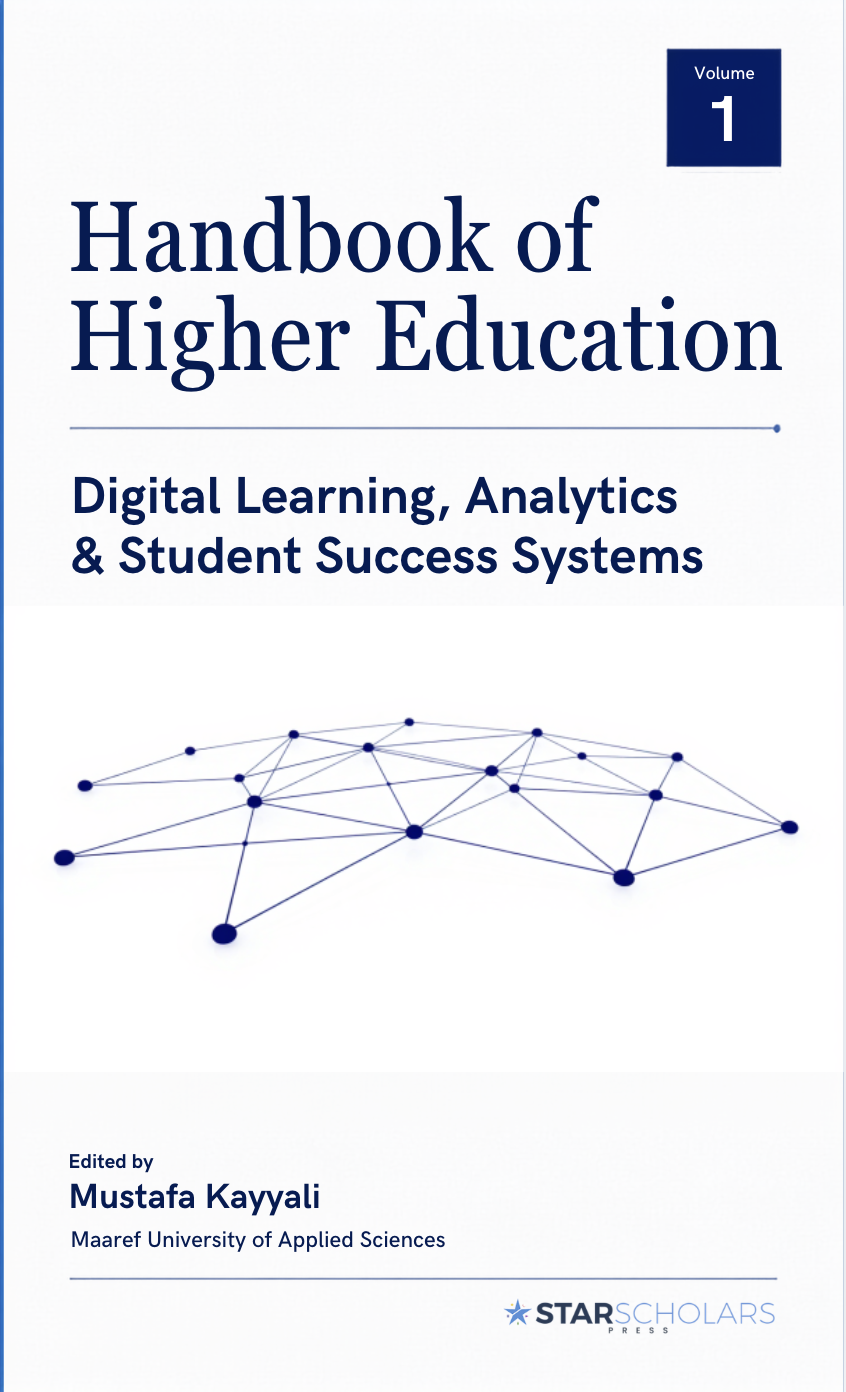
This volume examines how digital learning, analytics, and student success systems are quietly rewriting the inner grammar of higher education. It looks beyond platforms as tools and asks what happens when learning becomes traceable, adaptive, and continuously interpreted through data. The chapters explore online and hybrid learning, predictive analytics, advising systems, student engagement, retention, and the ethical use of educational data. At its core, the volume asks a difficult question: can institutions use digital intelligence to support students without reducing them to dashboards? The answer, unsurprisingly, is complex, hopeful, and sometimes unsettling.
Publisher : STAR SCHOLARS PRESS
Published : June 30, 2026
Order Print Copies | Amazon | Hardcover | eBook | Google Books
This volume examines the intersection of digital learning, learning analytics, and student success systems in contemporary higher education. Nine chapters written by scholars and practitioners from multiple geographic contexts analyze how artificial intelligence, institutional automation, faculty role transformation, and inclusive access technologies reshape higher education practice and outcomes. The volume combines theoretical frameworks with case evidence from national systems, disciplinary fields, and individual institutions. Core themes include the tension between digitalization and equity, the evolution of immersive and hybrid learning models, the role of data-informed decision-making in institutional performance, and the imperative to design digital transformations that serve all students, not only the advantaged. Intended for researchers, institutional leaders, faculty, graduate students, and policymakers, the volume argues that higher education can become simultaneously more efficient and more humane through thoughtful implementation and critical attention to context.
Publisher : STAR SCHOLARS PRESS
Published : May 24, 2026
Order your copies | Amazon | Hardcover | Paperback | eBook | Google Books |
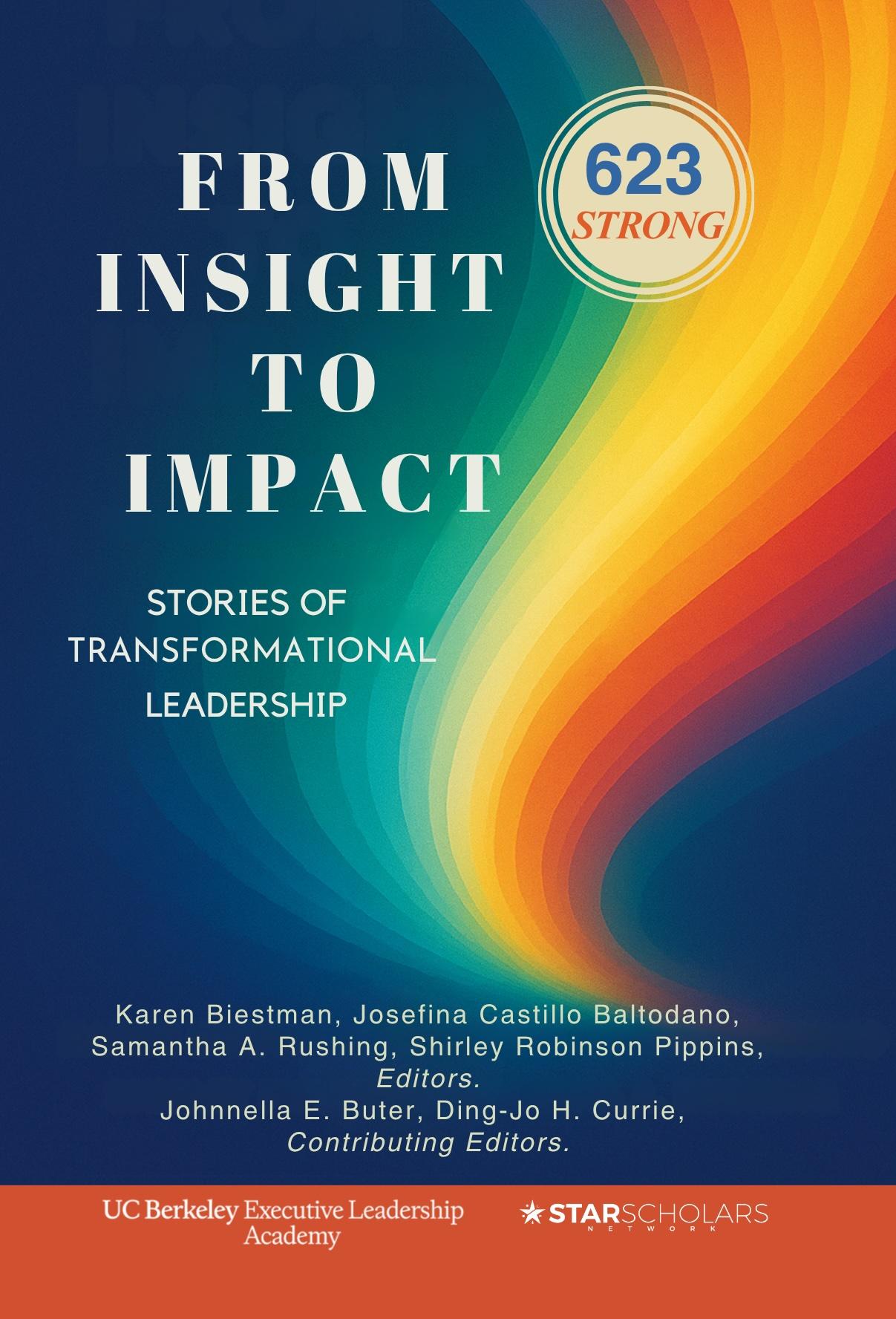
From Insight to Impact: Stories of Transformational Leadership offers a powerful collection of personal narratives and leadership lessons from alumni of the University of California, Berkeley’s Executive Leadership Academy (ELA). Drawing from a diverse group of presidents, provosts, deans, senior administrators, and emerging leaders from public and private institutions, the chapters reveal how ELA’s core teachings—courage, authenticity, empathy, collaboration, adaptability, and imagination—shape real-world decision-making. Each contributor shares a lesson learned, a leadership principle refined, or a transformative moment that reshaped their approach to navigating today’s rapidly evolving academy.
At a time of profound change in higher education, these stories illuminate how leaders cultivate purpose, strengthen institutional culture, and create environments where people and ideas can thrive. The narratives reflect a shared commitment to service, mentorship, and community—grounded in a belief that leadership is not only about managing complexity but about envisioning what institutions can become. It invites current and aspiring leaders to reflect on their own journeys and to navigate the academy with integrity, curiosity, and a renewed sense of possibility. Editors
Karen Biestman, J.D. Assistant Vice Chancellor, Office for Organizational Transformation, University of California, San Diego | La Jolla, California
Josefina Castillo Baltodano, J.D. Founder and Executive Director Emerita, Executive Leadership Academy, University of California, Berkeley | Berkeley, California and former President, Marian University | Fond du Lac, Wisconsin
Samantha A. Rushing Associate Director and Executive Assistant to the Advisory Board, Executive Leadership Academy, and former Program Administrator, Berkeley Global Executive Education, University of California, Berkeley | Berkeley, California
Shirley Robinson Pippins, Ed.D. Senior Search Consultant and Executive Coach, Academic Search | Washington, DC, and Former President, Suffolk County Community College | Long Island, New York
Johnnella E. Butler, Ed.D. Former Provost and Vice President for Academic Affairs, Spelman College | Atlanta, Georgia and former Associate Dean, The Graduate School, University of Washington | Seattle, Washington
Ding-Jo H. Currie, Ph.D. Distinguished Faculty and Director, Leadership Institute for Tomorrow, California State University, Fullerton | Fullerton, California and former Chancellor, Coast Community College District | Costa Mesa, California
Table of Contents
Foreword Preface A Brief History of the Executive Leadership Academy Introduction
Transformative Leadership: Aspirations Shaped by Purpose and Collaboration Ching-Hua Wang & Emily Prieto-Tseregounis
Transformative Leadership: Lessons from the Berkeley Executive Leadership Academy Mary C. Schutten
Leading with Purpose: A Journey of Resilience, Equity, and Transformative Leadership Jamillah Moore
From Reflection to Action: How ELA Empowered Me to Lead as My Whole Self Belinda Zamacona de Martinez
The Evolution of Leadership: Transitioning from Systemic Analysis to Adaptive Leadership Alicia B. Becton
Becoming an Intentional Leader: Lessons from the Executive Leadership Academy Sergio La Porta
Authentic Leadership in Turbulent Times Claire Oliveros
Leading in a Multicultural & Global Environment in Five Lessons Thomas Poon
Reflections at Year 4 of the Fresno State Presidency Saúl Jiménez-Sandoval
Biographies: Editors and Contributors
Publisher : STAR SCHOLARS PRESS
Published : August 15, 2026
Order your copies: Print Hardcover | ebook | Amazon | Google Books | Other Distributors
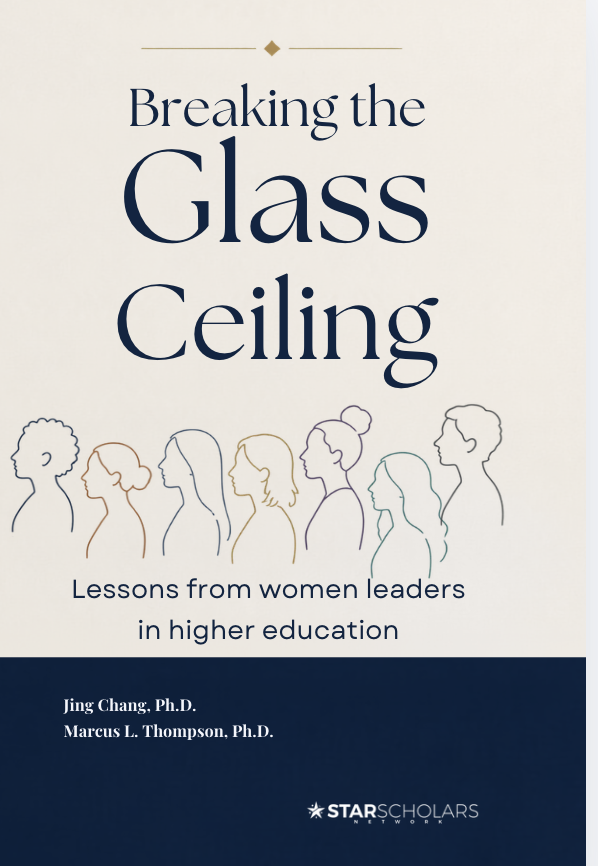
Women make up the majority of college students and advanced-degree holders. So why do they still lead only about one in three universities, and far fewer of the most powerful ones?
Breaking the Glass Ceiling answers that question the way it deserves to be answered: through the people who lived it. Here are seven women who reached senior leadership at a public university in the American South, three African American and four born in China, ranging from a dean in her seventies who helped desegregate her high school in 1963 to a young professor still proving she belongs. In their own candid words, they describe the mentors who pulled them up, the discrimination they outlasted, the families they refused to sacrifice, and the institutions they quietly rebuilt.
From their experience, the authors distill a clear and teachable model, the Three Core Layers of women's leadership, and a clear-eyed account of why so few women reach the top and what would actually change that. Rigorous enough for the seminar and human enough for the nightstand, this is both a study and a map.
Jing Chang, Ph.D. Marcus L. Thompson, Ph.D.
