
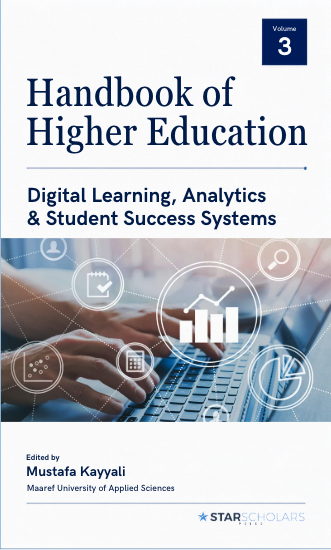
Categories

Behavioral Sciences

The Impact of Understanding and Empowering Quality Assurance and Accreditation in Higher Education Institutions in Egypt

Authors

By 
Sherihan Radi
Sherihan Radi, Brandenburg University of Technology, Cottbus – Senftenberg, Germany
Orcid https://orcid.org/0000-0002-0749-3800

Dr. Sherihan Radi is an independent researcher with a PhD in Economics from Brandenburg University of Technology, Cottbus–Senftenberg, Germany. Her academic pursuits and research interests span a wide spectrum, encompassing Trade & Investment, Economics, International Business, Gender Studies, Development, Human Sciences, Social Sciences, and Human Resource Management.
Additionally, she has worked extensively with foreign trade associations, supporting member companies in North Africa & Sahel, and has contributed to international projects under the auspices of prestigious organizations such as the UN, USAID, and the German Federal Foreign Office.
Dr. Radi's scholarly engagements extend to climate change and its implications, particularly for vulnerable groups such as women and children in developing countries. She conducted significant research during COP 27 held in Sharm El Sheikh, Egypt, highlighting climate change threats and impacts. Her expertise has been sought by various international presses and journals to contribute insights on climate-related issues.
In February 2023, Dr. Radi published her book titled “The Impact of Talent Management on Organizational and Employees’ Performance: The Case of Multinational Companies in Egypt” through Verlag Dr. Kovac, Germany. This publication underscores her commitment to advancing knowledge in organizational studies and human resource management.

STAR SCHOLARS PRESS

Published

Publication date : August 6, 2026

Synopsis

This chapter investigates the impact of quality assurance and accreditation on higher education institutions in Egypt. Using an online survey and statistical analysis, it examines the effects of external accreditation, internal accreditation, teaching and learning quality, and resources and infrastructure. The findings indicate that these components significantly influence institutional performance, educational quality, student outcomes, reputation, and competitiveness. The chapter offers practical recommendations for strengthening quality assurance culture and empowering Egyptian higher education institutions through continuous improvement and evidence-based planning.


Copyright
