
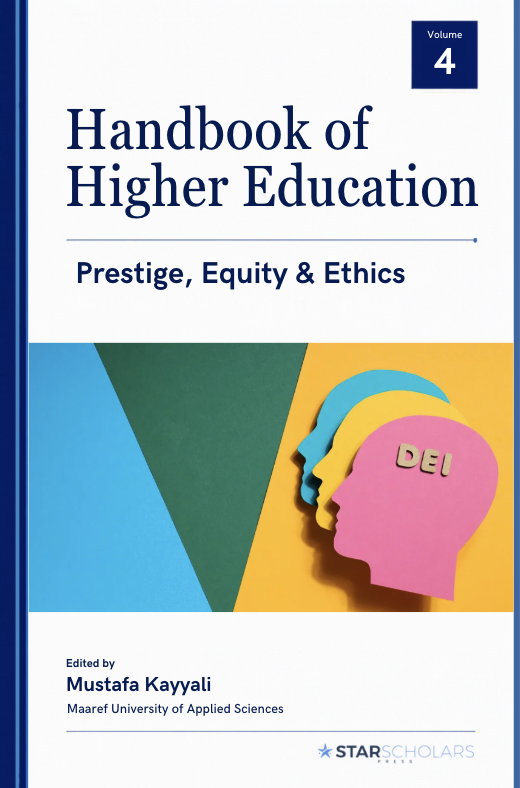
Accreditation as a Tool for Legitimacy and Improvement in Higher Education

Authors

By 
Offia Tugwell Owo
Offia Tugwell Owo, Ignatius Ajuru University of Education, Nigeria
Orcid https://orcid.org/0000-0001-8754-3531

Offia Tugwell Owo is a registered electrical engineer, lecturer and researcher in the Department of Technical Education, Ignatius Ajuru University of Education, Port Harcourt, Nigeria. He obtained his Ph.D. in Electrical/Electronic Technology Education with Distinction from the prestigious Rivers State University, Port Harcourt. With over 40 publications as journal articles, book chapters and conference proceedings, Dr. Owo contributed in no small measures to the development of education and technological advancement. He’s a certified educator, STEM education expert, and technology education researcher whose works cover digital education, educational assessment, teaching strategies, employability skills development, and higher education policies and administration.

Sylvester Akujuru
Sylvester Akujuru, Ignatius Ajuru University of Education, Nigeria
Orcid https://orcid.org/0009-0009-1036-5250

Sylvester Akujuru is a Graduate Assistant in the Department of Technical Education. He holds a Bachelor of Technology (B.Tech.) Degree in Electrical Engineering from Rivers State University, Port Harcourt. His area of specialization is Technical Education (Electrical/Electronic Technology), with research interests spanning electrical engineering, renewable energy systems, and sustainable energy technologies. His current research focuses on the design and optimization of renewable energy systems, particularly hybrid energy solutions for sustainable power generation. He’s committed to advancing technical education through innovative research, practical engineering solutions, and the integration of emerging technologies to address contemporary challenges in energy and engineering education.

STAR SCHOLARS PRESS

Published

Publication date : September 3, 2026

Synopsis

Accreditation has emerged as a critical mechanism for ensuring quality, legitimacy, and continuous improvement in higher education institutions worldwide. This chapter examines the dual function of accreditation as both a legitimizing instrument and a catalyst for institutional enhancement. Through an analysis of theoretical frameworks, empirical evidence, and contemporary practices, this study explores how accreditation processes influence institutional behaviour, stakeholder perceptions, and educational outcomes. The research reveals that while accreditation effectively confers external legitimacy and market credibility, its impact on substantive improvement varies considerably across institutional contexts and accreditation models. The paper discusses the tension between compliance-driven and improvement-focused approaches, examining how institutions navigate accountability demands while pursuing genuine quality enhancement. Additionally, the study addresses emerging challenges including credential inflation, resource disparities, and the need for innovation-friendly frameworks. The findings suggest that effective accreditation systems must balance standardization with flexibility, external accountability with internal ownership, and summative evaluation with formative development to maximize both legitimacy and improvement outcomes.


Copyright
