
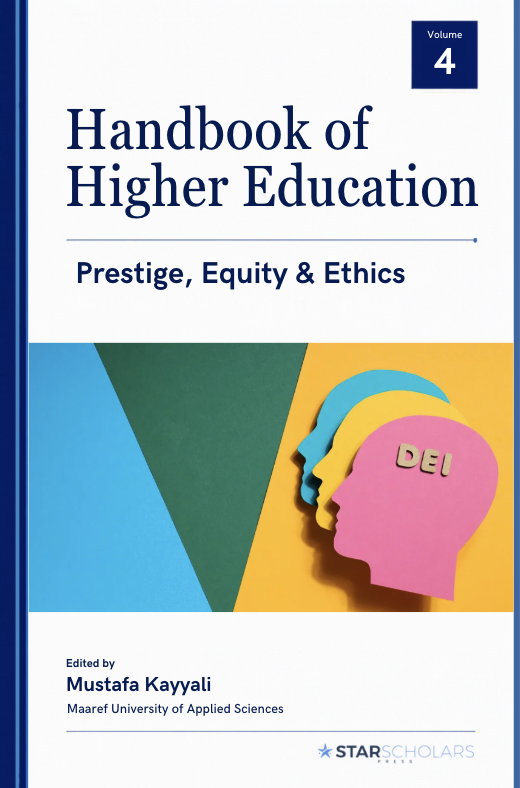
Global University Rankings and Quality Assurance: A Critical Review of Concepts, Metrics and Consequences
STAR SCHOLARS PRESS
Published
Publication date :
September 3, 2026
Synopsis
The global university rankings and quality assurance systems have emerged as two of the most powerful forces in modern-day higher education. Despite having different aims- classifications to build international hierarchies of prestige and quality assurance to protect academic standards- they now overlap in a manner that redefines institutional strategies, national policy agendas, and world academic identities. A critical review of the conceptual grounds, methodological frameworks and policy implications of global rankings and QA frameworks is presented in this chapter. It puts into focus the manner in which the collective rationale of quantification prioritizes the intensity of research, the impact of citation and global exposure, at the cost of the quality of teaching, its social purpose and relevance to context. Based on case studies of India, China, the United Kingdom, the United States and South Africa, the chapter demonstrates how institutional behaviour is affected by pressures in ranking, which reinforces stratification and reproduces epistemic inequalities between the Global North and the Global South. It also examines the expansion of managerialism and audit cultures where performance measures are predominant in academic governance and the effects of distortion, like diversion of resources, homogenisation and publication pressure. The chapter ends by summarising other models of evaluation such as multidimensional, mission-sensitive and context-aware methods and recommends a fairer global evaluation culture where other types of academic excellence are acknowledged rather than citation-based measures.
Copyright
Copyright (c) 2026 STAR SCHOLARS PRESS
