
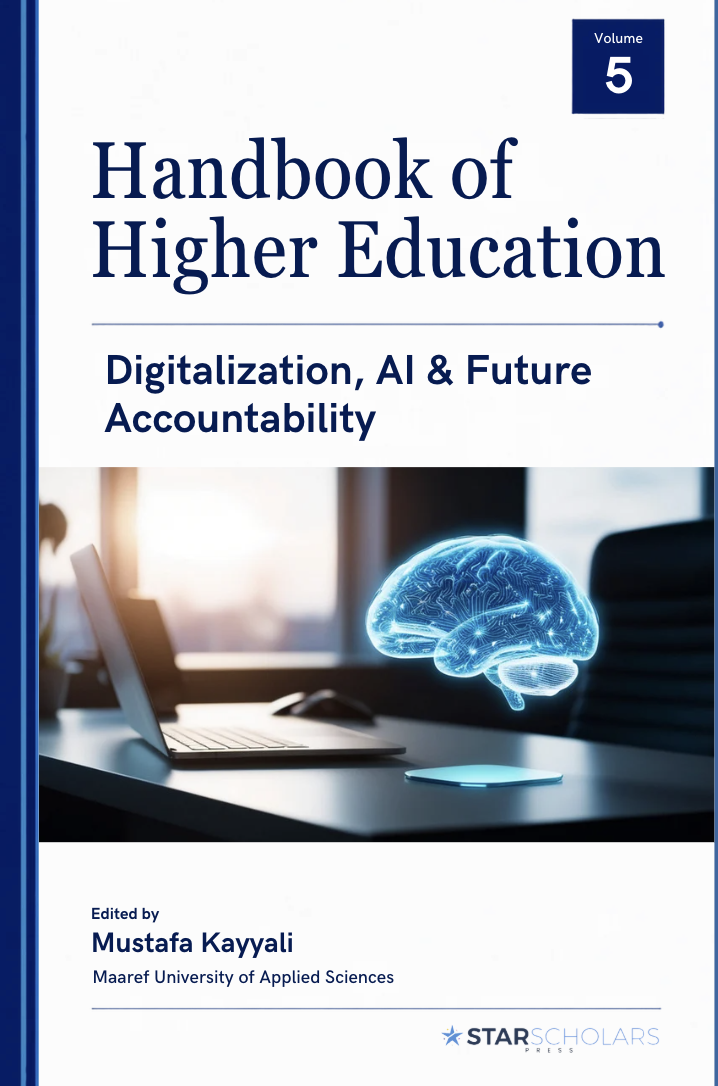
From Digitalization to Institutional Smartness: Rethinking Digital Transformation in Higher Education
STAR SCHOLARS PRESS
Published
Publication date :
August 9, 2026
Synopsis
Digital transformation has become a dominant narrative in contemporary higher education, accelerated by technological innovation, global competition, and crisis-driven change. However, many universities continue to equate transformation with the mere adoption of digital tools, platforms, and infrastructure, resulting in fragmented and often superficial reforms. This chapter argues that meaningful digital transformation requires a shift beyond digitalization toward what can be conceptualized as institutional “smartness”-a holistic reconfiguration of governance structures, organizational culture, decision-making processes, and academic practice. Drawing on conceptual and critical literature in higher education studies, organizational change, and digital governance, the chapter distinguishes analytically between digitization, digitalization, and digital transformation, and examines why technological adoption alone fails to generate sustainable institutional change. It then proposes a conceptual framework for smart institutions, emphasizing adaptability, data-informed governance, human-centered design, and ethical responsibility. By reframing digital transformation as an institutional rather than a purely technological process, the chapter offers a critical lens for scholars, policymakers, and university leaders seeking to understand and guide the future development of smart higher education institutions.
Copyright
Copyright (c) 2026 STAR SCHOLARS PRESS
