
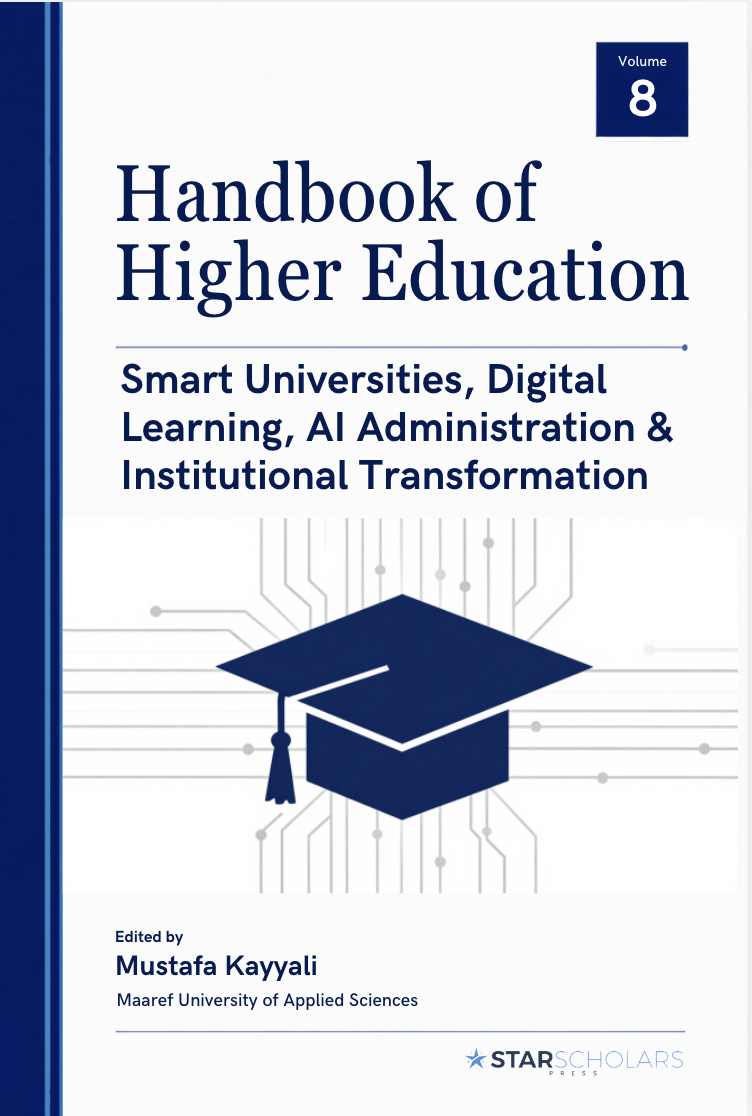
Categories
Social SciencesSmart Institutions and Global Collaboration
STAR SCHOLARS PRESS
Published
Publication date :
August 9, 2026
Synopsis
This chapter examines the transformative role of smart institutions in redefining global collaboration in higher education. It moves beyond traditional internationalization models centered on physical mobility to analyze digitally enabled, systemically embedded collaboration as a strategic and structural capability. The chapter explores digital infrastructures, data interoperability, and adaptive governance required to sustain cross-border partnerships in teaching, research, and institutional operations. Limitations of mobility-based approaches are highlighted alongside the rise of virtual exchange, MOOCs, and platform-mediated research, exemplified by hybrid models such as European university alliances. The discussion emphasizes that smart collaboration is not merely technical but shaped by political factors, including power asymmetries, regulatory complexity, and equity concerns. Challenges such as digital divides, platform dependence, and ethical risks underscore the need for inclusive and reflexive strategies. By conceptualizing global collaboration as a dynamic institutional capacity, the chapter positions smart institutions as interconnected nodes within global knowledge ecosystems, influencing identity, governance, and academic practices. The analysis concludes with implications for policy, institutional leadership, and future research, stressing that successful smart global collaboration requires balancing innovation with equity, autonomy, and social responsibility.
Copyright
Copyright (c) 2026 STAR SCHOLARS PRESS
