
Categories

Social Sciences

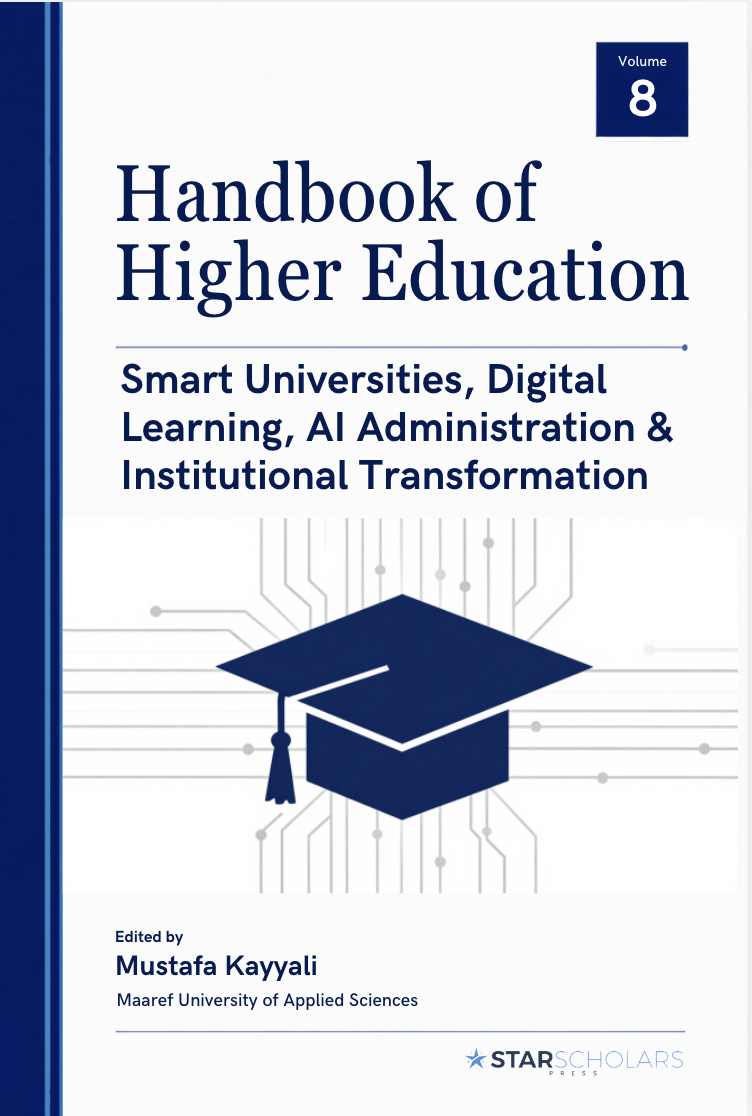
Decentralized and Hybrid Learning Models in Higher Education: Transforming Pedagogy Through Technological Innovation and Learner-Centered Approaches

Authors

By 
Offia Tugwell Owo
Offia Tugwell Owo, Ignatius Ajuru University of Education, Nigeria
Orcid https://orcid.org/0000-0001-8754-3531

Offia Tugwell Owo is a registered electrical engineer, lecturer and researcher in the Department of Technical Education, Ignatius Ajuru University of Education, Port Harcourt, Nigeria. He obtained his Ph.D. in Electrical/Electronic Technology Education with Distinction from the prestigious Rivers State University, Port Harcourt. With over 40 publications as journal articles, book chapters and conference proceedings, Dr. Owo contributed in no small measures to the development of education and technological advancement. He’s a certified educator, STEM education expert, and technology education researcher whose works cover digital education, educational assessment, teaching strategies, employability skills development, and higher education policies and administration.

Beauty Nkwoma Isiodu
Beauty Nkwoma Isiodu, Ignatius Ajuru University of Education, Nigeria
Orcid https://orcid.org/0009-0004-5999-0595

Beauty Nkwoma Isiodu serves as a Lecturer and Researcher in the Department of Technical Education at Ignatius Ajuru University of Education, Port Harcourt, Nigeria where she teaches, supervises and examines students’ academic works. She is an accomplished Building Technology lecturer, having obtained a Ph.D. in Building Technology Education, a field in which she has developed considerable expertise over the years. Her scholarly contributions include several publications spanning peer-reviewed journals, conference proceedings, and book chapters. Dr. Isiodu is dedicated to promoting excellence in teaching, research, and the advancement of technology-driven education in Nigeria. Her hobbies include reading, traveling and writing.

STAR SCHOLARS PRESS

Published

Publication date : August 9, 2026

Synopsis

The evolution of higher education has been significantly influenced by technological advancement and pedagogical innovation, leading to the emergence of decentralized and hybrid learning models. This chapter examines the theoretical foundations, implementation strategies, and effectiveness of these educational frameworks in contemporary higher education institutions. Drawing from recent empirical research and institutional case studies, this chapter analyses how decentralized learning models promote learner autonomy and personalized educational pathways, while hybrid models integrate synchronous and asynchronous delivery methods to optimize learning outcomes. The study explored the pedagogical advantages, technological infrastructure requirements, faculty development needs, and student engagement patterns associated with these models. Findings indicated that successful implementation requires institutional commitment, appropriate technological investment, comprehensive faculty training, and robust support systems. The chapter concludes with ten evidence-based recommendations for higher education institutions seeking to adopt or enhance decentralized and hybrid learning frameworks, emphasizing the importance of strategic planning, inclusive design, and continuous assessment in ensuring educational equity and excellence.


Copyright
