
Categories
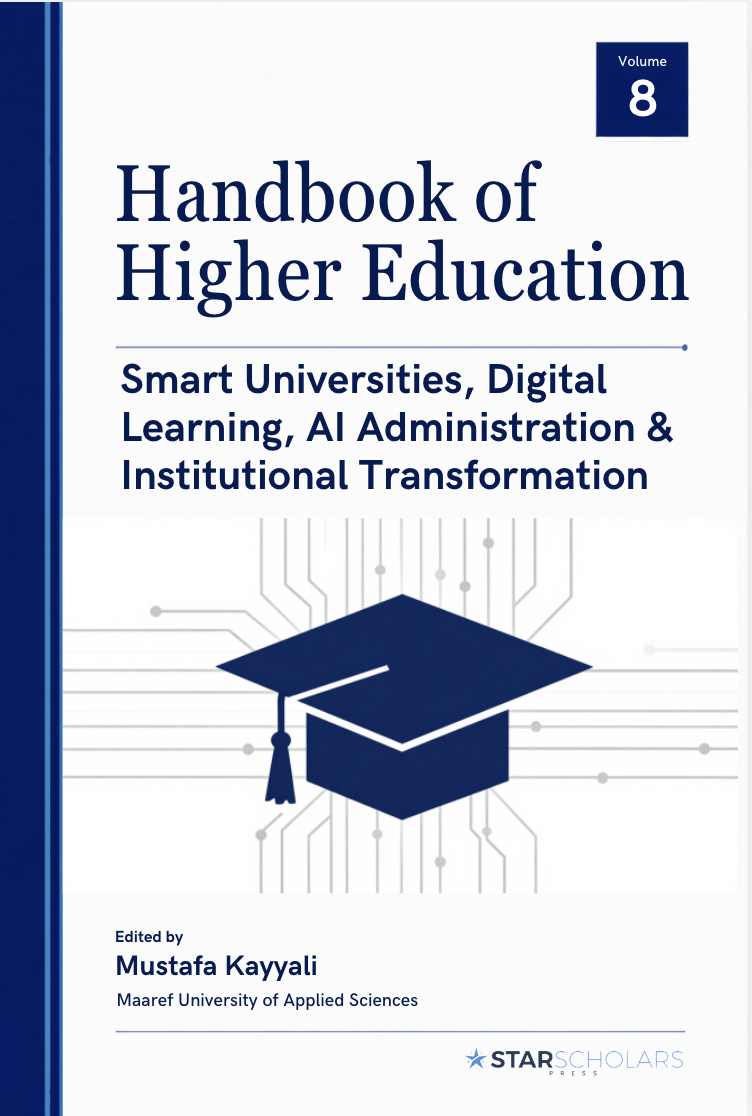
Social SciencesThe Digital Transformation of Higher Education: The Role of AI
STAR SCHOLARS PRESS
Published
Publication date :
August 9, 2026
Synopsis
The chapter explains the digital transformation, particularly AI, of higher education from structural and pedagogical perspectives. It is responsible for expanding the scope of learning, enhancing flexibility, maintaining educational trajectories, and increasing effective and efficient decision-making. Moreover, the impact of AI and digital transformation depends on institutional readiness, the quality of technological infrastructure, and the professional competencies of teaching staff. The research work helps evaluate the effect of digitalization on education quality. The authors employed a mixed-methods approach for the study. Quantitative data collected from 400 students and 55 instructors were examined using descriptive statistics, ANOVA, and multiple regression, while qualitative analysis was conducted using thematic analysis. The findings suggest an overall positive outlook toward digital transformation and AI. The participants highlighted flexibility and independent learning as crucial drivers of digital environments. The study also emphasizes barriers such as infrastructural inequality, limited digital skills, and insufficient pedagogical adaptation. The study was conducted in India with a definite sample size. Therefore, the findings may vary with geography and sample size.
Copyright
Copyright (c) 2026 STAR SCHOLARS PRESS
