
Categories
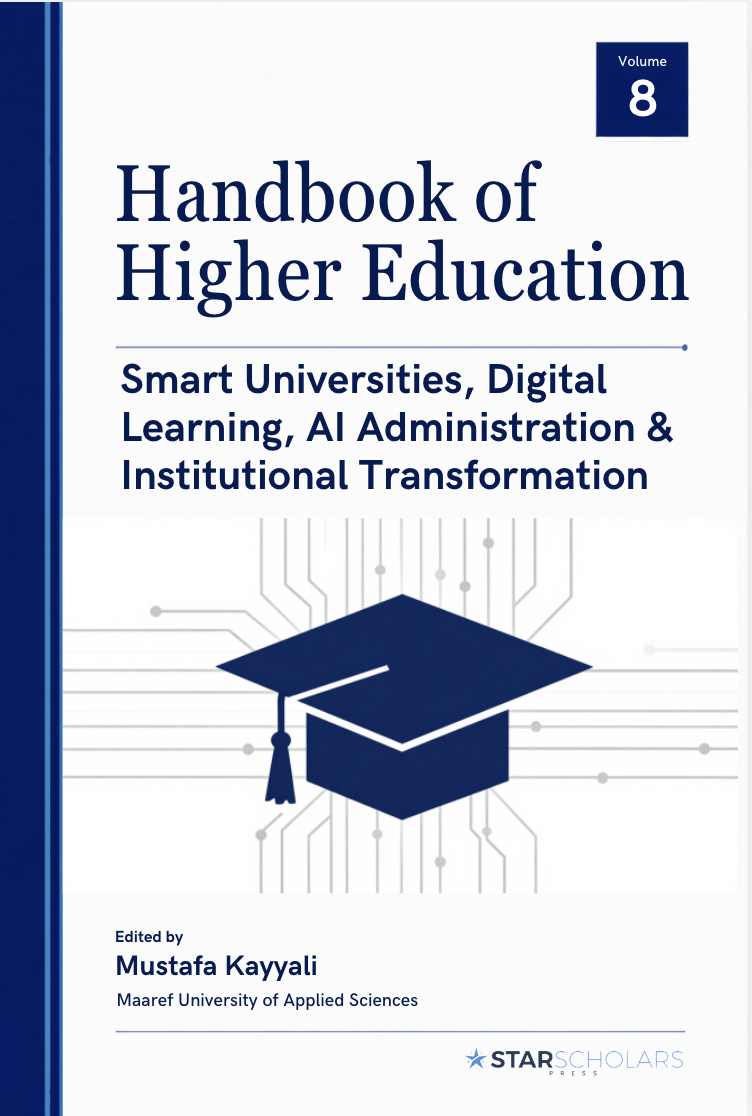
Social SciencesFrom Bureaucracy to Intelligence: AI-Driven Automation in University Administration
STAR SCHOLARS PRESS
Published
Publication date :
August 9, 2026
Synopsis
Bureaucracy in academic governance is a rule-based administrative regime of formalisation and specialisation. This chapter examines how artificial intelligence is repositioning university administration from document-centric bureaucracy toward data-centric, partially automated governance. It defines the administrative domains in which AI operates—admissions, student services, advising, scheduling, finance, HR, and compliance—and analyses how algorithmic systems convert institutional data into predictions, classifications, and recommendations that increasingly shape decisions. The chapter also addresses the operational architectures enabling this shift, including chatbots, workflow automation, analytics dashboards, and integrated quality-management systems. It evaluates the principal benefits claimed for AI-driven administration—scalability, speed, consistency, and enhanced decision support—alongside the most consequential risks, including opacity, bias, over-standardisation, privacy and security exposure, and the displacement or reconfiguration of human discretion. The chapter concludes by outlining governance and design conditions under which administrative intelligence can improve service quality and institutional capacity without reproducing digital forms of bureaucratic burden.
Copyright
Copyright (c) 2026 STAR SCHOLARS PRESS
