
Update Search
Categories
Series
Date
Update Search
Categories
Series
Date
1 - 2 of 2 items
Sort By

Publisher : STAR SCHOLARS PRESS
Published : August 9, 2026
This volume analyzes digitalization, artificial intelligence, accreditation, rankings, and internationalization through the lens of future accountability in higher education. Ten chapters bring together Pacific, African, Asian, European, and broader Global South perspectives on prestige, inclusion, governance, and institutional transformation. The volume examines ethical foundations of academic reputation, inclusive quality assurance, accreditation as governance and political practice, ranking actors and algorithms, India’s National Education Policy 2020, borderless accreditation, Ubuntu-informed approaches to quality, flexible internationalization during systemic instability, and the movement from digitalization toward institutional smartness. Across these themes, the contributors challenge accountability models that privilege visibility, mobility, and standardized metrics over relationships, context, and public purpose. Intended for researchers, institutional leaders, accreditation and quality assurance professionals, policymakers, faculty, and graduate students, the volume argues that responsible transformation requires transparent data practices, context-sensitive standards, inclusive participation, and a critical understanding of how prestige systems distribute power and opportunity.
Publisher : STAR SCHOLARS PRESS
Published : August 6, 2026
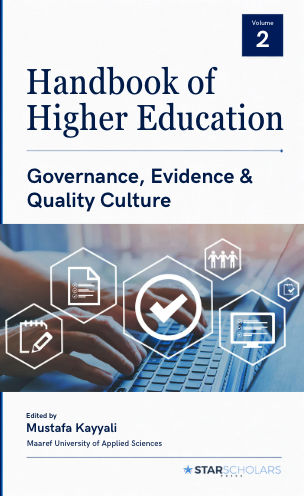
This volume explores governance not as a distant administrative machinery, but as the lived architecture through which universities decide, justify, improve, and sometimes resist change. It brings together discussions of evidence-based decision-making, institutional accountability, quality assurance, leadership, accreditation, and academic culture. The central concern is not merely whether universities collect evidence, but whether they know how to listen to it wisely. Across its chapters, the volume argues that quality culture cannot be manufactured through forms and audits alone; it grows through trust, participation, intellectual honesty, and the patient alignment of institutional purpose with everyday academic practice.
