
Update Search
Categories
Series
Date
Update Search
Categories
Series
Date
1 - 2 of 2 items
Sort By
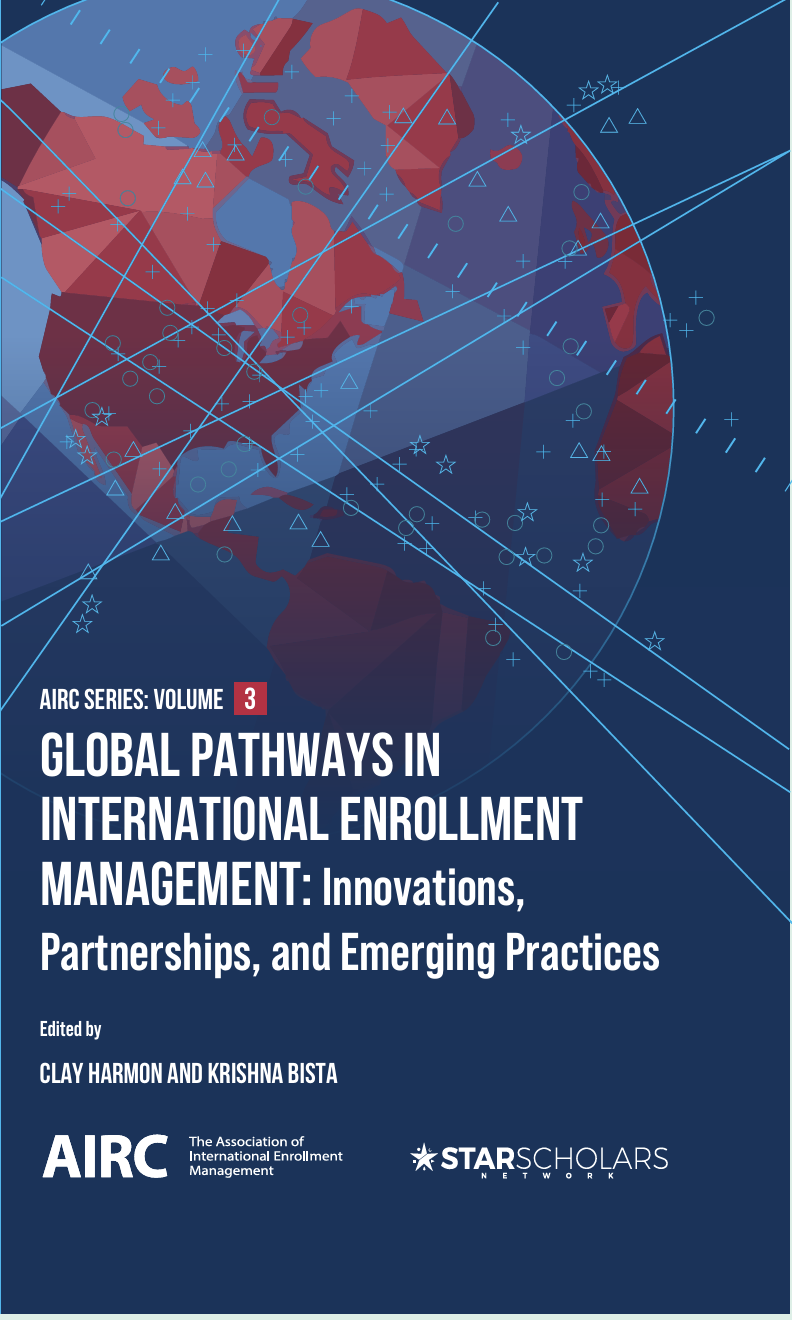
Series : Volume 3
Publisher : STAR SCHOLARS PRESS
Published : October 28, 2026
Global Pathways in International Enrollment Management: Innovations, Partnerships, and Emerging Practices examines how higher education institutions navigate geopolitical uncertainty, shifting immigration policies, global competition, and technological change. Bringing together empirical research, case studies, and practitioner perspectives, the volume explores ethical standards, adaptive enrollment strategies, study abroad, international recruitment travel, and mentoring and professional development for international graduate students. It traces the history of AIRC: The Association of International Enrollment Management and examines how consortia and cross-border university partnerships, including cooperation across the Lusophone world, strengthen institutional resilience. Connecting organizational strategy with student support, the book offers practical approaches to developing sustainable, student-centered, and ethically grounded international enrollment programs. The volume offers practical guidance for higher education leaders, enrollment professionals, researchers, and policymakers working to strengthen international partnerships and support student mobility. Order hardcopies here
Contents
A History of AIRC and Its Contribution to International Enrollment Management Introduction: Charting Global Pathways in International Enrollment Management
International Enrollment Management in an Age of Managed Mobility: An Integrated Framework for Strategy, Ethics, and Student Success
The International Student Journey Is a Neural Network, Not a Path
Enrollment Strategies Amid Volatility: Prioritizing Student Economic Outcomes
Future-Proofing Study Abroad: A Mission-Oriented Partnership Model for Applied-Technical Colleges
Recruiting on the Road: Culture, Safety, and Lessons from the Field
Professional Development and Mentoring as Mental Health Supports for International Graduate Students: A Leadership Framework for Graduate Education
The Strategic Role of Consortia in International Enrollment Management
University Cooperation in the Lusophone Space: The Role of the Pro Saúde Project in Health Education and Development
If Nothing Changes, Nothing Changes: Using Courage and Creativity on the Road to Market Resilience
Having Data Does Not Equal Using Data
From Recruitment Promotion to Career Reality: A Plan A/B/C Model for International Student Success in an Uncertain Policy Environment
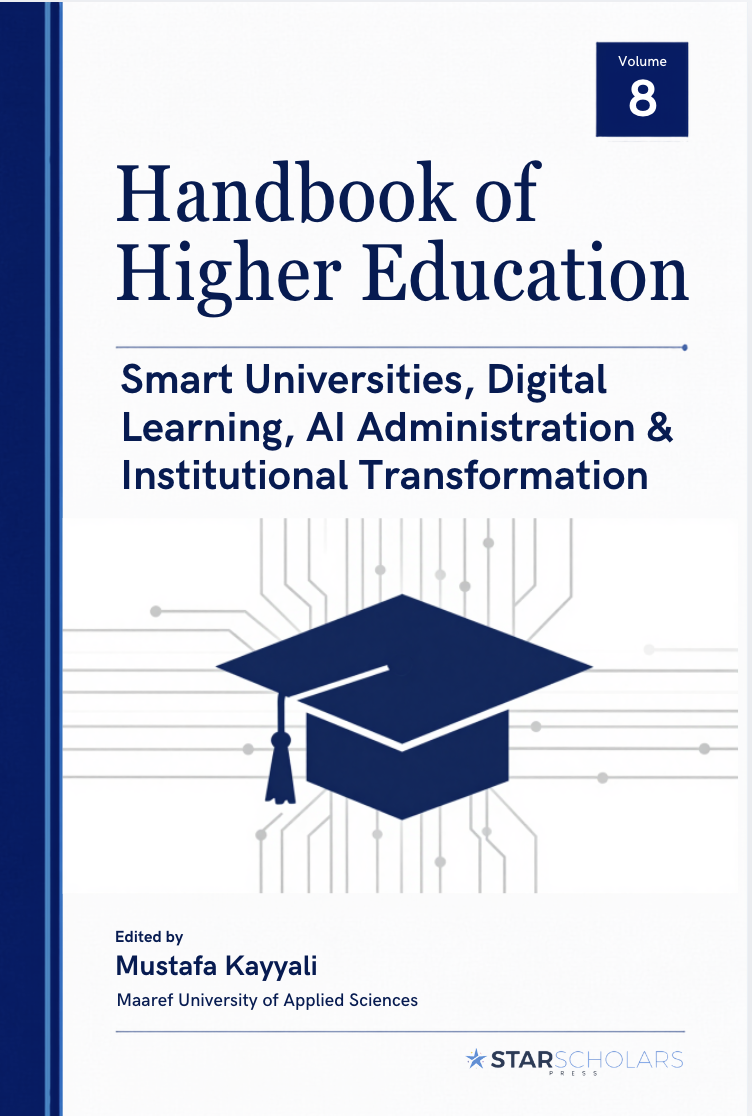
Publisher : STAR SCHOLARS PRESS
Published : August 9, 2026
This volume examines the transformation of higher education through smart university models, digital learning, artificial intelligence, and administrative innovation. Twelve chapters connect global collaboration, adaptive learning in sports education, responsible AI feedback, decentralized and hybrid pedagogy, institutional digital transformation, faculty role change, student online experiences, academic quality, teaching capital, and AI-driven university administration. The contributors combine conceptual reviews, empirical cases, governance analysis, and practice-oriented frameworks from diverse geographic and institutional contexts. Rather than treating smartness as a collection of technologies, the volume asks how universities can integrate data, automation, learning platforms, and intelligent systems while protecting equity, trust, privacy, and professional judgment. It highlights student experience and faculty capability as critical tests of whether digital transformation creates genuine educational value. Intended for researchers, university leaders, faculty, quality assurance professionals, policymakers, administrators, IT teams, and graduate students, the volume argues that smart universities must be designed as humane, accountable, and continuously learning institutions.
