
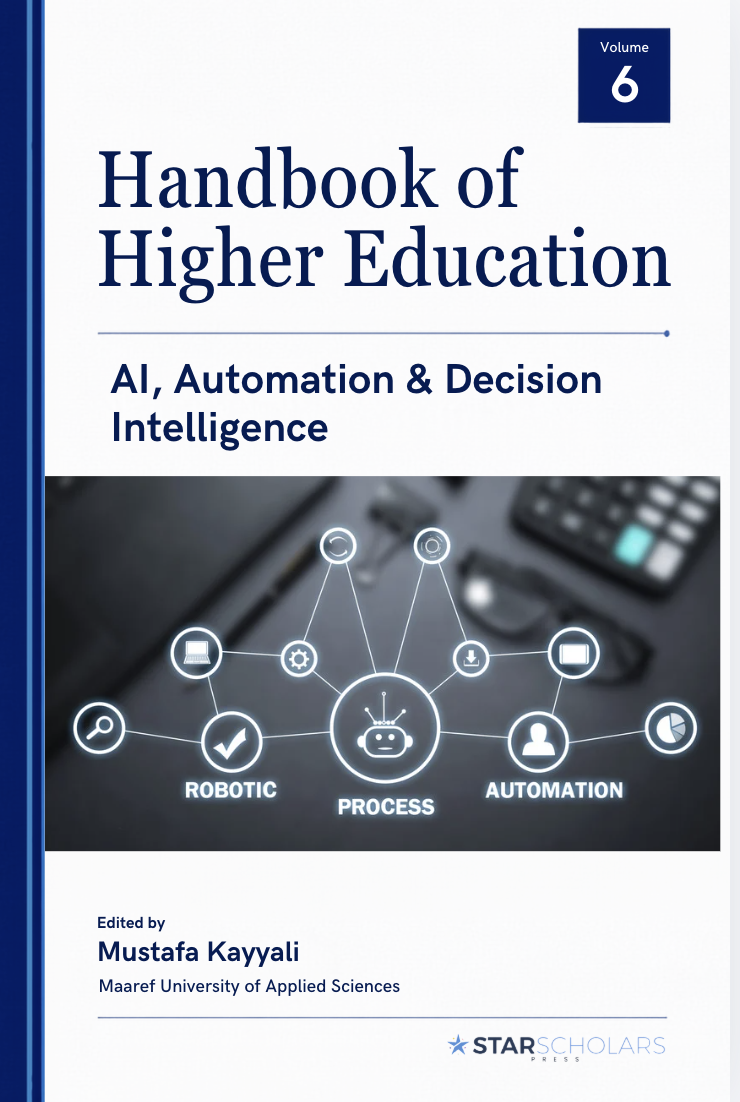
Categories
Social SciencesBlockchain for Academic Credentials and Learning Records
STAR SCHOLARS PRESS
Published
Publication date :
August 9, 2026
Synopsis
The rapid transition towards smart, technology-enabled learning environments has underscored the limitations of traditional, centralised systems for managing academic credentials and learning records. As higher education increasingly adopts decentralised and hybrid learning models, institutions require secure, verifiable, and interoperable mechanisms for documenting learners’ achievements. Blockchain technology provides a transformative response by offering a tamper-proof, transparent, and distributed ledger that supports digital diplomas, micro-credentials, and lifelong learning records. This chapter examines the foundational principles of blockchain and assesses its applicability to academic credentialling within next-generation educational ecosystems. It considers emerging global initiatives, the benefits of learner-owned digital identity wallets, and the potential for automated verification through smart contracts. Furthermore, the chapter identifies key challenges-including privacy considerations, integration complexity, and regulatory constraints-that shape institutional adoption. Through an analysis of both opportunities and limitations, the chapter highlights blockchain’s pivotal role in enabling the trust, flexibility, and interoperability essential for smart institutions that extend beyond conventional university structures.
Copyright
Copyright (c) 2026 STAR SCHOLARS PRESS
