
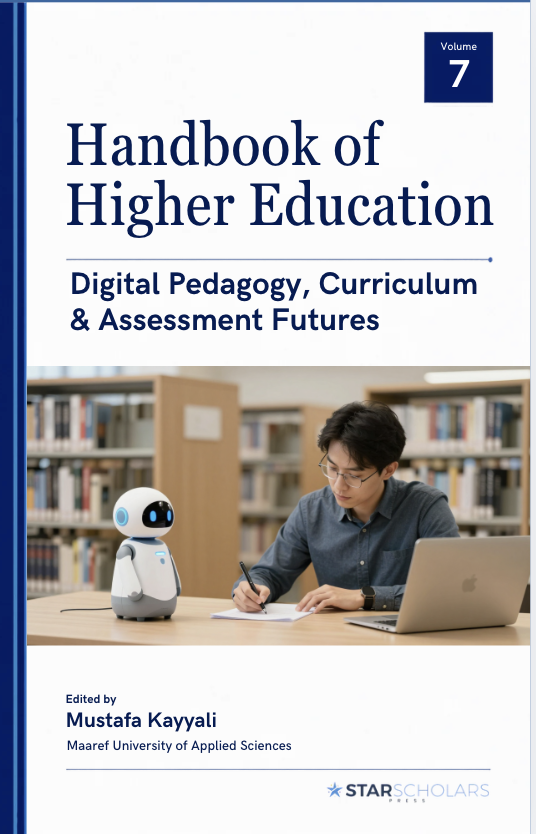
Categories
Social SciencesEmployability in the Age of AI: Redefining Graduate Attributes in Hospitality Education
STAR SCHOLARS PRESS
Published
Publication date :
August 9, 2026
Synopsis
Artificial intelligence is increasingly shaping hospitality work through its influence on service delivery, operational decision-making, and organizational practices. This chapter examines how hospitality education can respond to these developments by rethinking graduate attributes and employability within an AI-influenced professional context. Adopting a human-centered and integrative perspective, the chapter argues that artificial intelligence does not replace traditional hospitality competencies but reshapes how they are enacted, valued, and assessed. Drawing on interdisciplinary literature and hospitality-specific insights, the discussion explores the evolving relationship between graduate attributes, employability, and curriculum design. Particular attention is given to communication competence, ethical reasoning, adaptability, and reflective learning as attributes that enable graduates to navigate technologically mediated environments while sustaining service excellence. The chapter further considers curriculum design strategies that embed AI-related considerations within disciplinary learning, experiential activities, and assessment practices, emphasizing coherence, inclusivity, and pedagogical alignment. By framing employability as a dynamic and context-dependent process rather than a fixed outcome, the chapter positions hospitality education as a critical space for preparing graduates to engage critically with artificial intelligence while preserving the relational foundations of hospitality work. In doing so, it contributes to ongoing debates on workforce preparedness, curriculum relevance, and the future role of higher education in a transforming service sector.
Copyright
Copyright (c) 2026 STAR SCHOLARS PRESS
