
Categories
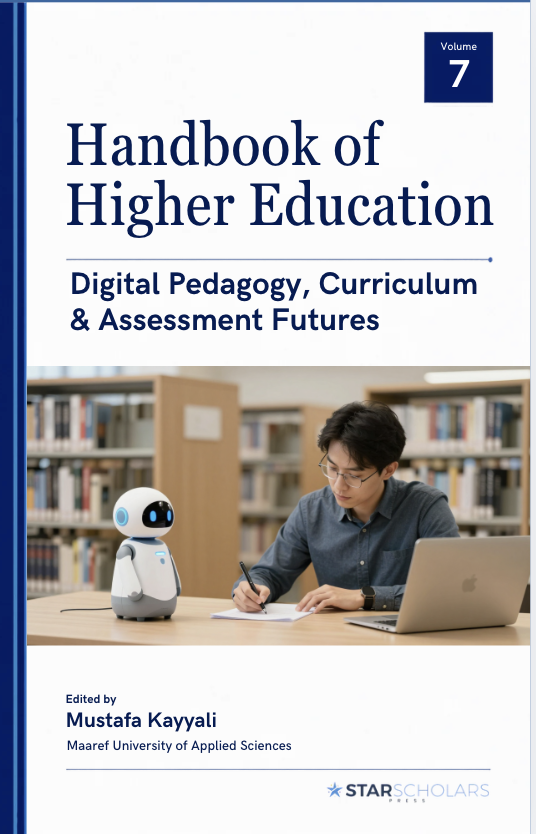
Social SciencesArtificial Intelligence in Higher Education: Rethinking Assessment Integrity and Quality Assurance
STAR SCHOLARS PRESS
Published
Publication date :
August 9, 2026
Synopsis
The fast-tracked adoption of artificial intelligence (AI) in Indian higher education institutions (HEIs) is transforming how academic tasks are conducted, assessments are administered, and institutions are managed according to the digital transformation agenda spelled out in the National Education Policy (NEP) 2020. Although these AI-powered tools provide benefits such as customized learning, automatic feedback, and scalable evaluation, they also create serious threats to assessment integrity and current quality assurance frameworks. Conventional strategies for ensuring academic honesty, such as plagiarism detection and examination management, are becoming insufficient to deal with AI-generated content and algorithmic assistance. This chapter is policy-based and empirically informed, relying on regulatory guidelines, institutional practices, and quality assurance norms common in Indian higher education. It critically discusses discrepancies in adoption, implementation, assessment design, and accreditation criteria. The chapter proposes reformed assessment models that focus on competency-based, experiential, and continuous assessment models in line with NEP 2020 ideas. It also emphasizes the need for adaptive quality assurance policies, faculty capacity building, and coherent institutional AI governance frameworks. The chapter provides practical information that HEIs, accreditation agencies, and regulators can utilize to protect the quality of academic programs and allow responsible and ethical adoption of AI in assessment programs.
Copyright
Copyright (c) 2026 STAR SCHOLARS PRESS
