
Update Search
Categories
Series
Date
Update Search
Categories
Series
Date
1 - 2 of 2 items
Sort By
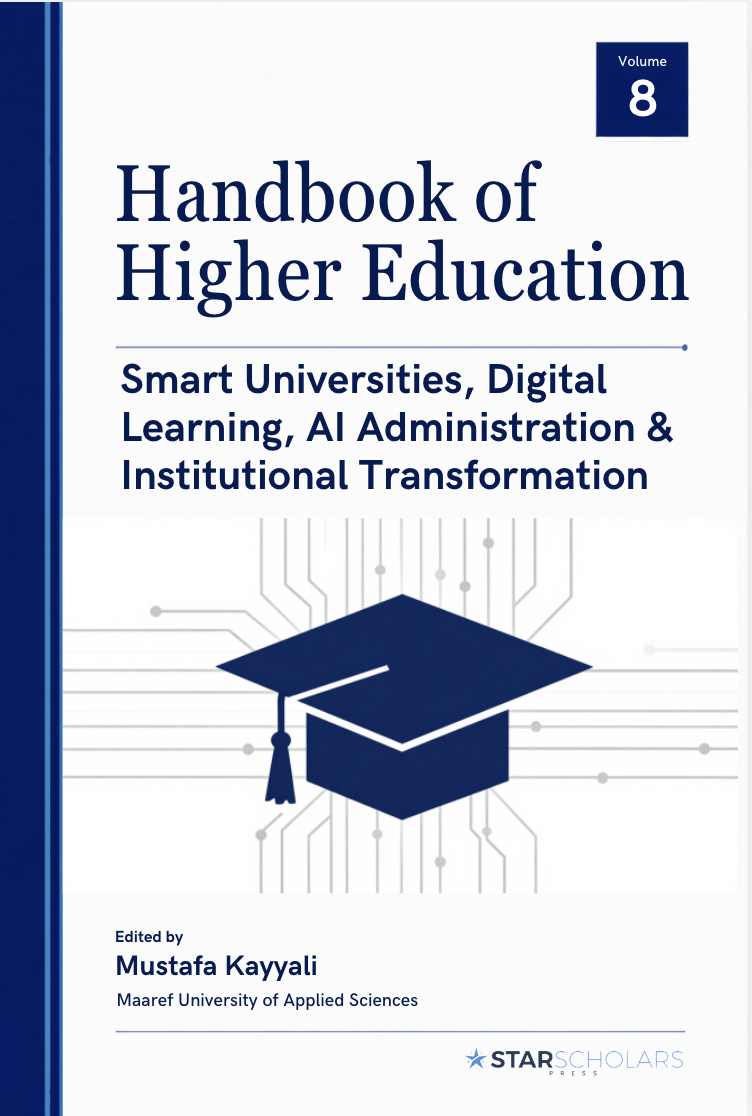
Publisher : STAR SCHOLARS PRESS
Published : August 9, 2026
This volume examines the transformation of higher education through smart university models, digital learning, artificial intelligence, and administrative innovation. Twelve chapters connect global collaboration, adaptive learning in sports education, responsible AI feedback, decentralized and hybrid pedagogy, institutional digital transformation, faculty role change, student online experiences, academic quality, teaching capital, and AI-driven university administration. The contributors combine conceptual reviews, empirical cases, governance analysis, and practice-oriented frameworks from diverse geographic and institutional contexts. Rather than treating smartness as a collection of technologies, the volume asks how universities can integrate data, automation, learning platforms, and intelligent systems while protecting equity, trust, privacy, and professional judgment. It highlights student experience and faculty capability as critical tests of whether digital transformation creates genuine educational value. Intended for researchers, university leaders, faculty, quality assurance professionals, policymakers, administrators, IT teams, and graduate students, the volume argues that smart universities must be designed as humane, accountable, and continuously learning institutions.
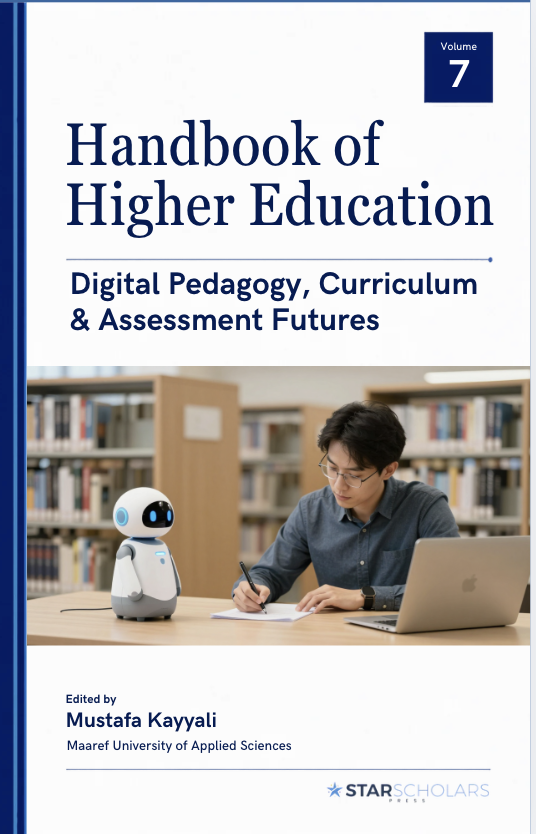
Publisher : STAR SCHOLARS PRESS
Published : August 9, 2026
This volume investigates the future of digital pedagogy, curriculum, assessment, and quality assurance across rapidly changing higher education systems. Twelve chapters address decentralized and hybrid learning, personalized and adaptive education, smart institution roadmaps, teaching efficiency, fragmented quality frameworks, accreditation and research excellence, Faculty 4.0, the faculty role as a human safeguard in AI-rich environments, hospitality employability, and assessment integrity. The contributors draw on international contexts to examine how institutional design, faculty capability, technology, and governance influence learning outcomes and public trust. The volume gives particular attention to the tension between flexibility and coherence, innovation and quality, automation and human judgment. It also considers how graduate attributes and assessment practices must evolve as artificial intelligence becomes embedded in learning and professional work. Intended for researchers, curriculum designers, faculty, institutional leaders, quality assurance professionals, graduate students, and policymakers, the volume argues that credible digital futures require pedagogical purpose, ethical assessment, inclusive access, and sustained investment in human expertise.
